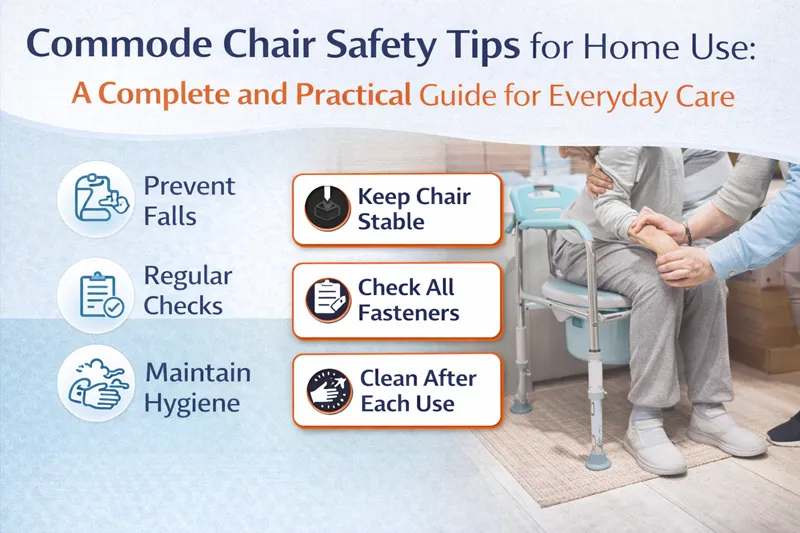
This long guide covers all practical safety tips for commode chair use at home, including setup, positioning, daily usage, night-time safety, caregiver precautions, hygiene safety, and common mistakes to avoid. Whether the user lives alone or receives assisted care, these safety tips can significantly reduce the risk of falls, injuries, infections, and caregiver strain.
Why Commode Chair Safety Is So Important at Home
At home, unlike hospitals, there are no nurses on duty, no
emergency buttons nearby, and often no immediate help available.
Bathroom-related accidents are among the most common causes of injuries in
elderly and mobility-impaired individuals. Wet floors, low lighting, urgency,
and fatigue increase risk especially at night. A commode chair reduces these
risks, but only if it is used properly. Incorrect height, unstable placement,
cluttered surroundings, or poor hygiene can turn a helpful aid into a hazard.
Safety practices ensure that the commode chair actually prevents accidents
instead of causing them.
Choosing the Right Commode Chair for Safe Home Use
Safety starts even before the commode chair is placed in the
home. Choosing the right type is the foundation. The chair should match the
user’s weight, height, strength, and mobility level. A chair that is too light,
too narrow, or too low will compromise stability. Steel commode chairs usually
provide better stability for long-term use. Adjustable-height chairs are safer
because they allow correct posture. For users living alone, commode chairs
without wheels are generally safer because there is no risk of rolling. If
wheels are required, brakes must be strong and easy to operate.
Correct Placement of the Commode Chair at Home
Placement is one of the most important safety factors. The
commode chair should be placed on a flat, solid, and dry surface. Avoid placing
it on rugs, uneven tiles, or near floor drains. For bedside use, ensure there
is enough space to approach the chair without twisting or bumping into
furniture. The chair should never be placed in a narrow passage where movement
is restricted. If the chair is used in the bedroom, ensure privacy while
keeping access clear. The user should be able to reach the chair without
rushing or stepping over obstacles.
Ensuring Proper Commode Chair Height for Safety
Incorrect height is a major cause of falls. The seat height
should allow the user to sit with feet flat on the floor and knees bent close
to a 90-degree angle. If the chair is too low, standing up becomes difficult
and risky. If it is too high, the user may lose balance because feet do not
grip the floor. Adjustable-height commode chairs are ideal for home use because
height can be fine-tuned. Height should be rechecked if footwear changes or if
the user’s strength declines over time.
Always Check Stability Before Every Use
Before each use especially if the chair is moved check that
all four legs are firmly touching the floor. Anti-slip rubber tips should be
intact and not worn out. If the chair has wheels, ensure all brakes are fully
locked before the user sits. Gently press down on the chair to confirm it does
not wobble. This simple habit can prevent serious accidents and should be part
of daily routine.
Safe Sitting and Standing Techniques
Users should be encouraged to sit and stand slowly and
deliberately. Rushing increases the risk of dizziness and imbalance. While
sitting, the user should hold both armrests firmly and lower themselves
gradually. While standing, they should push up using armrests rather than
pulling on furniture or walkers. Leaning forward slightly while standing helps
maintain balance. Caregivers should stand close by if assistance is required
but avoid sudden pulling or lifting unless absolutely necessary.
Importance of Strong Armrests and Back Support
Armrests are not optional they are essential safety
features. They provide leverage during sitting and standing and help distribute
body weight evenly. Weak or loose armrests significantly increase fall risk.
Back support improves posture and confidence, especially for elderly users or
those with weak core muscles. Chairs without backrests should be used only when
the user has good balance and trunk control.
Night-Time Safety Tips for Commode Chair Use
Night-time is the most dangerous period for bathroom-related
accidents. Low lighting, sleepiness, and urgency combine to increase fall risk.
The commode chair should be placed close to the bed to reduce walking distance.
A night lamp, motion-sensor light, or soft LED lighting should illuminate the
path. Avoid using bright lights that cause disorientation. Keep slippers with
non-slip soles near the bed. Remove rugs, wires, or clutter between the bed and
the chair. These simple steps dramatically reduce night-time accidents.
Using Commode Chairs with Walkers or Canes
If the user uses a walker or cane, it should be positioned
close to the commode chair before standing. The walker should not block access
to the chair but should be within reach when standing up. Never rely on
unstable furniture for support. Walkers with brakes should be locked during
transfers. Proper coordination between mobility aids and the commode chair
improves overall safety.
Safety Tips for Commode Chairs with Wheels
If a commode chair with wheels is used at home, extra
caution is required. Brakes must be locked every single time before the
user sits or stands. Wheels should be checked regularly for wear or debris that
could affect locking. Wheeled commode chairs should only be used on flat
surfaces and never on slopes or uneven flooring. For users living alone,
wheeled chairs should generally be avoided unless absolutely necessary.
Hygiene and Infection Safety
Hygiene is not just about cleanliness it is also about
safety. Dirty commode chairs increase the risk of infections, skin irritation,
and unpleasant odors. The waste bucket should be emptied and cleaned after each
use or at least daily. Use mild disinfectants and avoid harsh chemicals that damage
surfaces. Buckets should be dried before reinserting. The seat and armrests
should be wiped regularly. Gloves should be used by caregivers during cleaning.
Maintaining hygiene prevents infections and keeps the chair safe for repeated
use.
Skin Safety and Pressure Prevention
Prolonged sitting or rough seat edges can cause skin
irritation, especially in elderly or bedridden users. Check the seat for
cracks, sharp edges, or damage. For users with sensitive skin, padded seats or
seat covers may improve comfort. Users should not remain seated longer than
necessary. Regular skin checks help detect early signs of redness or sores.
Weight Capacity and Load Safety
Never exceed the recommended weight capacity of the commode
chair. Using a chair that is not designed for the user’s weight can cause
sudden collapse. Bariatric users should use bariatric-rated commode chairs with
reinforced frames and wider seating. Always check manufacturer specifications
and choose conservatively to maintain a safety margin.
Regular Inspection and Maintenance at Home
Commode chairs should be inspected weekly. Check for loose
screws, cracks, worn rubber tips, rust, or unstable joints. For steel chairs,
look for paint damage that could lead to rust. Address small issues immediately
before they become serious hazards. Preventive maintenance is far safer than
reacting after an accident.
Safety Tips for Caregivers Assisting at Home
Caregivers should avoid lifting unless absolutely necessary.
Use proper body mechanics bend knees, keep back straight, and stay close to the
user. Communicate clearly with the user before every movement. Never rush
transfers. Caregiver safety directly affects patient safety, especially in
long-term care situations.
Common Mistakes to Avoid
Placing the chair on slippery surfaces, using incorrect
height, ignoring brake locks, choosing unstable lightweight models, and
delaying maintenance are common mistakes. Another mistake is assuming the user
will “manage” without proper setup. Most accidents are preventable with simple
precautions.
Safety Checklist Table for Daily Home Use
|
Safety
Check |
Yes / No |
|
Chair placed
on flat, dry surface |
|
|
Correct
height adjusted |
|
|
Anti-slip
tips intact |
|
|
Wheels locked
(if applicable) |
|
|
Clear path
and good lighting |
|
|
Bucket clean
and secure |
|
|
Armrests firm
and stable |
Conclusion
Commode chair safety at home is not about complicated rules it
is about consistency, awareness, and correct habits. Proper placement, correct
height, stable setup, good lighting, routine hygiene, and regular inspection
transform a commode chair into a powerful safety tool. For elderly individuals,
post-surgery patients, and people with mobility challenges, these safety tips
can prevent injuries, preserve independence, and provide peace of mind. A
well-used commode chair does more than support toileting it protects health,
dignity, and confidence every single day.