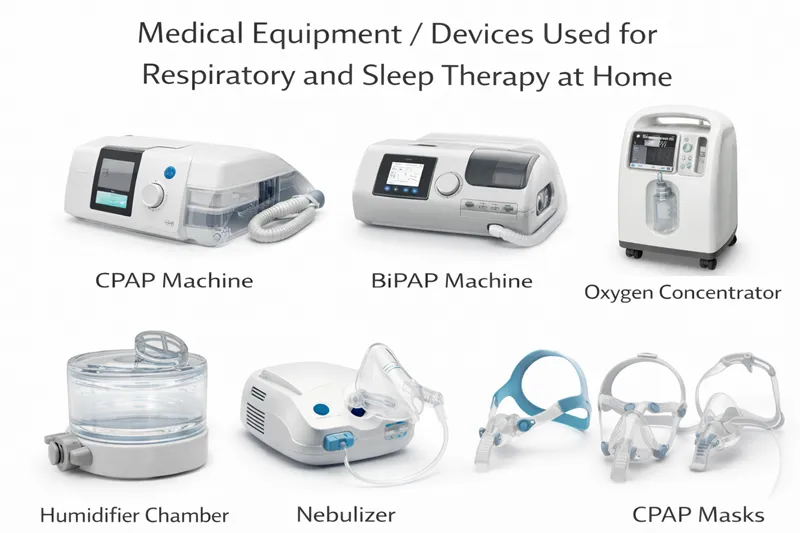
With the rise of chronic respiratory diseases, obesity, and
aging populations, home-based respiratory and sleep therapy has become
increasingly important. Patients no longer need prolonged hospital stays to
manage these conditions, as specialized medical equipment can be effectively
used in the comfort of home.
Importance of Home Respiratory and Sleep Therapy
Home therapy offers several benefits for patients with
respiratory and sleep disorders:
- Comfort
and convenience: Patients can undergo therapy in familiar surroundings.
- Cost-effectiveness:
Reduces hospital visits and stays.
- Improved
adherence: Patients are more likely to stick to therapy at home.
- Continuous
monitoring: Many devices allow remote tracking and data sharing with
healthcare providers.
- Better
sleep quality: Customized therapies enhance sleep patterns and overall
health.
Common Respiratory Therapy Equipment at Home
1. Nebulizers
- Deliver
medication directly into the lungs for conditions like asthma, COPD, or
bronchitis.
- Compact
and easy-to-use, suitable for children and adults.
- Types
include compressor, ultrasonic, and mesh nebulizers.
- Oxygen
Concentrators: Provide continuous oxygen supply at home for patients with
chronic respiratory failure.
- Portable
Oxygen Cylinders: Useful for mobility and travel.
- Oxygen
Hoods and Masks: Ensure proper delivery of oxygen for different age
groups.
- Continuous
Positive Airway Pressure (CPAP): Most commonly used for sleep apnea
treatment.
- Bi-level
Positive Airway Pressure (BiPAP): Provides variable pressure for patients
with more complex respiratory conditions.
- Helps
maintain open airways during sleep, preventing hypoxia and improving sleep
quality.
4. Humidifiers and Air Purifiers
- Improve
indoor air quality and reduce respiratory discomfort.
- Useful
for patients with allergies, asthma, or COPD.
- Helps
prevent dryness in the airways caused by long-term oxygen therapy.
5. Peak Flow Meters and Spirometers
- Monitor
lung function and detect early signs of asthma attacks or other
respiratory issues.
- Allow
patients and caregivers to track treatment effectiveness and adjust
medication accordingly.
- Measure
oxygen saturation (SpO2) and pulse rate.
- Non-invasive,
portable, and essential for monitoring respiratory conditions at home.
- Alerts
caregivers to low oxygen levels for timely intervention.
Common Sleep Therapy Devices at Home
1. Sleep Apnea Devices
- CPAP/BiPAP
Machines: Maintain airway pressure during sleep.
- Auto-adjusting
CPAP Machines (APAP): Automatically adjust pressure according to patient
needs.
2. Positional Therapy Devices
- Specialized
pillows or wearable devices help prevent supine sleeping, which worsens
sleep apnea.
3. Smart Sleep Trackers
- Wearable
devices or under-mattress sensors track sleep stages, heart rate, and
breathing patterns.
- Data
can be shared with physicians for personalized therapy.
4. Anti-Snoring Devices
- Mandibular
advancement devices (MAD) reposition the jaw to keep airways open.
- Nasal
dilators help reduce airflow resistance and snoring.
Best Practices for Home Respiratory and Sleep Therapy
- Always
follow physician prescriptions for device settings and usage.
- Maintain
hygiene and regular cleaning of devices, especially nebulizers, masks, and
tubing.
- Monitor
therapy effectiveness using devices like pulse oximeters and spirometers.
- Ensure
regular servicing and calibration of equipment for safety and accuracy.
- Educate
caregivers on proper handling and troubleshooting of devices.
Advantages of Home Therapy
- Reduces
hospital dependency
- Ensures
continuous monitoring and timely intervention
- Enhances
quality of life and sleep quality
- Improves
adherence to therapy
- Cost-effective
and convenient for patients and families
Frequently Asked Questions (FAQs)
Q1. Can CPAP or BiPAP machines be safely used at home?
Yes. CPAP and BiPAP machines are designed for home use under
medical guidance. Patients should be trained on proper mask fitting, cleaning,
and pressure settings.
Q2. How often should home respiratory devices be cleaned?
Nebulizers, oxygen masks, tubing, and humidifiers should be
cleaned daily or as recommended by the manufacturer to prevent
infections and ensure proper function.
Q3. Is remote monitoring possible with home sleep therapy
devices?
Yes. Many modern CPAP, BiPAP, and smart sleep trackers
provide remote monitoring capabilities, allowing physicians to track usage,
sleep quality, and treatment effectiveness.
Q4. Can home respiratory therapy completely replace
hospital treatment?
Home therapy is suitable for stable patients with chronic
conditions, mild to moderate sleep apnea, and controlled respiratory disorders.
Severe cases may still require hospital-based interventions.
Conclusion
Home-based respiratory and sleep therapy provides an
effective, convenient, and cost-efficient solution for patients with chronic
respiratory conditions and sleep disorders. With the right combination of
devices, patient education, and medical supervision, individuals can maintain
optimal health and quality of life from the comfort of their home.
At Aarogyaa Bharat, we offer a range of certified home-use
respiratory and sleep therapy equipment, empowering patients and caregivers
with safe and reliable solutions.