Understanding Aging at Home and Product Planning
Aging at home is not a one-time setup but an ongoing process
that evolves with the senior’s physical and medical condition. A product that
works well today may not be sufficient a year later if mobility declines or a
health condition progress. Product planning should therefore focus on
flexibility, adaptability, and long-term usability. Families must look beyond
immediate needs and consider how aging may affect walking, sitting, bathing,
sleeping, and self-care in the future. Senior care products chosen with
foresight reduce the need for frequent replacements and sudden emergency
purchases, which often happen after accidents. Thoughtful planning allows
seniors to transition smoothly through different stages of aging without
feeling disrupted or unsafe.
Mobility Support Products: Choosing for Stability and
Confidence
Mobility support products are often the first requirement in
elderly home care because movement affects every part of daily life. Walking
sticks, quad canes, walkers, rollators, and wheelchairs are designed to support
balance, reduce strain on joints, and prevent sudden falls. When choosing
mobility aids, families must consider height adjustment, grip comfort, weight
capacity, and manoeuvrability inside the home. A product that is too heavy or
poorly balanced can discourage use or create new risks. In Indian homes, where
space is limited and floor surfaces vary, compact and foldable designs are
usually more practical. The right mobility aid restores confidence, encourages
movement, and prevents seniors from limiting themselves due to fear.
Transition Support: Sit-to-Stand and Transfer Aids
One of the most overlooked challenges for elderly
individuals is transitioning between positions, such as standing up from a
chair, getting out of bed, or moving from bed to wheelchair. Sit-to-stand aids,
bed rails, grab handles, and transfer supports are critical for preventing
falls during these moments. Many accidents occur not while walking, but during
these transitional movements. Choosing sturdy, well-fitted transfer aids
reduces dependence on caregivers and protects both seniors and family members
from strain-related injuries. In Indian households, where furniture heights may
not be elder-friendly, transition support products make a significant
difference in daily safety.
Bathroom Safety Products: Buying Beyond the Basics
Bathrooms require special attention because they combine
slippery surfaces, confined spaces, and awkward movements. Basic products like
anti-slip mats and grab bars are essential, but families should think beyond
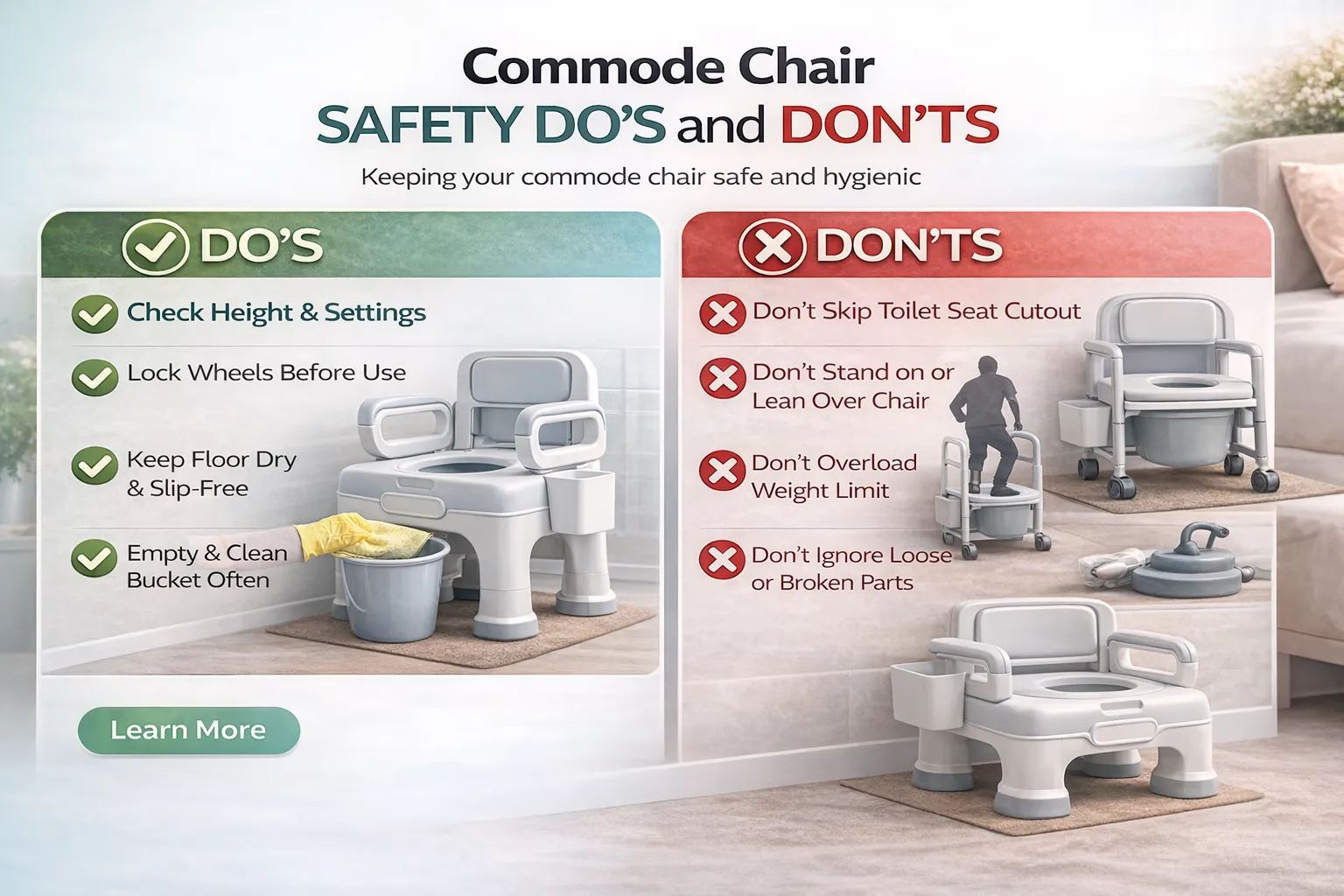
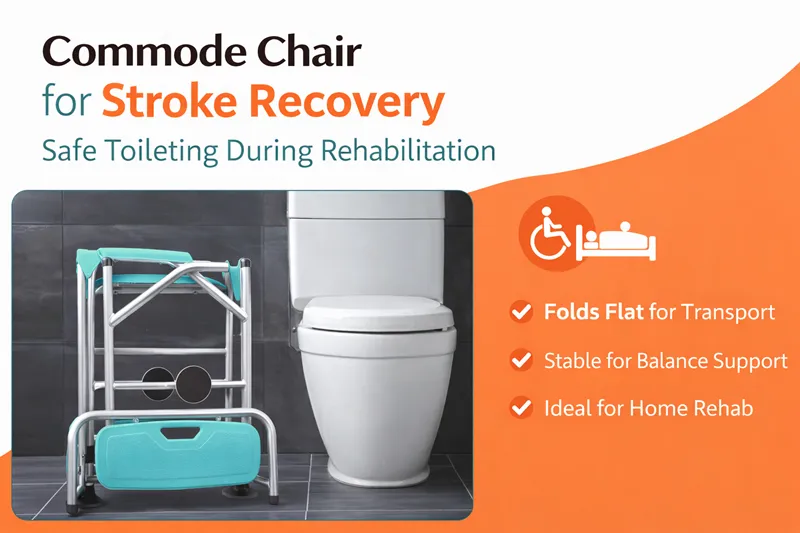
minimal setups. Commode chairs, raised toilet seats, shower chairs, and
handheld showers provide layered safety and comfort. When buying bathroom
safety products, water resistance, load capacity, and anti-skid design are
critical. Poor-quality bathroom products can fail unexpectedly, leading to serious
injuries. In Indian homes with squat toilets, commode chairs designed for
Indian usage help seniors avoid painful squatting and loss of balance. A
well-equipped bathroom significantly reduces daily stress for both seniors and
caregivers.
Bedroom Safety and Sleep Comfort Products
The bedroom is where elderly individuals spend a large
portion of their time, making it a high-priority area for safety planning.
Adjustable hospital beds, semi-fowler beds, pressure-relief mattresses,
backrests, bed rails, and wedge pillows help seniors rest comfortably and move
safely. These products support posture, reduce breathing discomfort, and
prevent pressure sores for seniors who spend extended time in bed. When
choosing bed-related products, families should consider mattress firmness, ease
of adjustment, and caregiver access. A comfortable and safe bedroom setup
improves sleep quality, which directly affects immunity, mood, and overall
health.
Living Room and Common Area Safety Products
Living rooms and common areas often contain furniture, rugs,
electrical wires, and uneven pathways that can become hazards for seniors.
Safety planning in these areas includes anti-slip flooring solutions, stable
seating with armrests, corner guards, and clear walking paths. Motion sensor
lights and proper ambient lighting reduce the risk of falls during evening and
night-time movement. Senior care products for common areas should blend
naturally with home décor so seniors do not feel surrounded by medical equipment.
A safe living space encourages seniors to remain socially engaged rather than
isolating themselves in one room.
Daily Living Aids for Eating, Dressing, and Grooming
Daily Living Aids support seniors in managing routine
personal tasks independently. Eating, dressing, and grooming often become
challenging due to arthritis, tremors, weak grip, or reduced flexibility.
Adaptive cutlery, non-slip plates, feeding cups, button hooks, shoe horns,
dressing sticks, and long-handled reaches are designed to reduce effort and
frustration. When choosing daily living aids, simplicity and comfort are more
important than advanced features. Products should feel natural to use and
should not require learning complex techniques. In Indian families, these aids
preserve dignity by allowing seniors to manage personal care without constant
assistance.
Health Monitoring Devices: Buying for Accuracy and Ease
Health monitoring devices are essential for seniors living
with chronic conditions such as diabetes, hypertension, and respiratory
disorders. Blood pressure monitors, glucometers, pulse oximeters, thermometers,
nebulizers, and oxygen concentrators help families monitor health regularly at
home. When buying these devices, accuracy, clear display, and ease of operation
should be prioritized. Devices that are difficult to read or operate may lead
to incorrect usage or avoidance. Reliable health monitoring devices reduce
hospital visits, support timely medical intervention, and give families
confidence in managing elderly health at home.
Rehabilitation Equipment for Long-Term Use at Home
Rehabilitation products help seniors recover from illness,
surgery, or injury and also support long-term mobility maintenance. Pedal
exercisers, resistance bands, hand exercisers, balance trainers, and posture
support devices encourage gentle physical activity. When buying rehabilitation
equipment, safety and adjustability are key considerations. Products should
support gradual progress rather than intense exercise. Compact rehabilitation
tools are especially useful in Indian homes, allowing seniors to continue
therapy routines without frequent clinic visits. Consistent rehabilitation
supports independence and slows physical decline.
Fall Prevention Products: Creating a Complete Safety Net
Fall prevention requires a comprehensive approach rather
than isolated product placement. Anti-slip mats, non-skid footwear, night
lamps, motion sensor lights, bed alarms, and clearly marked walking paths work
together to reduce accident risk. Families should evaluate fall risk across the
entire home, including bedrooms, bathrooms, hallways, and entrances. Fall
prevention products are most effective when combined with good lighting,
clutter-free spaces, and calm daily routines. A complete safety net allows seniors
to move freely without constant fear.
Senior Care Products for Home Use and Buying Focus
|
Product
Category |
Key Buying
Considerations |
Common
Mistakes to Avoid |
|
Mobility Aids |
Stability,
height adjustment |
Choosing
wrong size |
|
Transfer
Support |
Strong grip,
secure fitting |
Ignoring
transition risks |
|
Bathroom
Safety |
Anti-skid,
water resistance |
Weak
installation |
|
Bed Support |
Adjustability,
pressure care |
Low-quality
mattresses |
|
Daily Living
Aids |
Ease of use |
Overcomplicated
designs |
|
Health
Devices |
Accuracy,
readability |
Cheap
unverified brands |
|
Rehab
Equipment |
Safety,
adjustability |
Excessive
resistance |
|
Fall
Prevention |
Whole-home
coverage |
Partial
safety setup |
Installation, Training, and Correct Usage
Even the best senior care products can fail to protect if
they are poorly installed or incorrectly used. Grab bars must be fixed
securely, mobility aids must be adjusted to the correct height, and bed rails
must be positioned safely. Family members should take time to explain and
demonstrate usage to seniors patiently, without making them feel controlled or
restricted. Regular checks for wear and tear are essential, especially for
products used daily. Correct usage turns good products into reliable safety tools.
Budget Planning and Long-Term Value
Senior care products should be viewed as long-term
investments rather than short-term expenses. While low-cost options may seem
attractive, they often compromise on material quality and durability. Families
should balance budget considerations with safety, comfort, and longevity.
Choosing durable products reduces the need for frequent replacements and
minimizes long-term costs. Budget planning should also include future needs,
allowing families to upgrade or add products gradually rather than making rushed
purchases during emergencies.
Emotional and Psychological Benefits of the Right Choices
The emotional impact of choosing the right senior care
products is profound. Seniors who feel safe and capable at home experience
higher confidence, reduced anxiety, and better mental well-being. They are more
willing to stay active, socialize, and maintain routines. Families also feel
reassured knowing that their loved ones are protected even when alone.
Thoughtful product selection strengthens trust, reduces caregiver stress, and
supports healthier family relationships.
Common Buying Errors and Safer Alternatives
|
Common
Error |
Safer
Alternative |
|
Buying
cheapest option |
Prioritizing
safety-certified products |
|
Ignoring home
layout |
Measuring
space before purchase |
|
No
professional advice |
Consulting
doctor or therapist |
|
One-time
setup |
Regular
safety reassessment |
|
Isolated
product use |
Complete home
safety planning |
Conclusion
Senior care products for home use are essential for creating
a safe, supportive, and dignified living environment for elderly individuals in
India. By carefully selecting mobility aids, transition supports, bathroom
safety products, bed and bedroom solutions, daily living aids, health
monitoring devices, rehabilitation tools, and fall prevention products,
families can significantly reduce accident risk and dependence. Thoughtful
planning, proper installation, and regular reassessment ensure that these products
truly enhance quality of life rather than simply occupying space. With the
right approach, Indian homes can become secure environments where seniors
continue to live independently, comfortably, and with confidence.
Senior care products are becoming a necessity in Indian homes as families adapt to the realities of aging parents, changing lifestyles, and home-based elderly care. From preventing falls to supporting daily activities and managing health conditions, the right senior care products can dramatically improve safety, comfort, and independence. This very detailed guide by Aarogyaa Bharat explains the essential senior care products every Indian family should know about, helping them make informed, practical, and future-ready decisions for elderly home care