What Is a Spirometer?
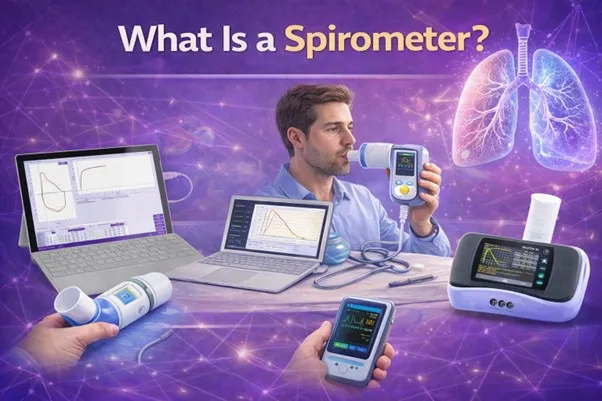
A spirometer is a medical diagnostic device used to measure
lung function, specifically the volume and speed of air that a person can
inhale and exhale. The test conducted using this device is called spirometry,
which forms the foundation of pulmonary function testing (PFT).
A Spirometer Measures:
- How
much air you can breathe in
- How
much air you can breathe out
- How
fast you can exhale air
Spirometry is:
- Non-invasive
- Painless
- Safe
for repeated use
- Suitable
for children, adults, and elderly patients
Because of its reliability and simplicity, spirometry is
often the first investigation ordered when a patient presents with
breathing-related symptoms.
Why Spirometry Is Crucial in Modern Healthcare
Respiratory diseases often develop silently. By the time
symptoms become obvious, lung damage may already be advanced. Spirometry allows
early detection, which is critical for better outcomes.
Clinical Importance of Spirometry
- Early
diagnosis of lung diseases
- Differentiation
between obstructive and restrictive lung disorders
- Objective
assessment of disease severity
- Monitoring
response to treatment (inhalers, steroids, bronchodilators)
- Pre-operative
fitness assessment
- Occupational
health screening
Simply put, spirometry converts breathing into data,
allowing doctors to move from guesswork to evidence-based decisions.
Diseases and Conditions Diagnosed Using a Spirometer
A spirometer is essential in diagnosing and monitoring:
- Asthma
- Chronic
Obstructive Pulmonary Disease (COPD)
- Chronic
bronchitis
- Emphysema
- Pulmonary
fibrosis
- Interstitial
lung disease
- Post-COVID
lung impairment
- Smoking-related
lung damage
- Occupational
lung diseases
- Neuromuscular
respiratory weakness
It is also widely used in:
- Pre-employment
medical exams
- Fitness-for-surgery
evaluation
- Long-term respiratory disease follow-up
Working Principle of a Spirometer (Explained Simply)
The working principle of a spirometer is based on measuring
airflow and converting it into lung volumes.
Step-by-Step Working Mechanism
- The
patient breathes through a mouthpiece
- Air
passes through a flow sensor
- The
sensor measures airflow speed and volume
- Software
converts this into graphs and numerical values
- Results
are compared with predicted normal values
Technologies Used in Modern Spirometers
- Flow
sensors
- Pressure
transducers
- Turbine-based
mechanisms
- Ultrasonic
airflow measurement
The results help identify whether the lungs are:
- Normal
- Obstructed
(as in asthma, COPD)
- Restricted
(as in pulmonary fibrosis)
Key Spirometry Parameters You Should Know
Understanding spirometry reports becomes easy when you know
the core parameters.
FVC (Forced Vital Capacity)
- Total
air exhaled forcefully after maximum inhalation
- Reflects
lung volume and restriction
FEV₁ (Forced Expiratory Volume in 1 Second)
- Air
exhaled in the first second
- Most
important marker of airway obstruction
FEV₁ / FVC Ratio
- Helps
distinguish obstructive from restrictive lung disease
PEFR (Peak Expiratory Flow Rate)
- Maximum
speed of exhalation
- Useful
for asthma monitoring
These values are interpreted based on age, gender, height, and ethnicity.
Spirometry Test Procedure: Step-by-Step
The spirometry test is simple but technique-dependent.
Before the Test
- Avoid
smoking for 4–6 hours
- Avoid
heavy meals
- Wear
loose clothing
During the Test
- Patient
sits upright
- Nose
clip may be applied
- Deep
inhalation
- Forceful
and complete exhalation
- Test
repeated 2-3 times
- Test Duration
- Usually
10-15 minutes
Proper coaching ensures accurate and reliable results.
Types of Spirometers
1. Handheld / Portable Spirometer
- Lightweight
and battery-operated
- Used
in clinics, home care, and health camps
- Ideal
for screening and monitoring
2. Desktop / Tabletop Spirometer
- Used
in hospitals and diagnostic centers
- High
accuracy and detailed reports
- Supports
complete PFT evaluation
3. Flow-Sensing Spirometer
- Most
common modern type
- Compact,
accurate, and reliable
4. Ultrasonic Spirometer
- Uses
sound waves to measure airflow
- No
moving parts
- Low
maintenance and long lifespan
Spirometer vs Other Respiratory Devices
Spirometer vs Peak Flow Meter
|
Feature |
Spirometer |
Peak Flow
Meter |
|
Parameters |
Volume + Flow |
Flow only |
|
Diagnostic
use |
Yes |
No |
|
Accuracy |
High |
Moderate |
|
Clinical role |
Diagnosis
& monitoring |
Daily asthma
tracking |
Spirometer Price in India
The price of a spirometer in India varies based on
technology, features, and application.
Approximate Price Range
- Handheld
spirometer: ₹15,000 - ₹35,000
- Portable
clinical spirometer: ₹35,000 - ₹80,000
- Advanced
desktop spirometer: ₹80,000 - ₹2,50,000+
Factors Affecting Cost
- Number
of measured parameters
- Software
and reporting
- Connectivity
(USB, Bluetooth, Wi-Fi)
- Brand
and after-sales service
How to Choose the Right Spirometer
Consider:
- Clinical
setting (home, clinic, hospital)
- Accuracy
and certification
- Ease
of use
- Report
generation
- Calibration
and service support
Choosing the right spirometer ensures long-term value and
diagnostic confidence.
Maintenance and Care of a Spirometer
- Use
disposable mouthpieces
- Clean
sensors as per guidelines
- Perform
periodic calibration
- Store
in a dry, dust-free environment
Proper maintenance ensures accuracy and infection control.
Advantages of Using a Spirometer
- Early
disease detection
- Objective
lung assessment
- Safe
and non-invasive
- Supports
preventive healthcare
- Improves
treatment outcomes
Limitations of Spirometry
- Requires
patient cooperation
- Not
suitable during acute respiratory distress
- Interpretation
requires training
Despite limitations, spirometry remains the gold standard
for basic lung function testing.
Conclusion
A spirometer is one of the most essential diagnostic tools
in respiratory medicine. By transforming breathing into measurable data, it
enables early diagnosis, accurate monitoring, and better management of lung
diseases.
Understanding spirometer uses, types, working principle, and
price in India empowers patients, caregivers, and healthcare professionals to
make informed decisions.
At Aarogyaa Bharat, we believe that better understanding
leads to better breathing and better health.