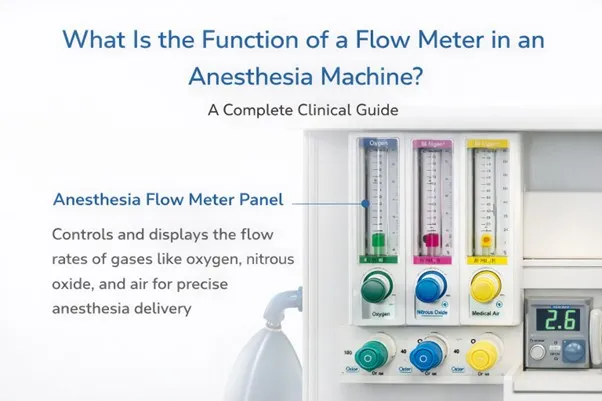
What Is a Flow Meter in an Anesthesia Machine?
A flow meter is a precision measuring device used in an
anesthesia machine to control and display the rate of flow of medical gases,
such as:
- Oxygen
(O₂)
- Nitrous
oxide (N₂O)
- Medical
air
The flow meter allows anesthesiologists to accurately mix
gases before they reach the vaporizer and, ultimately, the patient.
Flow meter in anesthesia machine, anesthesia flowmeter function, oxygen flow
meter anesthesia
Why Is the Flow Meter So Important in Anesthesia?
- The flow meter ensures:
- Correct oxygen concentration
- Accurate anesthetic gas delivery
- Prevention of hypoxic gas mixtures
- Stable depth of anesthesia
- Patient safety during surgery
Without a properly functioning flow meter, even the best
anesthesia machine becomes unsafe.
Primary Function of a Flow Meter in an Anesthesia Machine
1. Controls Gas Flow Rate
The flow meter regulates how many liters of gas per minute
(L/min) are delivered from the machine.
2. Allows Precise Gas Mixing
By adjusting individual flow meters, clinicians can:
- Increase
oxygen concentration
- Reduce
nitrous oxide levels
- Deliver
safe gas ratios
3. Prevents Hypoxia
Flow meters work with safety systems to ensure oxygen is
never completely shut off.
4. Provides Visual Confirmation
Floating indicators allow instant visual assessment of gas
delivery.
Flow Meter Close-Up View
How Does a Flow Meter Work? (Working Principle)
An anesthesia flow meter typically works on the variable
area principle.
Step-by-Step Working:
- Gas
enters the flow tube from below
- Gas
pushes a lightweight float (bobbin) upward
- The
float rises until gravity equals gas flow force
- Height
of float corresponds to flow rate
- Flow
rate is read against calibrated markings
The higher the float rises, the greater the gas flow.
Main Parts of an Anesthesia Flow Meter
Flow Tube
- Transparent
vertical tube
- Tapered
to allow accurate readings
Float / Bobbin
- Indicates
flow rate
- Must
rotate freely
Control Knob
- Adjusts
gas flow
- Color-coded
for safety
Gas Inlet & Outlet
- Controls
gas direction
- Prevents
backflow
parts of anesthesia
flow meter
Types of Flow Meters Used in Anesthesia Machines
Oxygen Flow Meter
- Most
critical flow meter
- Always
positioned downstream
- Usually
color-coded green or white
Nitrous Oxide Flow Meter
- Delivers
anesthetic gas
- Interlocked
with oxygen system
Air Flow Meter
- Used
for balanced anesthesia
- Reduces
oxygen toxicity risk
Electronic Flow Meters (Modern Machines)
- Digital
display
- Computer-controlled
precision
- Automatic
safety alarms
Multiple Gas Flow Meters
Flow Meter Safety Features in Anesthesia Machines
Modern anesthesia machines include multiple flow meter
safety mechanisms:
Oxygen Priority System
Ensures oxygen is always delivered first.
Hypoxic Guard System
Prevents dangerous low-oxygen mixtures.
Colour Coding & Labelling
Prevents accidental gas selection.
Minimum Oxygen Flow
Oxygen cannot be turned fully off.
These features dramatically reduce anesthesia-related
accidents.
Common Problems & Faults in Anesthesia Flow Meters
|
Problem |
Risk |
|
Stuck float |
Incorrect
flow reading |
|
Cracked tube |
Gas leakage |
|
Calibration
error |
Wrong gas
delivery |
|
Dirt/moisture |
Float
malfunction |
|
Incorrect
assembly |
Patient
hypoxia |
Regular inspection is essential.
Maintenance & Calibration of Flow Meters
- Daily
visual inspection
- Check
float movement
- Annual
calibration by biomedical engineer
- Immediate
replacement if damaged
Proper maintenance ensures accuracy and patient safety.
Flow Meter vs Electronic Gas Control Systems
|
Feature |
Traditional
Flow Meter |
Electronic
System |
|
Display |
Manual |
Digital |
|
Accuracy |
High |
Very high |
|
Maintenance |
Regular |
Software-based |
|
Cost |
Lower |
Higher |
|
Safety alarms |
Limited |
Advanced |
Both systems are safe when properly used and maintained.
Clinical Importance of Flow Meters in Surgery
Flow meters are vital during:
- Induction
of anesthesia
- Maintenance
phase
- Emergence
and recovery
- Pediatric
anesthesia
- Long-duration
surgeries
Incorrect flow settings can cause life-threatening
complications.
Training & Best Practices
- Always
start with oxygen flow
- Double-check
gas mixture
- Monitor
patient vitals continuously
- Never
rely solely on visual readings
- Use
oxygen analyzers as backup
Conclusion
The flow meter in an anesthesia machine is a small but
critically important component that directly controls life-sustaining gas
delivery during surgery. By regulating gas flow rates, enabling precise mixing,
and working alongside safety systems, flow meters protect patients from
hypoxia, overdose, and anesthesia-related complications.
For hospitals and surgical centers, proper understanding,
routine checks, and maintenance of anesthesia flow meters are non-negotiable
safety requirements.
At Aarogyaa Bharat, we emphasize not just equipment
procurement but also clinical education and safety awareness, helping
healthcare providers deliver anesthesia with confidence, precision, and care.