When the height is correct, toileting becomes smoother, safer, and far less stressful for both the user and the caregiver. This extended guide explains in depth how to choose the right commode chair height for elderly users, post-surgery patients, bedridden individuals, bariatric users, and long-term home care situations. It also includes practical measurement methods, common mistakes, medical considerations, and comparison tables to help families make the right decision confidently.
Why Commode Chair Height Matters More Than Any Other
Feature
Toileting involves controlled sitting and controlled
standing, both of which depend heavily on leg strength, balance, and joint
flexibility. If the commode chair height is incorrect, the body is forced into
unnatural movement patterns. A low chair increases knee bending and hip
flexion, while a high chair reduces foot contact with the floor. Both
situations increase the risk of instability, pain, and falls. For elderly
people or patients with weak muscles, this can turn toileting into a
frightening experience.
Correct height allows the body to move naturally,
distributes weight evenly, and reduces reliance on caregivers. Over weeks and
months of daily use, the difference between correct and incorrect height
becomes extremely significant.
What Happens When the Commode Chair Is Too Low
When a commode chair is too low, the user must bend the
knees and hips excessively to sit. This is especially painful for people with
arthritis, knee degeneration, hip stiffness, or those recovering from joint
replacement surgery. Standing up from a low height requires strong thigh and
hip muscles, which many elderly or post-surgery patients do not have. This
often results in sudden collapse, fear, or the need for caregivers to lift
forcefully, increasing injury risk on both sides. Low commode chair height also
places pressure on the lower back and abdominal muscles, which is dangerous
after abdominal or spinal surgery. Over time, repeated strain can slow recovery
and worsen joint damage.
What Happens When the Commode Chair Is Too High
When a commode chair is too high, the user’s feet may not
rest flat on the floor. This reduces balance and creates a sensation of
floating or instability. Users may feel insecure while sitting, which increases
anxiety and hesitation. During standing, the lack of stable foot contact
increases the risk of slipping forward or sideways.
For elderly individuals, this fear alone can discourage
regular toileting and lead to accidents or dependence. Excessive height also
makes it harder for caregivers to assist safely.
Ideal Sitting Position for Correct Commode Chair Height
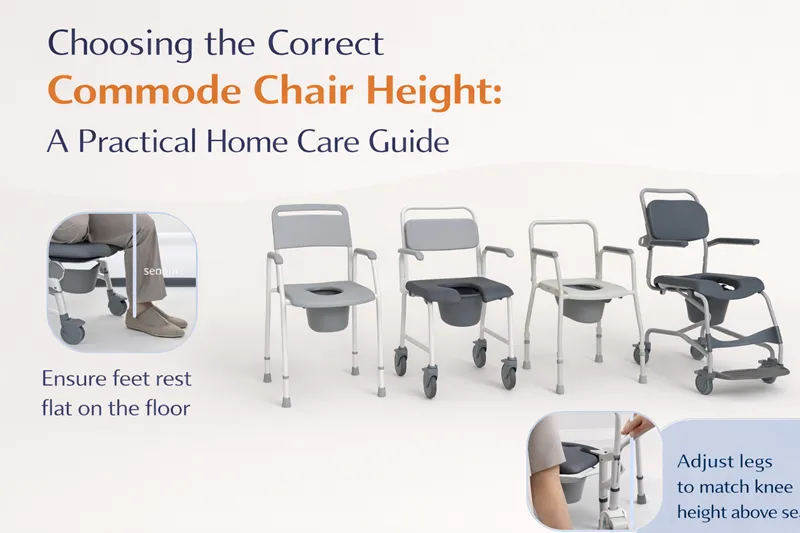
The ideal commode chair height allows the user to sit with
feet flat on the floor, knees bent close to a 90-degree angle, and hips
comfortably aligned without excessive bending. In this position, body weight is
evenly distributed, balance is maintained, and standing up requires minimal
effort. Armrests can then be used for support rather than compensation.
This posture reduces joint stress, improves confidence, and
allows smooth, controlled movement.
How to Measure the Right Commode Chair Height at Home
The most practical method to determine correct commode chair height is to measure knee height. Ask the user to sit on a chair or bed with feet flat on the floor and knees bent at 90 degrees. Measure from the floor to the underside of the thigh near the knee. This measurement gives a good estimate of the ideal seat height. Another method is to match the commode chair height to bed height, especially for bedridden or post-surgery patients. Equal or near-equal height allows safer transfers with minimal lifting or bending.
Recommended Commode Chair Height by User Type
|
User
Category |
Recommended
Seat Height |
Reason |
|
Elderly
(general) |
Slightly
higher than knee height |
Reduces
standing effort |
|
Post knee/hip
surgery |
Equal to or
slightly higher than bed height |
Prevents
excessive bending |
|
Bedridden
patients |
Same as bed
height |
Safer
transfers |
|
Wheelchair
users |
Same or
slightly lower than wheelchair seat |
Smooth
transfers |
|
Bariatric
users |
Moderate
height with strong base |
Balance +
reduced effort |
Choosing Commode Chair Height for Elderly Users
Elderly individuals often have reduced muscle strength,
joint stiffness, and slower reaction time. A slightly higher seat height than
standard can reduce the effort required to stand up. However, the height must
still allow full foot contact with the floor. Adjustable-height commode chairs
are ideal for elderly care because they allow gradual changes as mobility
decreases over time. For seniors with arthritis, osteoporosis, or balance
issues, correct height selection can prevent falls and significantly reduce
daily pain.
Choosing Commode Chair Height After Surgery
Post-surgery patients are especially sensitive to incorrect
height. After knee replacement, hip replacement, spinal surgery, or abdominal
surgery, doctors usually restrict bending beyond certain angles. A low commode
chair can violate these restrictions and cause severe pain or complications. For
post-surgery recovery, the commode chair height should be equal to or slightly
higher than the bed height. Adjustable-height commode chairs are strongly
recommended because height needs often change as recovery progresses.
Choosing Height for Bedridden and Semi-Bedridden Patients
For bedridden patients, height compatibility between bed and
commode chair is critical. A height mismatch forces caregivers to lift or
support the patient awkwardly, increasing injury risk. Proper height alignment
allows the patient to pivot or slide with support rather than be lifted. In
long-term bedridden care, correct height reduces joint strain and prevents
secondary injuries caused by repeated poor transfers.
Commode Chair Height for Wheelchair Users
When a commode chair is used alongside a wheelchair, height
alignment is essential. The commode chair seat should be the same height or
slightly lower than the wheelchair seat to allow safe transfers. If the commode
chair is higher, transfers become unsafe and require lifting.
Height Considerations for Bariatric Users
Bariatric users need a balance between reduced standing
effort and stability. A slightly higher seat may help standing, but excessive
height can compromise balance. Bariatric commode chairs usually include
reinforced adjustable legs that allow safe height customization without
sacrificing stability.
Effects of Incorrect Commode Chair Height
|
Height
Issue |
Impact on
User |
Impact on
Caregiver |
|
Too low |
Knee pain,
hip strain, fear |
Heavy
lifting, back injury |
|
Too high |
Poor balance,
insecurity |
Increased
supervision |
|
Correct
height |
Safe
movement, confidence |
Reduced
effort, safer care |
Fixed Height vs Adjustable Height Commode Chairs
Fixed-height commode chairs work only in very specific
situations and offer no flexibility if the user’s condition changes.
Adjustable-height commode chairs allow customization for different users,
different beds, wheelchairs, and changing medical needs. For home care,
adjustable height is always safer and more future-proof.
Common Mistakes Families Make When Choosing Height
Many families choose commode chairs based on average height
instead of measuring the actual user. Others assume that higher is always
better, leading to balance problems. Another common mistake is ignoring bed
height, wheelchair height, or floor mats. These small oversights can turn a
useful device into a daily struggle.
How Correct Height Reduces Caregiver Strain
Correct commode chair height protects caregivers as much as
it protects users. Proper height alignment reduces bending, lifting, and sudden
support movements. Over months of daily care, this dramatically lowers
caregiver fatigue, back injuries, and burnout.
Height Checklist Before Buying a Commode Chair
|
Checklist
Item |
Yes / No |
|
Knee height
measured |
|
|
Bed height
measured |
|
|
Feet rest
flat on floor |
|
|
Adjustable
height available |
|
|
Matches
wheelchair height (if applicable) |
Conclusion
Choosing the right commode chair height is one of the most
critical decisions in home healthcare. The correct height reduces pain,
prevents falls, supports independence, and makes caregiving safer and easier.
Whether caring for an elderly parent, a post-surgery patient, or a bedridden
individual, height compatibility should never be overlooked. A properly
adjusted commode chair transforms toileting from a stressful task into a safe,
dignified, and manageable daily routine.