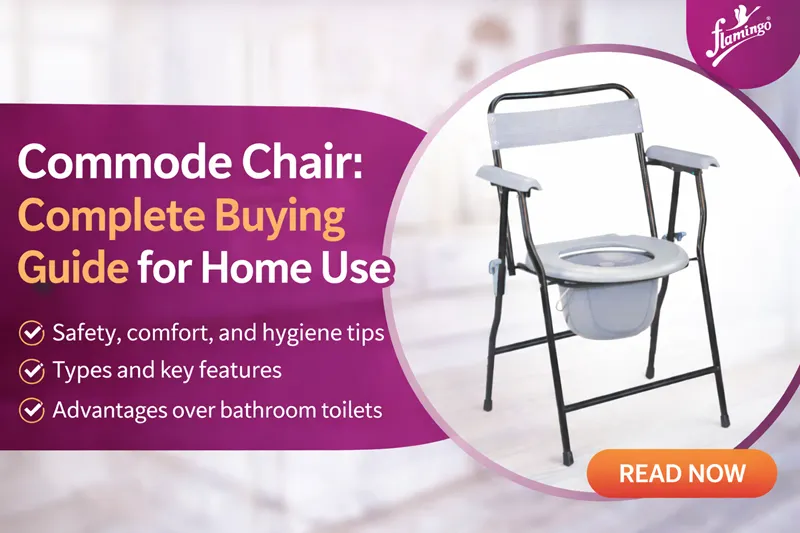
Among all activities of daily living, toileting is often the most stressful and sensitive task, as it combines physical effort, urgency, balance, privacy, and dignity. For elderly individuals and patients with reduced strength or coordination, walking to the bathroom especially at night or during sudden urgency can feel unsafe, frightening, and humiliating. Fear of slipping, falling, or not reaching the toilet in time often leads to anxiety, reduced fluid intake, poor sleep, and emotional distress, all of which negatively impact overall health and recovery. A commode chair for home use addresses these challenges by providing a safe, accessible, and dignified toileting solution within the comfort of the home. By eliminating the need for repeated or risky movement to the bathroom, a commode chair significantly reduces fall risk, preserves patient confidence, and restores a sense of control over daily life. For caregivers, it reduces physical strain, repetitive lifting, and stress, making daily care more manageable and humane. At Aarogyaa Bharat, we believe that choosing the right commode chair for elderly and patient care is not merely a purchase decision it is a decision that directly affects safety, hygiene, emotional well-being, and quality of life. This in-depth buying guide explains everything families need to know before selecting the best commode chair for home use.
What Is a Commode Chair?
A commode chair is a portable toilet system designed for
individuals who cannot safely or comfortably use a conventional bathroom toilet
due to mobility limitations. It consists of a strong, stable frame typically
made from medical-grade steel or aluminium a seat with a central opening, and a
removable commode bucket positioned directly beneath the seat to collect waste
hygienically. Most modern commode chairs also include armrests and a backrest,
which play a crucial role in assisting users during sitting and standing
movements by reducing strain on the knees, hips, spine, and shoulders. Unlike fixed bathroom fixtures, a commode chair offers
exceptional flexibility. It can be placed beside the bed, near a recliner, in
the bedroom, or wherever the patient feels safest. This portability makes the
commode chair for home use an essential device in home healthcare,
post-hospital discharge care, long-term elderly support, and palliative care.
Its widespread recommendation by doctors, physiotherapists, and home-care
professionals stems from its proven ability to reduce injuries, improve hygiene,
and preserve dignity.
Why a Commode Chair Is Essential for Home Care
The primary reason a commode chair is considered essential
in-home care is its impact on fall prevention. Bathrooms are among the most
dangerous areas in a home, especially for elderly individuals, due to slippery
floors, cramped spaces, and poor lighting at night. A commode chair placed
close to the bed removes the need for risky walking and dramatically reduces
the chance of serious injuries such as hip fractures, head trauma, or spinal
damage. Beyond physical safety, a commode chair plays a vital role
in emotional and psychological well-being. Losing independence in toileting can
deeply affect self-esteem, leading to embarrassment, frustration, and
depression. By allowing individuals to manage toileting with minimal
assistance, a commode chair helps preserve dignity and autonomy. Caregivers
also benefit significantly, as the chair reduces the need for lifting and
awkward transfers, lowering the risk of back injuries and caregiver burnout. In
short, a commode chair improves life for both the user and the caregiver.
Who Needs a Commode Chair at Home?
A commode chair for home use is suitable for a wide range of
conditions and situations, including long-term, short-term, and transitional
care. Elderly individuals often experience age-related issues such as
arthritis, joint stiffness, muscle weakness, balance problems, dizziness, and
reduced endurance, all of which make repeated bathroom visits difficult and
unsafe. For them, a commode chair placed nearby provides immediate access,
especially during night-time hours, reducing anxiety and accidents. Patients recovering from surgeries such as hip or knee
replacement, spinal surgery, abdominal procedures, or cardiac treatments often
have strict movement restrictions during recovery. Walking to the bathroom
during this phase can slow healing or cause complications. Individuals with
neurological conditions like stroke, Parkinson’s disease, paralysis, multiple
sclerosis, or post-COVID weakness may require medium- to long-term toileting
support. Even temporary conditions such as fractures, severe fatigue, or
pregnancy-related mobility issues can make a commode chair an invaluable
short-term solution at home.
Types of Commode Chairs for Home Use
Different patients require different commode chair designs
based on mobility level, caregiver involvement, and home layout.
Common Types of Commode Chairs
|
Type |
Description |
Best For |
|
Fixed Commode
Chair |
Sturdy,
non-movable chair placed bedside |
Patients who
can sit independently |
|
Folding
Commode Chair |
Foldable for
easy storage |
Small homes
or limited space |
|
Wheelchair
Commode Chair |
Wheels with
locking brakes |
Fully
assisted or immobile patients |
|
Height-Adjustable
Commode Chair |
Adjustable
leg height |
Correct
posture & joint comfort |
|
Shower
Commode Chair |
Rust-resistant
material |
Combined
bathing & toileting |
|
Bariatric
Commode Chair |
Reinforced
frame, wider seat |
Heavy-weight
users |
Each type serves a specific purpose, and selecting the right
one ensures maximum safety and comfort.
Key Features to Look for When Buying a Commode Chair
Choosing the best commode chair for elderly or patient care
requires careful evaluation of safety, comfort, and durability. The frame must
be strong and stable, preferably made of high-quality steel or reinforced
aluminium, to support the user’s weight without wobbling. Stability builds
confidence and reduces fear during use. Seat design is equally important. A smooth, well-contoured
seat helps prevent pressure sores and skin irritation, especially for users who
may need to sit for longer durations. Armrests should be sturdy and
ergonomically positioned to provide firm support during sitting and standing
movements, while a backrest improves posture and reduces fatigue. The commode
bucket should be easy to remove, clean, and reinstall, as hygiene is critical
for preventing infections. Anti-slip rubber tips or lockable wheels enhance
stability, and height adjustability ensures correct alignment with the
patient’s body and bed height.
Feature Checklist Table
|
Feature |
Why It
Matters |
|
Strong metal
frame |
Prevents
wobbling and accidents |
|
Comfortable
seat |
Reduces
pressure sores |
|
Armrests
& backrest |
Safer sitting
and standing |
|
Easy-clean
bucket |
Better
hygiene |
|
Anti-slip
base / brakes |
Prevents
movement |
|
Height
adjustability |
Reduces joint
strain |
Commode Chair vs Western Toilet for Patient Use
While installing a western toilet with grab bars may seem
like a permanent solution, it is not always practical or safe for patients with
severe mobility issues. A commode chair can be placed right next to the bed,
eliminating long or exhausting walks. It also provides built-in arm support and
allows caregivers to assist patients in a controlled and comfortable position.
Comparison Table
|
Aspect |
Commode
Chair |
Western
Toilet |
|
Distance to
access |
Very close |
Often far |
|
Fall risk |
Low |
Higher |
|
Caregiver
assistance |
Easy |
Difficult |
|
Night-time
safety |
High |
Lower |
|
Flexibility |
Portable |
Fixed |
How to Use a Commode Chair Safely at Home
For safe use, the commode chair should always be placed on a
flat, dry, non-slippery surface. Caregivers should ensure that all legs are
firmly positioned or that wheel brakes are locked before use. The bucket must
be properly aligned and emptied after each use to prevent odor and bacterial
growth. Regular cleaning with mild disinfectants is essential to maintain
hygiene and prevent infections. Proper height adjustment and gentle assistance
during transfers further reduce injury risk.
Rent or Buy a Commode Chair for Home Use?
The decision to rent or buy depends on the expected duration
of use.
|
Option |
Best When |
|
Rent |
Short-term
recovery, temporary illness |
|
Buy |
Long-term
elderly or chronic care |
Many families start by renting and later purchase once
long-term needs are clear.
Commode Chair Price in India
Commode chair prices in India vary based on type, material,
and features. Basic fixed models are affordable, while wheelchair and
adjustable designs cost more due to added functionality. At Aarogyaa Bharat,
all commode chairs meet medical-grade standards and are available for both rent
and purchase, offering reliable quality and dependable after-sales support.
Conclusion
A commode chair for home use is an essential home-care
solution that improves safety, hygiene, dignity, and independence for elderly
individuals and patients with mobility challenges. When chosen correctly, it
prevents falls, reduces caregiver strain, and enhances quality of life. With
Aarogyaa Bharat, families receive trusted products, expert guidance, and
compassionate care ensuring comfort, confidence, and dignity every day at home.