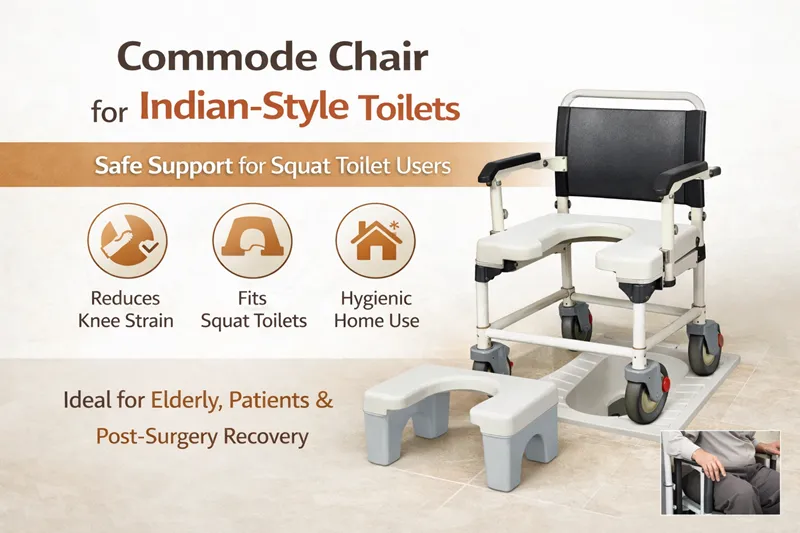
What was once a routine movement can quickly turn into a high-risk activity leading to falls, joint damage, and severe loss of confidence. In many Indian homes, especially older houses and semi-urban settings, the bathroom layout still revolves around Indian-style toilets, making complete replacement with western toilets impractical or expensive. A commode chair for Indian-style toilets offers a practical, non-structural solution that allows users to avoid squatting altogether while maintaining hygiene, dignity, and safety within familiar home environments. At Aarogyaa Bharat, we frequently see families struggling with the dilemma of how to manage toileting for parents or patients when the home has only Indian-style toilets. Renovations are not always possible due to cost, rental restrictions, plumbing limitations, or temporary medical needs. In such cases, a commode chair acts as a bridge between traditional infrastructure and modern care needs, enabling safe seated toileting without forcing painful or dangerous squatting movements. This solution not only prevents physical injuries but also reduces emotional stress and caregiver burden.
Why Indian-Style Toilets Become Unsafe with Age or
Illness
Squatting requires strong quadriceps, flexible knees and
hips, stable ankles, and good balance, all functioning together in a
coordinated motion. As people age, cartilage wears down, joint lubrication
reduces, muscles weaken, and balance deteriorates, making deep squatting
extremely painful and unstable. Medical conditions such as arthritis,
osteoporosis, stroke, Parkinson’s disease, spinal problems, obesity, and
post-surgical weakness further increase the difficulty. In Indian bathrooms,
wet floors, soap residue, uneven slopes, and poor lighting compound the risk,
turning a simple toileting act into a serious fall hazard. A commode chair
removes the need for squatting entirely, allowing users to toilet safely in a
seated position either inside the room or placed strategically near the
bathroom.
Understanding How a Commode Chair Works with Indian-Style
Toilets
A commode chair designed for Indian-style toilet users does
not require any modification to the existing toilet. Instead of squatting over
the floor pan, the user sits on the commode chair, which has a built-in seat
and removable waste bucket. In some cases, the chair can be positioned directly
above the squat pan if space allows, while in many homes it is used as a
bedside or room-based solution. This flexibility makes commode chairs highly
suitable for Indian homes where plumbing alterations are not feasible. The
chair converts a squatting-only setup into a seated toileting experience
without structural changes.
Safety Benefits of Using a Commode Chair Instead of
Squatting
The biggest safety advantage of a commode chair is falling
prevention. Squatting and standing back up place extreme stress on joints and
balance systems, and any slip can lead to fractures, especially hip or knee
fractures in elderly individuals. A commode chair provides a stable, raised
seat with arm support, allowing users to sit and stand using controlled
movements. Non-slip rubber feet ensure stability on tiled floors, while
armrests allow weight distribution through the upper body instead of painful
knees. This controlled posture significantly reduces injury risk and restores
confidence during toileting.
Comfort and Pain Reduction for Daily Use
For arthritis patients and elderly parents, pain during
toileting often leads to avoidance, dehydration, constipation, and urinary
problems. A commode chair allows users to maintain a comfortable seated posture
that minimises joint strain and muscle stress. Adjustable height ensures proper
alignment with the user’s body, reducing pressure on knees and hips. Over time,
this comfort encourages regular toileting habits and improves overall health
outcomes.
Dignity and Emotional Well-Being
Many elderly parents feel embarrassed or helpless when they
are unable to use Indian-style toilets independently, especially in homes where
these toilets were used comfortably for decades. Being forced to rely on
assistance or face repeated slips deeply affects self-esteem. A commode chair
restores dignity by allowing users to toilet safely and independently without
changing the home’s structure. This emotional reassurance is often just as
important as physical safety.
Night-Time Toileting in Homes with Indian-Style Toilets
Indian-style toilets are particularly dangerous at night due
to poor visibility, urgency, and stiffness after sleep. Walking to the bathroom
and squatting in low light dramatically increases fall risk. A commode chair
placed beside the bed eliminates the need to access the bathroom at night,
allowing safe toileting with minimal movement. This improves sleep quality and
reduces anxiety for both users and caregivers.
Hygiene Management Without Bathroom Renovation
Commode chairs use removable buckets that can be emptied and
cleaned hygienically without requiring the user to enter the bathroom every
time. This is especially helpful in homes where the bathroom is small, shared,
or difficult to access safely. With proper cleaning routines, commode chairs
maintain excellent hygiene standards while avoiding the risks associated with
wet bathroom floors.
Caregiver Convenience and Reduced Physical Strain
Caregivers often struggle to assist patients squatting or
standing up from Indian-style toilets, which requires significant lifting and
balance support. A commode chair reduces caregiver effort by allowing
controlled assistance during seated transfers rather than dangerous squatting
support. This protects caregivers from back injuries and fatigue while making
daily care more manageable.
Comparison Table: Indian-Style Toilet vs Commode Chair
Solution
|
Aspect |
Indian-Style
Toilet (Squat) |
Commode
Chair for Indian-Style Homes |
|
Squatting
required |
Yes |
No |
|
Joint strain |
Very high |
Low |
|
Fall risk |
High |
Very low |
|
Night-time
safety |
Poor |
Excellent |
|
Bathroom
modification |
Required for
safety |
Not required |
|
Elderly
independence |
Low |
High |
|
Caregiver
effort |
High |
Reduced |
Choosing the Right Commode Chair for Indian-Style Toilet
Homes
Families should select a commode chair with strong frame
construction, adjustable height, non-slip feet, sturdy armrests, and
easy-to-clean buckets. Compact designs are ideal for small Indian homes, while
foldable models help manage space. Aarogyaa Bharat guides families in choosing
commode chairs that fit Indian household layouts and medical needs, ensuring
long-term usability and safety.
Long-Term Value Compared to Bathroom Renovation
Replacing an Indian-style toilet with a western toilet often
involves plumbing changes, floor modification, and high costs, which may not be
justified for temporary or evolving care needs. A commode chair offers a
cost-effective, immediate, and flexible alternative that adapts as patient
needs change. This makes it a practical investment for families managing elder
care or recovery at home.
Why Aarogyaa Bharat Recommends Commode Chairs for
Indian-Style Toilets
Aarogyaa Bharat understands the cultural and structural
realities of Indian homes. Our focus is on solutions that work within existing
environments rather than forcing expensive or impractical changes. By
recommending commode chairs for Indian-style toilet homes, we help families
protect their loved ones while preserving comfort, dignity, and peace of mind.
Conclusion
For homes with Indian-style toilets, a commode chair is not just an alternative but a necessity when mobility declines. By eliminating squatting, reducing fall risk, and restoring independence, a commode chair transforms one of the most dangerous daily activities into a safe and dignified routine. In Indian households where tradition and modern care needs intersect, this solution offers the perfect balance between practicality and compassion. Aarogyaa Bharat remains committed to helping families adapt their homes safely without compromising dignity or comfort.