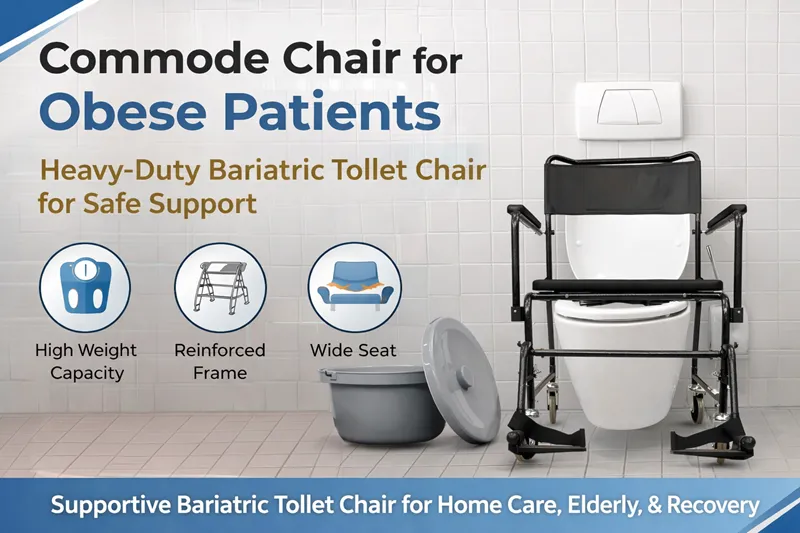
In Indian homes, where bathrooms are often compact and not designed for higher body weight or mobility aids, toileting becomes one of the most stressful daily activities for both patients and caregivers. A commode chair designed specifically for obese patients, often referred to as a bariatric commode chair, provides a safe, stable, and dignified solution that allows patients to manage toileting without compromising safety or comfort. At Aarogyaa Bharat, we frequently encounter families using standard commode chairs that are not engineered to handle higher weight loads, leading to instability, discomfort, and serious safety risks. A commode chair for obese patients is not simply a larger version of a regular chair; it is a structurally reinforced medical support device designed to distribute weight evenly, provide enhanced stability, and support confident sitting and standing. Choosing the right chair is essential not only for patient safety but also for caregiver protection and long-term home care sustainability.
Understanding the Unique Toileting Challenges Faced by
Obese Patients
Obese patients experience increased stress on weight-bearing
joints such as the knees, hips, and ankles, making sit-to-stand movements
particularly painful and risky. Limited flexibility, reduced stamina, and
compromised balance further complicate toileting. Many obese individuals also
suffer from related conditions such as diabetes, heart disease, sleep apnea, or
arthritis, which intensify fatigue and increase fall risk. Traditional toilets
and standard commode chairs often fail to provide the width, strength, and
support required, leading to fear, embarrassment, or avoidance of toileting. A
purpose-built commode chair addresses these challenges by offering enhanced
load capacity, wider seating, and reinforced support structures.
Why Standard Commode Chairs Are Unsafe for Obese Patients
Standard commode chairs are typically designed for average
body weights and compact use. When used by obese patients, these chairs may
wobble, flex, or wear out prematurely, increasing the risk of sudden failure.
Narrow seats can cause discomfort, poor posture, and pressure injuries, while
weak frames may not distribute weight evenly. Armrests may bend under load, and
rubber feet may lose grip. These risks are magnified during transfers, which is
when most falls and injuries occur. Using an underspecified commode chair is
one of the most common and dangerous mistakes families make when caring for
obese patients at home.
What Defines a Bariatric Commode Chair for Obese Patients
A commode chair for obese patients is engineered with
reinforced steel or heavy-duty aluminium frames capable of supporting
significantly higher weight loads. These chairs feature wider seats to
accommodate body size comfortably, strengthened joints to prevent flexing, and
extra-stable legs with non-slip feet. Armrests are reinforced to support full
body weight during transfers, and height adjustment mechanisms are built to
withstand repeated use without loosening. Some bariatric commode chairs also
feature cross-bracing for added stability, ensuring the chair remains firm even
during lateral movement.
Importance of Weight Capacity in Obese Patient Toileting
Safety
Weight capacity is the most critical specification when
selecting a commode chair for obese patients. Chairs designed for bariatric use
typically support higher loads safely over long periods. Exceeding the
recommended capacity of a commode chair can result in structural failure,
sudden collapse, or gradual weakening of joints. Aarogyaa Bharat strongly
advises families to choose a chair with a certified weight capacity that
exceeds the patient’s current weight, allowing a safety margin for movement and
long-term use. This approach ensures reliability, confidence, and peace of
mind.
Role of Wider Seats in Comfort and Pressure Management
Seat width plays a crucial role in comfort, posture, and
pressure distribution for obese patients. Narrow seats force the body into
unnatural positions, increasing discomfort and risk of skin breakdown. A wider
seat allows even weight distribution, reduces pressure on thighs and hips, and
promotes stable sitting posture. For patients who require longer toileting
times, proper seat width significantly improves comfort and reduces anxiety.
Aarogyaa Bharat prioritises commode chairs with ergonomically designed wide
seats that support both comfort and safety.
Reinforced Armrests and Their Importance for Transfers
Transfers are the most physically demanding part of
toileting for obese patients. Reinforced armrests allow patients to use upper
body strength to assist with sitting and standing, reducing reliance on painful
or weak lower limbs. These armrests must be securely welded or bolted into the
frame to prevent bending or detachment. Proper arm support improves balance,
reduces fall risk, and builds patient confidence during every transfer.
Stability and Anti-Slip Design for Indian Home Floors
Indian homes commonly feature tiled floors, which can become
slippery due to moisture or cleaning residue. Bariatric commode chairs must
include high-quality, non-slip rubber feet designed to grip tiled surfaces
under heavy load. Wider leg spacing and reinforced base design further enhance
stability. This anti-slip engineering is essential to prevent chair movement
during transfers, which is particularly dangerous for obese patients.
Managing Night-Time Toileting for Obese Patients
Night-time toileting presents additional risks for obese
patients due to reduced visibility, stiffness after rest, and urgency. Walking
to the bathroom at night increases fall risk significantly. A bariatric commode
chair placed beside the bed allows obese patients to manage night-time
toileting safely without long walks or sudden movements. This improves sleep
quality, reduces anxiety, and prevents night-time emergencies that often lead
to hospitalisation.
Hygiene and Cleaning Considerations for Bariatric Use
Hygiene management must be simple and effective, especially
in small homes. Bariatric commode chairs are designed with large, securely
fitted buckets that can handle higher volumes comfortably. Smooth, non-porous
surfaces make cleaning easier and reduce bacterial buildup. Proper hygiene
practices ensure that the chair remains safe and odour-free, even with frequent
use. Aarogyaa Bharat provides guidance on maintaining hygiene without
increasing caregiver workload.
Psychological Impact and Dignity for Obese Patients
Obese patients often face emotional distress, embarrassment,
and reduced self-esteem related to mobility challenges. Toileting dependency
can intensify these feelings. A properly designed commode chair restores
dignity by allowing patients to toilet safely and confidently without fear of
equipment failure. This emotional reassurance plays a significant role in
mental well-being and encourages patients to engage more actively in self-care
routines.
Reducing Caregiver Physical Strain and Injury Risk
Assisting obese patients places significant physical strain
on caregivers, particularly during transfers. A bariatric commode chair reduces
caregiver burden by providing structural support that minimises lifting. Stable
armrests, correct height adjustment, and firm seating allow caregivers to guide
rather than lift. This protects caregivers from back injuries, joint strain,
and long-term musculoskeletal problems, making home care more sustainable.
Long-Term Use and Durability in Obese Patient Care
Obesity is often a long-term or chronic condition, requiring
equipment that can withstand daily use over months or years. Bariatric commode
chairs are built for durability, with reinforced frames, secure joints, and
high-quality materials. Investing in a durable chair reduces replacement costs,
prevents safety incidents, and ensures consistent performance throughout
long-term care.
Comparison Table: Toileting With vs Without a Bariatric
Commode Chair
|
Aspect |
With
Bariatric Commode Chair |
Without
Proper Chair |
|
Weight
support |
High and
stable |
Inadequate |
|
Fall risk |
Very low |
High |
|
Patient
comfort |
High |
Poor |
|
Caregiver
strain |
Reduced |
Severe |
|
Night-time
safety |
High |
Dangerous |
|
Dignity and
confidence |
Preserved |
Compromised |
Choosing the Right Commode Chair for Obese Patients
Selecting the right commode chair requires careful
evaluation of weight capacity, seat width, armrest strength, height
adjustability, and floor stability. Families should avoid choosing based solely
on price or appearance. Aarogyaa Bharat assists families in selecting
bariatric-grade commode chairs that meet safety standards and fit Indian home
environments, ensuring reliable daily use.
Cost-Effectiveness of Bariatric Commode Chairs
While bariatric commode chairs may cost more than standard
models, they offer superior long-term value by preventing falls, reducing
caregiver injuries, and avoiding hospital admissions. For families managing
obesity-related health conditions, this investment delivers daily safety,
comfort, and peace of mind, making it highly cost-effective over time.
Why Aarogyaa Bharat Recommends Bariatric Commode Chairs
for Obese Patients
Aarogyaa Bharat understands the medical, emotional, and practical challenges faced by obese patients and their caregivers. Our recommendations focus on safety-engineered solutions that address real-world needs rather than generic equipment. By guiding families toward properly designed bariatric commode chairs, Aarogyaa Bharat supports safer, more dignified, and sustainable home care for obese patients across India.
Conclusion
For obese patients, safe toileting is a major daily
challenge that directly affects physical health, emotional well-being, and
caregiver safety. A commode chair designed specifically for obese patients
transforms this experience by providing stability, comfort, and dignity while
reducing fall risk and caregiver strain. In Indian homes, where space and
bathroom design often increase hazards, a bariatric commode chair becomes an
essential component of responsible home care. Aarogyaa Bharat remains committed
to guiding families toward reliable, safety-first solutions that improve
quality of life for obese patients and those who care for them.