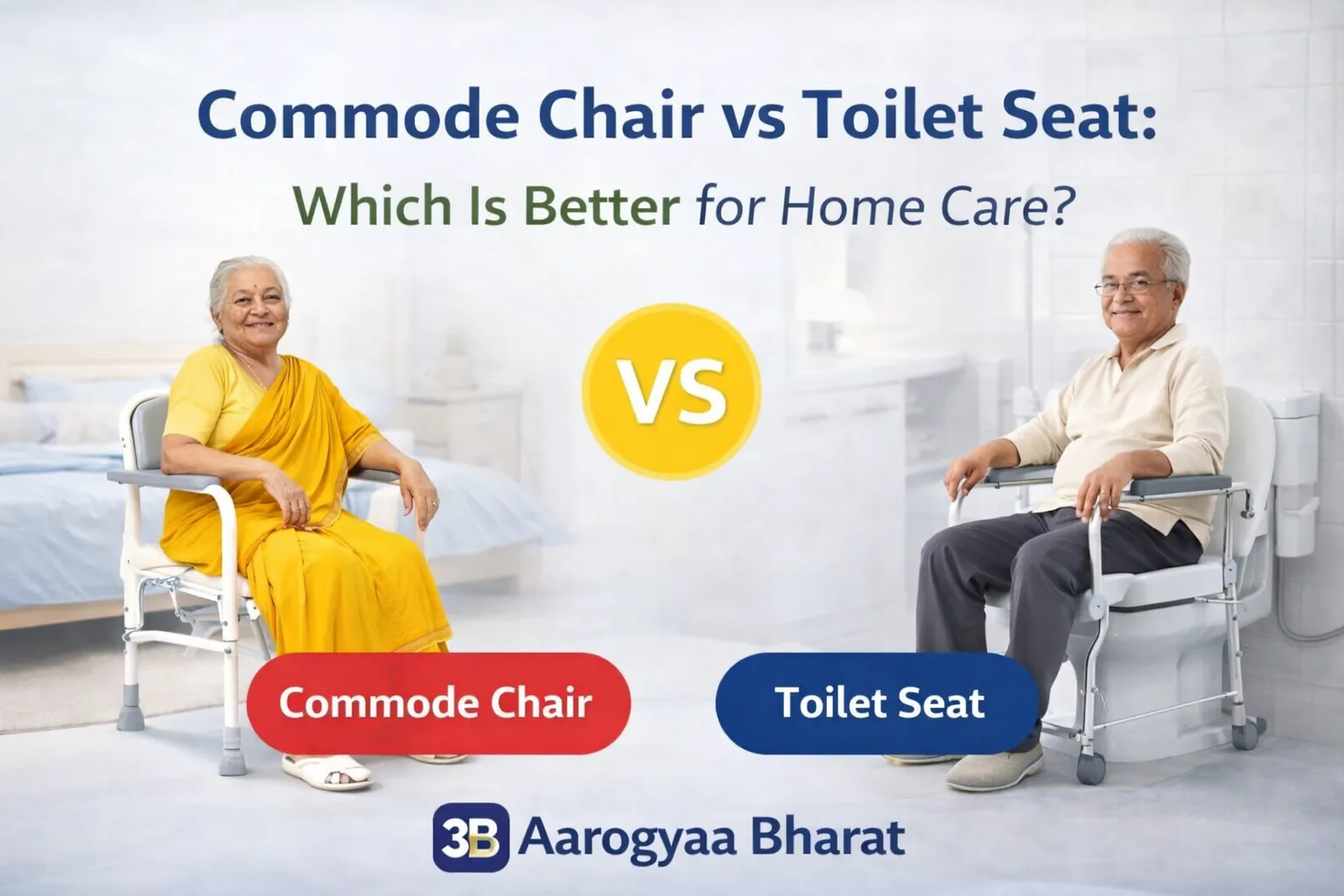
Understanding the Core Difference
- A toilet seat attachment assumes one critical thing:
- The person can reach the bathroom safely.
- A commode chair assumes something very different:
- The person should not be forced to walk to the bathroom at all.
- This single difference defines which option works—and which becomes dangerous.
What a Toilet Seat Is Really Designed For
A toilet seat (raised seat or toilet seat with handles) is
designed for people who:
- Can
walk independently or with minimal support
- Have
reasonable balance
- Only struggle with sitting down or standing up
- Use
the bathroom during daytime mostly
It is an assistive aid, not a mobility solution.
In other words, a toilet seat helps once you are already
at the toilet.
What a Commode Chair Is Actually Solving
A commode chair is designed for people who:
- Cannot
walk safely to the bathroom
- Are
at risk of falling during transfers
- Need
night-time toileting support
- Are
weak, post-surgery, elderly, or bedridden
It solves the entire journey, not just the sitting
part.
A commode chair brings the toilet to the person,
instead of forcing the person to reach the toilet.
The Hidden Risk of Choosing a Toilet Seat Too Early
Many families start with a toilet seat because:
- It
is cheaper
- It
feels less “medical”
- It
looks like a small change
But problems often appear within weeks.
What Actually Happens in Real Homes
- The
elderly person hesitates to walk to the bathroom
- Night-time
trips become risky
- Slippery
floors increase fall risk
- Caregivers
must constantly assist
Eventually, families realise:
“We should have bought a commode chair earlier.”
The delay often leads to:
- Falls
- Loss
of confidence
- Fear
of toileting
- Increased
dependence
Mobility Level: The Most Important Deciding Factor
Forget product categories for a moment.
The real question is:
Can the person walk to the bathroom safely, every time,
including at night?
- If the answer is YES
A toilet seat may be enough for now.
- If the answer is NO or SOMETIMES
A commode chair is clearly the safer option.
“SOMETIMES” is especially dangerous. Most accidents happen
during:
- Fatigue
- Night-time
- Urgency
- Dizziness
Night-Time Toileting: Where the Difference Becomes
Obvious
This is where commode chairs clearly outperform toilet
seats.
At night:
- Lighting
is low
- Balance
is poor
- Urgency
is high
- Caregivers
may be asleep
A toilet seat still requires:
- Walking
- Turning
- Bathroom
entry
A commode chair:
- Sits
beside the bed
- Requires
minimal movement
- Reduces
falls dramatically
For elderly individuals, night-time safety alone
justifies a commode chair.
Bathroom Design in Indian Homes
Most Indian bathrooms:
- Are
small
- Have
wet floors
- Are
not wheelchair-friendly
- Have
Indian or Western hybrid layouts
Toilet seats often:
- Do
not fit perfectly
- Shift
if not installed properly
- Lack
space for caregiver assistance
Commode chairs:
- Work
in bedrooms
- Do
not depend on bathroom layout
- Offer
flexibility
This is why commode chairs are more practical for Indian
homes.
Dignity & Emotional Comfort: A Factor People Avoid
Talking About
Toileting is deeply personal.
Many elderly people feel:
- Embarrassed
asking for help
- Anxious
about falling
- Ashamed
of accidents
A commode chair:
- Allows
privacy
- Reduces
dependence
- Restores
confidence
A toilet seat often still requires:
- Escorting
- Standing
support
- Physical
assistance
In long-term care, emotional dignity matters as much as
physical safety.
Caregiver Perspective: Which Option Is Easier?
Caregivers often report:
With Toilet Seats
- More
lifting
- More
walking support
- Higher
back strain
- Constant
supervision
With Commode Chairs
- Less
lifting
- Easier
positioning
- Safer
assistance
- Reduced
fatigue
Over months, this difference becomes enormous.
Cost Comparison: Short-Term vs Long-Term Thinking
Yes, toilet seats are cheaper upfront.
But long-term costs include:
- Increased
fall risk
- Possible
injuries
- Emergency
care
- Caregiver
burnout
Commode chairs cost more initially, but:
- Reduce
accidents
- Reduce
caregiver strain
- Last
for years
True cost is measured in safety and peace of mind,
not just rupees.
When a Toilet Seat Actually Makes Sense
To be fair, toilet seats are useful when used correctly.
They are suitable when:
- The
user is mobile
- Balance
is stable
- Bathroom
access is safe
- Usage
is temporary
Examples:
- Early
arthritis
- Minor
surgery recovery
- Younger
mobility-restricted users
Even then, reassessment is important as conditions change.
When a Commode Chair Is Clearly the Better Choice
A commode chair is the better option when:
- The
person is elderly
- There
is fall risk
- Night-time
toileting is frequent
- Caregiver
assistance is limited
- Long-term
care is expected
In most elderly home-care situations, a commode chair is
the safer, more humane choice.
A Practical Rule Used by Home-Care Experts
If safety depends on “being careful,” the setup is not
safe enough.
Toilet seats rely on caution.
Commode chairs rely on design.
That is a critical difference.
Why Aarogyaa Bharat Recommends Needs-Based Selection
At Aarogyaa Bharat – Live Healthy, Live Better, we
never recommend products blindly.
We consider:
- Age
- Mobility
- Home
layout
- Caregiver
availability
- Long-term
prognosis
In many cases, families start with toilet seats and later
shift to commode chairs. We help them make the right choice at the right
time.
Final Verdict: Commode Chair vs Toilet Seat — Which Is
Better?
There is no one-size-fits-all answer.
But for elderly care at home, the conclusion is
clear:
- Toilet
seats are suitable for mild, temporary mobility issues
- Commode
chairs are safer, more reliable, and more dignified for elderly and
long-term care
If there is any doubt about safety, the commode chair
is the better choice.