Because nebulizers are often used multiple times per day for weeks, months, or even years, many families worry whether daily nebulizer use is truly safe, whether it can damage the lungs, cause dependency, or lead to long-term side effects. Some patients also struggle with confusion about correct dosage, hygiene practices, device maintenance, medication compatibility, and whether frequent nebulization weakens the lungs over time. The truth is that daily nebulizer use is medically safe when done correctly under a doctor’s guidance, using prescribed medications, proper cleaning routines, and a reliable nebulizer machine. However, incorrect usage habits, poor hygiene, overuse of certain medicines, and low-quality devices can create health risks that are often misunderstood as “nebulizer side effects.” This comprehensive guide by Aarogyaa Bharat explains in deep practical detail whether daily nebulizer use is safe, who actually needs daily nebulization, which medicines are safe for regular use, how nebulizers work, how to choose the right machine, how to use it correctly at home, what safety rules to follow, what risks to avoid, how to clean and maintain the device, and how to build a long-term nebulization plan that protects both lung health and overall well-being.
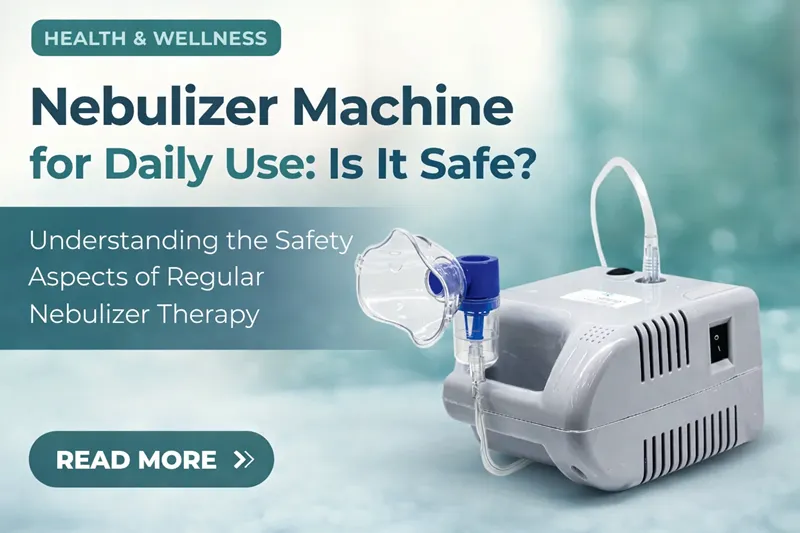
What Is a Nebulizer Machine and How Does It Work
A nebulizer machine is a medical device designed to convert
liquid medication into a fine aerosol mist that can be inhaled directly into
the lungs through a mouthpiece or face mask. It works by using either
compressed air, ultrasonic vibrations, or mesh technology to break medication
into microscopic droplets that can travel deep into the bronchial tubes and
alveoli, where they act quickly to reduce inflammation, open airways, loosen
mucus, and fight infection. For daily users, nebulizers provide a major advantage over
inhalers because they do not require precise breathing coordination, making
them ideal for children, elderly patients, bedridden individuals, and people
with severe breathlessness. Nebulizers also deliver higher medication doses
more evenly across the lungs, which is particularly important for chronic
conditions that require sustained drug levels for symptom control. The safety of daily nebulizer use depends heavily on three
factors: the type of medication used, the frequency of use, and the cleanliness
and quality of the nebulizer machine itself.
Who Needs Daily Nebulizer Therapy
Not every respiratory patient requires daily nebulization,
but for certain medical conditions, it becomes an essential part of long-term
disease management rather than an emergency treatment.
Patients with moderate to severe asthma often use daily
nebulized bronchodilators and corticosteroids to keep airways open and prevent
flare-ups. COPD patients rely on daily nebulization to reduce breathlessness,
control mucus production, and improve lung function. Individuals with chronic
bronchitis, bronchiectasis, and pulmonary fibrosis may need daily nebulized
medications to manage inflammation and airway obstruction.
Post-COVID lung patients frequently require daily
nebulization during recovery to heal inflamed lung tissue and restore breathing
capacity. Children with recurrent wheezing, respiratory infections, or
congenital lung conditions often use nebulizers daily under paediatric
supervision. Elderly patients with weak inhalation strength also benefit from
daily nebulization for consistent medication delivery.
For these patient groups, daily nebulizer use is not only
safe but medically necessary to prevent disease progression, reduce hospital
visits, and improve quality of life.
Is It Safe to Use a Nebulizer Every Day
Daily nebulizer use is considered medically safe when the
treatment plan is prescribed and monitored by a doctor, medications are used
correctly, and the device is maintained hygienically. Nebulizers themselves do not harm the lungs. They are simply
delivery systems that transport medication into the respiratory tract. Any
potential risk comes from improper medication dosing, overuse of
bronchodilators, contamination of nebulizer parts, or ignoring cleaning and
maintenance routines. Many patients worldwide use nebulizers multiple times per
day for decades without long-term lung damage when therapy is properly managed.
In fact, daily nebulization often prevents lung deterioration by reducing
chronic inflammation, keeping airways open, and improving oxygen exchange. The key to safety lies in responsible use rather than fear
of frequency.
Which Medications Are Safe for Daily Nebulizer Use
Not all nebulized medicines are meant for daily long-term
use, and this is one of the most misunderstood aspects of nebulizer therapy. Bronchodilators such as salbutamol, Levo salbutamol, and
ipratropium are commonly prescribed for daily or regular use to relax airway
muscles and relieve breathlessness. Inhaled corticosteroids such as budesonide
are often used daily to control inflammation in asthma and COPD patients.
Mucolytics such as acetylcysteine are used daily to thin mucus and improve
airway clearance in chronic bronchitis and bronchiectasis. Antibiotics and strong steroids are usually prescribed only
for short-term courses and should not be used daily unless specifically
directed by a doctor. Overuse of bronchodilators without proper medical
supervision can lead to heart palpitations, tremors, dependency, and reduced
drug effectiveness over time.
Using only doctor-prescribed medication at the correct
dosage is the single most important rule for safe daily nebulization.
Benefits of Daily Nebulizer Therapy
Daily nebulizer therapy offers multiple long-term health
benefits for patients with chronic respiratory disease. It provides consistent symptom control by maintaining open
airways and reducing inflammation. It improves lung function by delivering
medication deep into the respiratory tract. It reduces the frequency of acute
attacks, flare-ups, and hospital admissions. It enhances exercise tolerance,
sleep quality, and overall energy levels. It supports faster recovery from
infections and lung injuries. For many patients, daily nebulization transforms breathing
from a constant struggle into a manageable routine, allowing them to lead more
active, independent lives.
Risks and Side Effects of Improper Daily Nebulizer Use
While nebulizers are safe, improper use can create avoidable
risks that are often wrongly blamed on the machine itself. Overuse of bronchodilators can cause heart palpitations,
tremors, anxiety, and reduced drug effectiveness. Using contaminated nebulizer
parts can introduce bacteria and fungi into the lungs, leading to repeated
respiratory infections. Using incorrect medication doses can cause steroid side
effects, throat irritation, and voice changes. Poor-quality machines can
deliver inconsistent particle sizes, reduce treatment effectiveness and
increase lung irritation. These risks are not caused by daily use itself but by
incorrect usage habits and poor maintenance.
How to Use a Nebulizer Safely Every Day
Safe daily nebulizer use follows a structured routine that
prioritizes accuracy, hygiene, and consistency. Always wash hands before preparing medication. Use only
sterile saline or prescribed medication ampoules. Measure medication doses
accurately and never mix drugs without medical advice. Sit upright during
nebulization and breathe slowly and deeply. Continue treatment until the mist
stops completely. Rinse the mouth after steroid nebulization to prevent fungal
infections. Daily use becomes safer and more effective when it follows
the same disciplined routine every time.
Cleaning and Maintenance Rules for Daily Users
- Cleaning is the most critical safety factor for people who use nebulizers every day.
- After every session, the nebulizer cup, mask, and mouthpiece should be rinsed with warm water and air-dried. Once daily, these parts should be washed with mild soap and water. At least twice a week, parts should be disinfected by boiling (if permitted by the manufacturer) or soaking in a recommended disinfectant solution.
- Air filters in compressor nebulizers should be cleaned or replaced regularly. Mesh nebulizers require special care to avoid damaging the delicate mesh plate.
- A dirty nebulizer is far more dangerous than daily nebulizer use itself.
Choosing the Right Nebulizer for Daily Use
- Not all nebulizers are designed for heavy daily usage, and choosing the wrong model can compromise safety and comfort.
- Compressor nebulizers are durable, affordable, and ideal for daily long-term use at home. Ultrasonic nebulizers are quieter but may not be compatible with all medications. Mesh nebulizers are portable and efficient but require careful maintenance.
- Key features to look for include low noise level, consistent particle size delivery, fast nebulization time, easy-to-clean parts, durable motor, warranty coverage, and service availability.
Nebulizer vs Inhaler for Daily Therapy
|
Feature |
Nebulizer |
Inhaler |
|
Ease of Use |
Very easy |
Requires
coordination |
|
Drug Delivery |
High |
Moderate |
|
Suitable for
Children/Elderly |
Yes |
Often
difficult |
|
Treatment
Time |
Longer |
Very fast |
|
Daily Use
Safety |
High |
High |
|
Cost |
Moderate |
Low |
|
Maintenance |
High |
Low |
Why Aarogyaa Bharat Recommends Nebulizers for Daily Home
Care
At Aarogyaa Bharat, we believe that daily nebulizer therapy
should be safe, comfortable, and medically effective rather than stressful or
confusing. We recommend high-quality nebulizer machines with consistent
drug delivery, easy cleaning, low noise operation, and strong service support.
We educate families on correct medication use, cleaning routines, and safety
rules to ensure long-term therapy success. Our goal is to help patients breathe better every day with
confidence, dignity, and peace of mind.
Conclusion
Using a nebulizer machine daily is medically safe and often
essential for managing chronic respiratory diseases when done correctly under
medical supervision.
The nebulizer itself does not damage the lungs, but improper
medication use, poor hygiene, and device neglect can create avoidable risks.
With the right machine, correct medications, disciplined
cleaning habits, and regular medical monitoring, daily nebulization can
dramatically improve breathing, prevent complications, and enhance quality of
life.
Daily nebulizer therapy is not a danger. It is a powerful,
life-improving treatment tool when used responsibly.