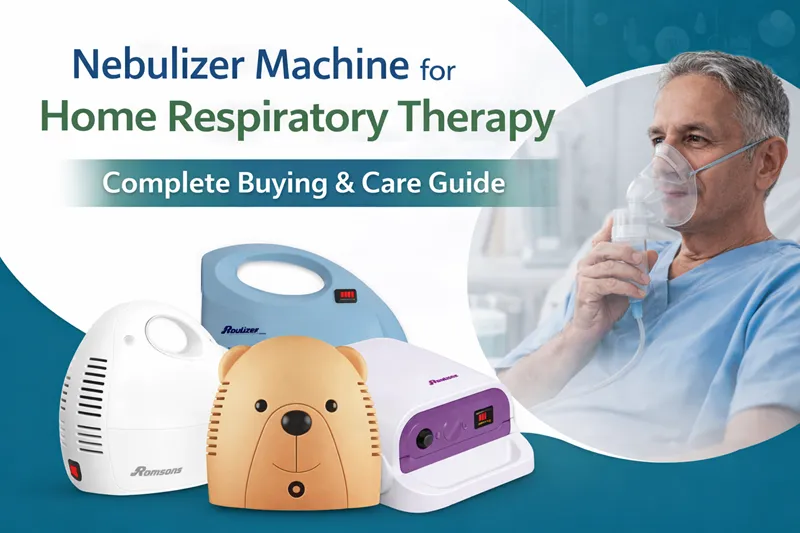
In such situations, a nebulizer machine is not just another medical device sitting in the corner of the room. It becomes an essential part of daily life, delivering medication directly into the lungs in a gentle, effective, and medically precise way. For children who cannot coordinate inhaler use, elderly patients with weak breathing capacity, and individuals experiencing severe respiratory distress, nebulizers offer a safer, easier, and more reliable form of respiratory therapy at home.
This in-depth guide by Aarogyaa Bharat is designed for
patients, caregivers, and families who want clear, medically sound, real-world
guidance. It explains how nebulizer therapy works, who needs it, what types of
machines are available, which technical features matter most, how to use a
nebulizer safely at home, how to clean and maintain it properly, and how to
plan long-term respiratory care. Whether you are buying your first nebulizer or
upgrading an existing one, this article will help you make a confident,
future-ready decision.
Understanding Home Respiratory Therapy and Why Nebulizers
Matter
Home respiratory therapy refers to the use of medical
treatments and devices to manage breathing problems outside a hospital setting.
Instead of visiting emergency rooms or clinics repeatedly for breathing
treatments, patients can receive consistent therapy at home in a controlled,
familiar environment.
A nebulizer machine plays a central role in this process. It
converts liquid medication into a fine mist that can be inhaled deep into the
lungs. This mist delivers medication directly to the airways, allowing it to
act quickly and locally. Unlike oral medications that must pass through the
digestive system or inhalers that require precise timing and strong inhalation
effort, nebulizers work passively. The patient simply breathes normally through
a mouthpiece or face mask.
This makes nebulizers especially valuable for:
- Young
children who cannot use inhalers properly
- Elderly
patients with weak lung function
- People
experiencing severe breathlessness
- Patients
with neurological or physical disabilities
- Individuals
recovering from serious respiratory infections
- Post-COVID
patients with persistent lung inflammation
Nebulizers are widely prescribed for asthma, COPD,
bronchitis, bronchiolitis, pneumonia, cystic fibrosis, allergic airway
inflammation, sinusitis, and post-viral respiratory complications. In all these
conditions, home nebulizer therapy reduces emergency hospital visits, improves
medication compliance, and provides faster relief during respiratory flare-ups.
How a Nebulizer Machine Works: The Science Made Simple
A nebulizer machine consists of three main components:
- A
compressor or power unit
- A
nebulizer cup that holds liquid medication
- An
air delivery system that includes tubing, a mouthpiece, or a face mask
When the machine is switched on, the compressor generates
airflow. This airflow passes through the nebulizer cup containing the liquid
medicine. The high-speed air brakes the liquid into microscopic droplets,
forming a fine aerosol mist. This mist then travels through the tubing and
exits through the mouthpiece or mask, where the patient inhales it into the
lungs.
The tiny size of these droplets (usually between one and
five microns) allows the medication to reach deep into the bronchial tubes and
alveoli. This direct lung delivery ensures faster action, better absorption,
and fewer systemic side effects compared to oral medication.
For patients experiencing acute breathing difficulty, this
rapid and targeted action can be life-saving.
Who Needs a Nebulizer Machine at Home
A nebulizer machine is not only for severe asthma cases. It
is useful for a wide range of respiratory conditions and patient groups.
People with asthma often use nebulizers during acute attacks
or when inhalers fail to provide sufficient relief. Patients with COPD and
chronic bronchitis rely on nebulizers for bronchodilator and steroid
medications that help open airways and reduce inflammation. Children with
bronchiolitis or recurrent wheezing benefit from nebulizer therapy because they
cannot use inhalers properly. Elderly patients with weak breathing capacity
find nebulizers easier and less physically demanding than handheld inhalers. Post-COVID
patients with persistent cough, breathlessness, and mucus buildup use
nebulizers to deliver anti-inflammatory and mucus-thinning medications.
Individuals with cystic fibrosis depend on nebulizers for daily airway
clearance therapy.
In all these cases, having a nebulizer at home ensures
faster relief, fewer hospital visits, better symptom control, and improved
long-term outcomes.
Types of Nebulizer Machines for Home Use
Not all nebulizers are the same. Choosing the right type
depends on medical needs, noise sensitivity, portability requirements,
medication type, and budget.
Compressor (Jet) Nebulizers
Compressor nebulizers are the most commonly used type for
home respiratory therapy. They use compressed air to convert medication into
mist. These machines are highly durable, affordable, and compatible with a wide
range of medications, including bronchodilators, steroids, antibiotics, and
saline solutions.
Jet nebulizers are ideal for long-term home use, children,
elderly patients, and individuals with chronic respiratory diseases. However,
they are larger and noisier compared to other types.
Ultrasonic Nebulizers
Ultrasonic nebulizers use high-frequency sound waves to
create mist. They are quieter and faster than compressor models, making them
suitable for nighttime use or noise-sensitive environments.
However, ultrasonic nebulizers are not compatible with all
medications, particularly thicker suspensions. They are also more expensive
than jet nebulizers.
Mesh Nebulizers
Mesh nebulizers use a vibrating mesh membrane with
microscopic holes to produce fine aerosol mist. These machines are compact,
lightweight, battery-operated, and extremely quiet.
Mesh nebulizers are ideal for travel, paediatric use, and
patients who require therapy outside the home. They are more expensive and
require careful cleaning to prevent mesh blockage.
Key Features to Look for in a Home Nebulizer Machine
Choosing the right nebulizer involves more than just picking
a popular brand. Certain technical and practical features directly affect
therapy effectiveness and daily convenience.
Medication Compatibility
Ensure the nebulizer supports the medications prescribed by
your doctor. Some medications are only compatible with jet nebulizers and not
ultrasonic or mesh models.
Particle Size Output
Effective nebulizers produce mist particles between one and
five microns. This size range allows medication to reach deep into the lungs
rather than settling in the throat.
Nebulization Speed
Faster nebulization means shorter treatment sessions, which
improves patient compliance, especially for children and elderly users.
Noise Level
Low-noise models are ideal for nighttime therapy and
paediatric use. Look for machines with noise levels below fifty decibels.
Portability
If therapy is required outside the home, choose a compact,
lightweight, or battery-operated model.
Ease of Cleaning
Nebulizers require regular cleaning to prevent bacterial
growth. Choose models with simple, detachable parts for easy maintenance.
Warranty and Service Support
Always select a nebulizer brand with reliable service
support and easy availability of spare parts in your region.
Comparison Table: Types of Nebulizers for Home Use
|
Feature |
Compressor
Nebulizer |
Ultrasonic
Nebulizer |
Mesh
Nebulizer |
|
Noise Level |
Moderate to
high |
Low |
Very low |
|
Portability |
Low |
Moderate |
High |
|
Medication
Compatibility |
High |
Moderate |
High |
|
Nebulization
Speed |
Moderate |
Fast |
Fast |
|
Cost |
Low |
Medium |
High |
|
Maintenance |
Easy |
Moderate |
Delicate |
How to Use a Nebulizer Machine Correctly at Home
Proper usage ensures effective therapy and reduces side
effects. Always wash your hands thoroughly before handling medication. Assemble
the nebulizer cup, tubing, and mouthpiece or mask. Add the prescribed dose of
medication to the nebulizer cup. Connect the tubing to the compressor and
nebulizer cup. Turn on the machine and place the mouthpiece in your mouth or
secure the mask over your nose and mouth.
Breathe slowly and deeply until the medication is completely
used up, which usually takes five to fifteen minutes. Avoid talking during
therapy to ensure optimal medication delivery.
After treatment, turn off the machine, disassemble the
parts, and clean them according to the manufacturer’s instructions.
Important Safety Guidelines for Nebulizer Therapy
Always use only medications prescribed by your doctor. Do
not mix medications unless instructed. Never share nebulizer parts between
patients to prevent cross-infection.
Keep the machine away from water and heat sources. Use a
voltage stabilizer if power fluctuations are common. Replace filters and tubing
as recommended.
Monitor symptoms closely. If breathing difficulty worsens or
side effects occur, seek medical attention immediately.
Cleaning and Maintenance Routine
Clean the nebulizer cup, mask, and mouthpiece after every
use using warm soapy water. Rinse thoroughly and air dry. Disinfect parts
weekly by soaking in a vinegar-water solution or using a manufacturer-approved
disinfectant.
Wipe the compressor unit with a dry cloth. Replace air
filters periodically. Regular maintenance ensures long device life and safe
therapy.
Renting vs Buying a Nebulizer Machine
Renting
Renting is ideal for short-term therapy, post-infection
recovery, or trial use before purchase.
Buying
Buying is better for long-term or chronic respiratory
conditions. Ownership offers cost savings, hygiene control, and daily
availability.
Why Aarogyaa Bharat Is Trusted for Home Respiratory
Solutions
At Aarogyaa Bharat, we understand that choosing a nebulizer
machine is a medical decision, not just a product purchase. We guide families
based on diagnosis, medication type, patient age, noise sensitivity,
portability needs, and long-term therapy planning.
Our focus is on safety, comfort, service reliability, and
real-world usability.
Conclusion
A nebulizer machine for home respiratory therapy is not just
a device. It is a foundation for daily breathing comfort, disease stability,
and emergency preparedness. The right nebulizer can reduce hospital visits,
improve medication effectiveness, and significantly enhance quality of life.
Choosing a medically appropriate, reliable, and easy-to-use
nebulizer is one of the most important decisions for any respiratory patient or
caregiver.
With expert guidance and the right equipment, home respiratory therapy can be safe, effective, and stress-free.