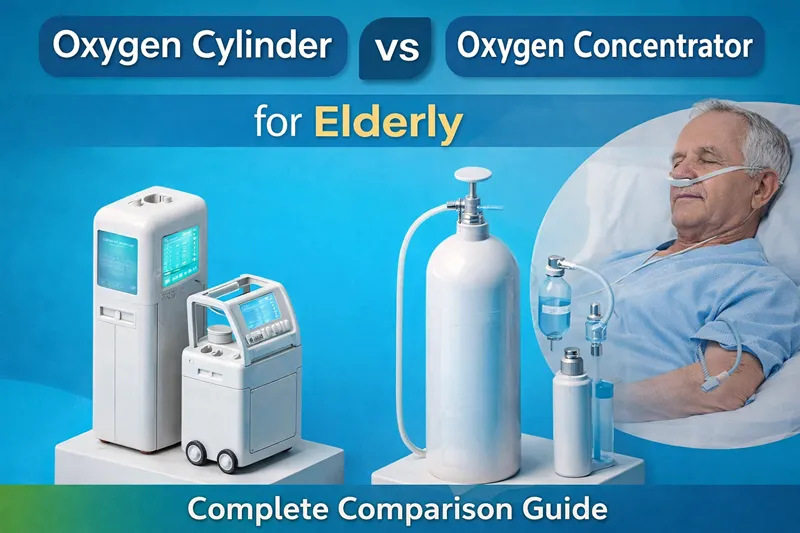
For millions of elderly
individuals in India, respiratory conditions such as COPD, asthma, pulmonary
fibrosis, heart failure, post-COVID lung damage, pneumonia, interstitial lung
disease, and post-stroke breathing weakness make oxygen therapy a daily medical
necessity rather than a temporary support measure. For families and caregivers, one of the most emotionally
stressful and medically critical decisions is choosing between an oxygen
cylinder and an oxygen concentrator. While both devices deliver supplemental
oxygen, they function very differently and offer very different levels of
safety, reliability, long-term affordability, convenience, and emergency
preparedness. For elderly patients especially those who are weak,
bedridden, cognitively impaired, or living with chronic respiratory conditions
this choice is not just technical. It directly affects quality of life,
caregiver workload, emotional stress, nighttime safety, emergency readiness,
and even survival. This in-depth guide by Aarogyaa Bharat goes far beyond
surface-level comparisons. It explains in detail how oxygen cylinders and
concentrators work, how aging lungs change oxygen needs, the medical risks
associated with each system, real-world caregiver challenges, long-term cost
implications, safety hazards, power backup planning, and which option is best
for different types of senior patients. Whether you are arranging home oxygen
therapy for the first time or planning a permanent care setup, this guide will
help you make a confident, medically sound, future-ready decision.
Why Elderly Patients Commonly Need Oxygen Therapy
Oxygen therapy is prescribed when a patient’s blood oxygen
saturation (SpO₂) consistently falls below safe levels, typically below ninety
to ninety-two percent. In elderly individuals, oxygen deficiency can develop
slowly and silently, often going unnoticed until it causes serious
complications. Several age-related factors contribute to low oxygen levels
in seniors. Lung tissue loses elasticity over time, making it harder for the
lungs to expand fully. Respiratory muscles weaken, reducing breathing
efficiency. The immune system becomes less effective, increasing vulnerability
to infections such as pneumonia and bronchitis. Chronic diseases accumulate,
each placing additional strain on the respiratory and cardiovascular systems. Common medical reasons elderly patients require oxygen
therapy include chronic obstructive pulmonary disease, pulmonary fibrosis,
bronchiectasis, heart failure, pulmonary hypertension, post-stroke respiratory
weakness, advanced asthma, post-tuberculosis lung damage, long COVID-related
lung injury, neuromuscular disorders, and age-related respiratory muscle
decline. Chronic hypoxemia does not only cause breathlessness. It
places continuous stress on the heart, increasing the risk of arrhythmias,
heart failure, and sudden cardiac events. It worsens memory and confusion,
increases fall risk, weakens immunity, slows wound healing, and accelerates
overall physical decline. For many elderly patients, oxygen therapy becomes a
long-term or lifelong requirement. This makes the choice of oxygen delivery
system a life-impacting medical decision rather than a simple equipment
purchase.
How Oxygen Cylinders Work: The Traditional Approach
An oxygen cylinder is a heavy metal tank filled with
compressed medical-grade oxygen gas. When the valve is opened, oxygen flows out
through a regulator and is delivered to the patient via a nasal cannula or
oxygen mask. Oxygen cylinders are available in various sizes, ranging
from small portable cylinders for travel and emergencies to large stationary
tanks for home use. Each cylinder contains a fixed amount of oxygen. Once the
oxygen is depleted, the cylinder must be replaced or refilled by a supplier. For decades, oxygen cylinders were the standard method for
home oxygen therapy. Even today, they are still widely used in hospitals,
ambulances, and short-term home care scenarios.
However, for long-term elderly care, cylinders come with
several serious limitations that are often underestimated at the time of
purchase.
How Oxygen Concentrators Work: The Modern Solution
An oxygen concentrator is an electrically powered medical
device that draws in surrounding air, filters out nitrogen using molecular
sieve technology, and delivers concentrated oxygen to the patient. Unlike cylinders, concentrators do not store oxygen. They
generate oxygen continuously as long as there is electricity. This means there
is no risk of running out of oxygen unexpectedly, provided there is a stable
power supply.
There are two main types of concentrators:
- Stationary
(home) oxygen concentrators, designed for continuous long-term use
- Portable
oxygen concentrators, designed for mobility and travel
For elderly patients who require oxygen therapy at home for
many hours per day, stationary concentrators are generally the preferred and
medically recommended option.
The Fundamental Differences That Truly Matter for Elderly
Care
Although both systems deliver oxygen, their real-world
performance differs dramatically when used for elderly care.
Oxygen cylinders provide a fixed amount of oxygen and will
inevitably run out. This creates a constant risk of therapy interruption, which
can be life-threatening for seniors who depend on continuous oxygen. Oxygen
concentrators provide an unlimited oxygen supply as long as electricity is
available.
Cylinders require frequent refills or replacements, which
can be physically difficult and emotionally stressful for caregivers.
Concentrators eliminate refill dependency. Cylinders pose higher safety risks due to high-pressure gas
storage and fire hazards. Concentrators operate at low pressure and are
generally safer. Cylinders have lower upfront cost but much higher long-term
cost. Concentrators cost more initially but are far more economical over time. Cylinders require heavy lifting, careful storage, and
physical handling. Concentrators are designed for easy home use and minimal
physical strain.
Comparison Table: Oxygen Cylinder vs Oxygen Concentrator
for Elderly
|
Feature |
Oxygen
Cylinder |
Oxygen
Concentrator |
|
Oxygen Supply |
Limited, runs
out |
Unlimited
with power |
|
Refill
Requirement |
Frequent |
None |
|
Safety Risk |
High pressure
gas |
Low |
|
Long-Term
Cost |
Very high |
Much lower |
|
Ease of Use |
Moderate |
Very easy |
|
Emergency
Readiness |
Low to
moderate |
High (with
backup) |
|
Caregiver
Stress |
High |
Low |
|
Portability |
High |
Moderate |
|
Noise Level |
Silent |
Low noise |
|
Power
Dependency |
No |
Yes |
|
Fire Hazard
Risk |
Higher |
Lower |
|
Nighttime
Safety |
Risky |
Safer |
|
Storage Space |
Large |
Compact |
Pros and Cons of Oxygen Cylinders for Elderly Patients
Advantages of Oxygen Cylinders
Oxygen cylinders do not require electricity, making them
useful during power outages. They are easy to transport in small sizes for
short trips or emergency hospital transport. They deliver oxygen instantly
without warm-up time. They are widely available and familiar to most healthcare
providers. They can be kept as a secondary backup even if a concentrator is
used as the primary oxygen source.
Disadvantages of Oxygen Cylinders
Cylinders run out of oxygen, often unexpectedly if usage
increases due to illness or stress. Refilling or replacing cylinders can be
physically difficult for caregivers, especially for elderly spouses or female
family members. Long-term rental or refill costs add up quickly. High-pressure
gas poses safety risks, including leaks, explosions, and fire hazards. Storage
space is required. Cylinders are heavy and difficult to move. There is always
anxiety about supply continuity, especially at night.
For elderly patients who require oxygen for many hours per
day, these disadvantages usually outweigh the benefits.
Pros and Cons of Oxygen Concentrators for Elderly
Patients
Advantages of Oxygen Concentrators
Oxygen concentrators provide continuous oxygen without the
risk of running out. They eliminate the need for refills or cylinder
deliveries. They are safer because they do not store compressed gas. They are
more cost-effective for long-term use. Modern concentrators are quiet, easy to
operate, and designed for home environments. They offer better therapy
continuity for chronic respiratory conditions. Built-in alarms improve safety.
They reduce caregiver workload significantly.
Disadvantages of Oxygen Concentrators
Concentrators require electricity to operate. They may not
be suitable for remote areas with frequent power outages unless paired with a
battery backup or inverter. Initial purchase cost is higher than renting a
cylinder. They require periodic maintenance and filter cleaning.
Despite these drawbacks, concentrators are generally the
preferred option for long-term elderly care.
Which Option Is Safer for Elderly Patients?
Safety is the top priority in elderly care. From a safety
perspective, oxygen concentrators are usually the better choice.
Cylinders carry the risk of leaks, tipping, fire hazards,
and high-pressure accidents. Improper handling or storage can lead to serious
injuries. Concentrators operate at low pressure and include built-in safety
alarms for power failure, overheating, and low oxygen purity.
For seniors with limited mobility, dementia, or poor
coordination, a concentrator reduces the risk of accidental mishandling.
Which Option Is More Cost-Effective in the Long Run?
While oxygen cylinders appear cheaper initially, they become
significantly more expensive over time due to recurring refill or rental
charges. For a patient requiring oxygen daily, monthly cylinder costs can
quickly exceed the one-time cost of a concentrator.
An oxygen concentrator has a higher upfront cost but minimal
ongoing expenses, limited mainly to electricity and periodic maintenance. Over
six to twelve months of continuous use, a concentrator usually becomes the more
economical choice.
Power Backup Planning: A Critical Elderly Care
Requirement
In India, power outages are a common reality. For elderly
patients dependent on oxygen, even a short power cut can become a medical
emergency.
For families using oxygen concentrators, power backup
planning is essential. This may include:
- A
home inverter or UPS system
- A
portable battery pack (for select concentrator models)
- A
small oxygen cylinder as an emergency backup
This hybrid approach provides maximum safety and eliminates
the biggest drawback of concentrators.
Practical Recommendations Based on Elderly Patient Needs
For Short-Term Oxygen Therapy
If the elderly patient needs oxygen for a few days or weeks
after an illness or surgery, renting an oxygen cylinder may be practical.
For Long-Term or Lifelong Oxygen Therapy
For chronic lung disease, heart failure, or permanent
respiratory impairment, an oxygen concentrator is strongly recommended.
For Homes with Frequent Power Cuts
A concentrator paired with an inverter or battery backup is
far safer than relying solely on cylinders.
For Bedridden or Cognitively Impaired Seniors
A stationary oxygen concentrator is the safest and most
reliable choice.
For Travel or Emergency Backup
A small oxygen cylinder can be kept as a secondary backup
even if a concentrator is used as the primary device
Why Aarogyaa Bharat Recommends Oxygen Concentrators for
Elderly Care
At Aarogyaa Bharat, we focus on real-world elderly care
needs rather than just technical specifications. We recommend oxygen
concentrators for most senior patients because they offer superior safety,
lower long-term cost, easier daily management, and uninterrupted therapy.
We help families choose concentrators based on medical
prescription, oxygen flow requirements, home environment, power backup needs,
and long-term care planning. Our goal is to ensure safety, dignity, and peace
of mind for both patients and caregivers.
Conclusion
Choosing between an oxygen cylinder and an oxygen
concentrator for an elderly patient is not just a product decision. It is a
healthcare decision that directly impacts safety, comfort, emergency
preparedness, and long-term quality of life.
For most elderly patients who require ongoing oxygen
therapy, an oxygen concentrator is the safer, more reliable, and more
cost-effective solution. Oxygen cylinders still have a role as emergency
backups or short-term support tools, but they are rarely the best long-term
choice.
With the right equipment, expert guidance, and proper safety
planning, home oxygen therapy for seniors can be safe, effective, and
stress-free.