Why Mobility Support Is Important During Rehabilitation
Rehabilitation is a critical phase of recovery for elderly
individuals who have experienced injuries, surgeries, or long-term illnesses.
During this period, the body gradually rebuilds muscle strength, coordination,
and endurance. Walking is one of the most important rehabilitation activities
because it improves circulation, strengthens muscles, and helps restore
balance. However, patients often experience weakness, dizziness, or joint pain
during early recovery stages. Without proper support, attempting to walk
independently can increase the risk of falls and injuries. Doctors and
physiotherapists listed on Aarogyaa Bharat hospital pages emphasize that
mobility aids such as walkers play a vital role in ensuring safe
rehabilitation. Walkers provide the stability needed to practice walking
exercises while reducing the physical strain on joints and muscles.
What Is a Walking Walker for Assisted Rehabilitation
A walking walker used for assisted rehabilitation is a
mobility aid designed to provide strong support while patients gradually regain
their walking ability. These walkers typically include four legs with non-slip
rubber tips or wheels that allow smooth movement across surfaces. The wide base
of the walker provides excellent balance support, making it easier for patients
to maintain stability during walking exercises. Rehabilitation walkers are
often adjustable so they can be customized according to the user’s height and
posture. Physiotherapists listed on Aarogyaa Bharat hospital pages
frequently recommend walkers for patients recovering from orthopaedic
surgeries, fractures, or neurological conditions. The use of walkers allows
patients to move safely while gradually rebuilding strength and coordination.
Common Medical Conditions That Require Rehabilitation
Walkers
Many medical conditions require rehabilitation programs that
include walker-assisted walking exercises. Patients recovering from knee
replacement or hip replacement surgeries often need walkers during the early
stages of mobility recovery. Stroke survivors frequently experience balance and
coordination challenges that make walkers essential for safe movement.
Individuals recovering from fractures, spinal surgeries, or neurological
disorders also benefit from walker support. Orthopaedic specialists listed on Aarogyaa
Bharat city pages frequently recommend walkers for patients experiencing
muscle weakness, joint instability, or reduced endurance during recovery. By
providing stable support, walkers allow patients to practice walking safely
while gradually regaining independence.
Key Features of Walkers Designed for Rehabilitation
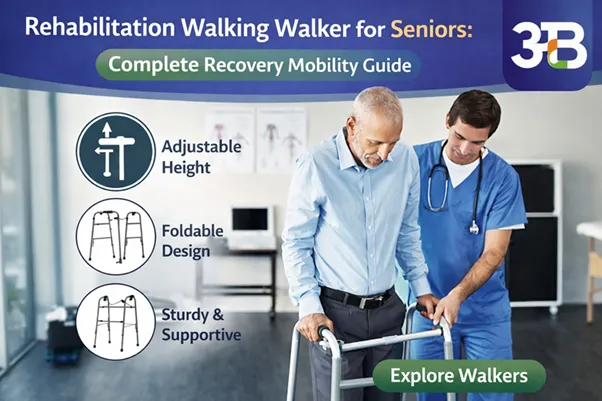
Walkers used for rehabilitation include several features
that enhance safety and comfort during recovery. Lightweight aluminium frames
provide durability while keeping the walker easy to manoeuvre. Adjustable
height handles ensure proper posture alignment during walking exercises.
Non-slip rubber tips provide excellent grip on smooth floors, preventing
accidental slips. Some walkers include front wheels that allow smoother
movement and reduce the need for lifting the walker repeatedly. Ergonomic hand
grips reduce pressure on the wrists and provide comfortable support during
prolonged use. Experts listed on Aarogyaa Bharat hospital pages often
recommend walkers with sturdy frames and adjustable designs to ensure they meet
the needs of rehabilitation patients.
Comparison Between Different Walkers for Rehabilitation
|
Stability
Level |
Movement
Style |
Best Use
Case |
|
|
Standard
Walker |
Very high |
Lift and move |
Early
rehabilitation |
|
Walker with
Wheels |
Moderate |
Smooth
movement |
Indoor
recovery walking |
|
Rollator
Walker |
Moderate |
Rolling
motion |
Later-stage
mobility |
|
Foldable
Walker |
High |
Portable |
Home
rehabilitation |
This comparison helps families choose the most suitable
walker type depending on the patient’s rehabilitation stage.
Benefits of Using Walkers During Rehabilitation
• Provides stable support during walking exercises
• Reduces pressure on injured joints and muscles
• Prevents falls during early recovery stages
• Helps rebuild balance and coordination
• Encourages gradual increase in walking distance
• Supports physiotherapy rehabilitation programs
• Improves confidence during mobility recovery
These benefits highlight why walkers are widely recommended
for rehabilitation patients.
Role of Walkers in Physiotherapy Programs
Physiotherapy programs are designed to restore mobility,
strength, and coordination after injuries or surgeries. Walking exercises form
a major part of these programs because they help rebuild muscle strength and
improve circulation. Walkers provide the stability needed for patients to
perform these exercises safely. Physiotherapists listed on Aarogyaa Bharat
hospital pages often guide patients through structured walking routines
that gradually increase in intensity as recovery progresses. These exercises may
include short-distance walking, posture correction training, and balance
improvement techniques. Walkers allow patients to practice these activities
while maintaining proper support and reducing fall risks.
Tracking Recovery Using Healthcare Calculators
Monitoring rehabilitation progress helps families understand
how mobility improves over time. Aarogyaa Bharat healthcare calculators
allow caregivers to estimate recovery timelines, physiotherapy costs, and
expected mobility milestones. These tools provide insights into walking
endurance improvements and rehabilitation progress. For example, joint
replacement recovery calculators can estimate how long a patient may need
walker support before transitioning to independent walking. By combining
walker-assisted mobility with physiotherapy programs and healthcare
calculators, seniors can follow a structured recovery plan that supports
long-term mobility improvement.
Choosing the Right Walker for Rehabilitation
Selecting the correct walker is essential for ensuring safe
and comfortable rehabilitation. Adjustable walkers are usually recommended
because they allow customization for the user’s height and posture. Lightweight
aluminium frames make walkers easier to manoeuvre during physiotherapy
exercises. Non-slip rubber tips or wheels should be selected depending on the
patient’s mobility level and walking environment. Experts listed on Aarogyaa
Bharat city pages often recommend walkers with ergonomic handles that reduce
wrist strain during prolonged use. Consulting physiotherapists or orthopaedic
specialists before purchasing a walker can help ensure the correct choice.
Where to Buy Reliable Walkers in India
Reliable walkers should always be purchased from trusted
medical equipment providers that follow healthcare safety standards.
Hospital-grade walkers are designed with durable materials and ergonomic
features that support rehabilitation safely. Aarogyaa Bharat provides medically
recommended walkers designed for assisted rehabilitation, home recovery, and
elderly mobility support. With availability across major city pages including
Pune, Mumbai, Delhi, Bangalore, and Hyderabad, Aarogyaa Bharat ensures families
across India can easily access reliable mobility equipment for rehabilitation
care.
Conclusion
Rehabilitation is a critical stage of recovery for elderly individuals recovering from injuries, surgeries, or chronic health conditions. Walking walkers provide essential support that allows patients to practice walking safely while rebuilding strength and balance. These mobility aids help reduce fall risks, improve posture, and support structured physiotherapy programs. When combined with hospital consultations, physiotherapy guidance, and healthcare calculators available through Aarogyaa Bharat, walkers become an essential tool for successful mobility recovery. Choosing the right walker can significantly improve rehabilitation outcomes and help seniors regain independence more confidently