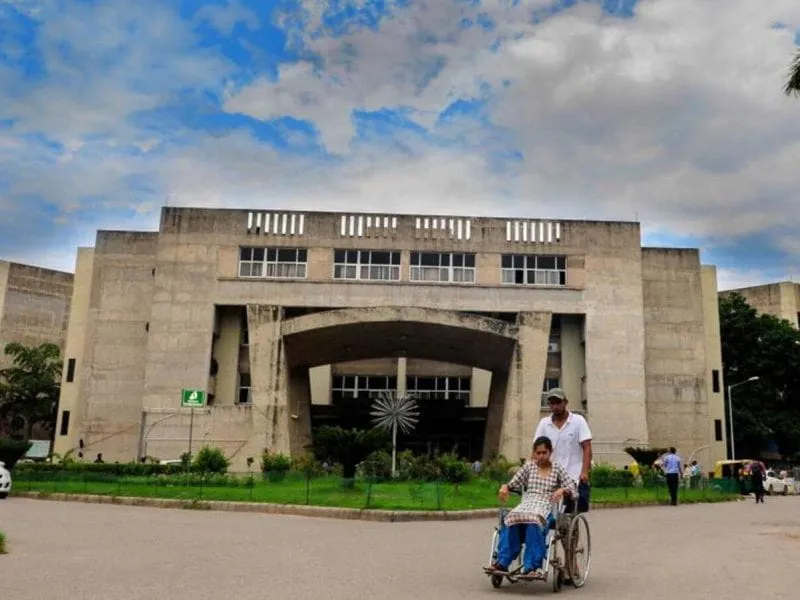
In this comprehensive guide by Aarogyaa Bharat, we present the top 10 government hospitals in India known for:
-
Advanced medical care
-
Teaching & medical research
-
National and international patient trust
-
Affordable and accessible treatment
Whether you are looking for treatment for a serious illness or routine healthcare, this list will help you choose the best government hospital in India based on specialty, infrastructure, and reputation.
Why Choose Government Hospitals in India?
-
Affordable or free treatment under Central & State health schemes
-
Super-specialty services at a fraction of private hospital costs
-
Teaching & research institutions with updated medical protocols
-
Access to Ayushman Bharat, CGHS, EWS & State Insurance Schemes
-
Trusted by millions of patients every year
List of 10 Best Government Hospitals in India
1. All India Institute of Medical Sciences (AIIMS), New Delhi
AIIMS Delhi is widely regarded as the best government hospital in India. Established through an Act of Parliament in 1956, it was envisioned as a center of excellence in medical education, research, and patient care.
Key Highlights
-
Consistently ranked India’s No.1 medical institution
-
Over 600+ research publications annually
-
Leader in national health policy development
-
Houses multiple super-specialty centers for cardiac sciences, neurosciences, oncology & ophthalmology
-
Major contributor during national health emergencies & pandemics
-
Extensive rural health outreach program in Haryana
-
Provides high-volume, low-cost treatment to lakhs of patients daily
2. PGIMER, Chandigarh
The Post Graduate Institute of Medical Education & Research (PGIMER) is an Institute of National Importance and one of India’s most advanced teaching hospitals.
Key Highlights
-
Established in 1962
-
Offers 50+ specialty & super-specialty courses
-
Renowned for research in tuberculosis, malaria, vasculitis, and infectious diseases
-
Ranked among India’s top 3 medical institutions
-
Expanding national footprint with upcoming MBBS programs
-
Massive 277-acre modern campus
3. Safdarjung Hospital, New Delhi
Safdarjung Hospital is one of the largest tertiary government hospitals in India, providing multi-disciplinary care.
Key Highlights
-
Originated during World War II
-
Expanded from 204 to over 1,500 beds
-
Key center for postgraduate medical training
-
Strong departments in medicine, surgery, orthopedics, cardiology & neurosurgery
-
Serves patients from across North India
4. King Edward Memorial (KEM) Hospital, Mumbai
KEM Hospital is one of Mumbai’s most historic and trusted government hospitals.
Key Highlights
-
Established in 1926
-
Treats 18+ lakh OPD & 85,000+ IPD patients annually
-
Houses 390+ senior doctors & 550 resident doctors
-
Pioneer in integrated OPD hospital design
-
Known for virtually free treatment for the underprivileged
-
Offers full-scale medical, surgical & super-specialty care
5. Sanjay Gandhi Postgraduate Institute of Medical Sciences (SGPGIMS), Lucknow
SGPGIMS is among India’s most advanced super-specialty medical institutes.
Key Highlights
-
Commissioned in 1983
-
Houses multiple high-end MRI & CT scanners
-
Leader in cancer care, endocrinology & critical care
-
Pioneered Tele-ICU services in Uttar Pradesh
-
Awarded for Healthcare Innovation & Critical Care Excellence
-
Round-the-clock advanced ICU & organ support facilities
6. Jawaharlal Institute of Postgraduate Medical Education & Research (JIPMER), Puducherry
JIPMER is one of India’s premier medical training and government healthcare centers.
Key Highlights
-
Established in 1823 during the French colonial period
-
Recognized as an Institute of National Importance
-
Ranked consistently among India’s top medical colleges
-
Over 7,100 research publications
-
Strong in undergraduate, postgraduate & super-specialty training
-
Provides high-quality affordable care to South India
7. Tata Memorial Hospital, Mumbai
Tata Memorial Hospital is India’s leading government cancer hospital and a global oncology research center.
Key Highlights
-
Established in 1941
-
Treats 1,20,000+ new cancer patients annually
-
Pioneer in radiation therapy, robotic oncology surgery & cancer research
-
Houses ACTREC – Advanced Cancer Research Center
-
National leader in clinical trials & cancer education
-
Serves as India’s primary oncology referral center
8. Grant Medical College & Sir J.J. Group of Hospitals, Mumbai
One of Asia’s oldest medical education institutions with world-class government healthcare services.
Key Highlights
-
Founded in 1845
-
Among the earliest medical colleges in South Asia
-
Second medical college in India to admit women
-
Major center for free tertiary healthcare for economically weaker sections
-
Offers complete super-specialty & trauma services
-
Produces eminent doctors & academicians
9. Dr. Ram Manohar Lohia Hospital (RML), New Delhi
A major central government hospital with both clinical and academic excellence.
Key Highlights
-
Established in 1932
-
Currently operates with 1,400+ beds
-
Handles 12 lakh OPD visits annually
-
Dedicated CGHS nursing home
-
Performs 50,000+ surgeries each year
-
Attached to Atal Bihari Vajpayee Institute of Medical Sciences
-
Expansion planned to become one of India’s largest hospitals
10. Victoria Hospital, Bengaluru
Victoria Hospital is Karnataka’s oldest and one of India’s major government teaching hospitals.
Key Highlights
-
Established in 1900
-
Affiliated with Bangalore Medical College
-
Offers multi-specialty & super-specialty treatment
-
Houses modern ICUs, trauma blocks & radiotherapy units
-
Over 1,000+ bed capacity
-
Handles major emergency and trauma cases for Karnataka
Conclusion
The best government hospitals in India continue to be a lifeline for millions of patients, delivering high-quality medical care at minimal costs. Institutions like AIIMS, PGIMER, KEM, SGPGIMS, JIPMER, and Tata Memorial stand as pillars of India’s healthcare system—combining advanced medical technology, skilled doctors, strong research, and public service values.
While government hospitals significantly reduce the cost of treatment, certain advanced procedures, prolonged hospital stays, imported medicines, or private referrals may still cause financial stress. In such cases, families can explore:
-
Government health schemes
-
State medical assistance programs
-
Community & medical fundraising platforms
-
NGO & charitable hospital trusts
By combining strong public healthcare infrastructure with financial assistance and community support, patients across India can access life-saving care without overwhelming financial hardship.