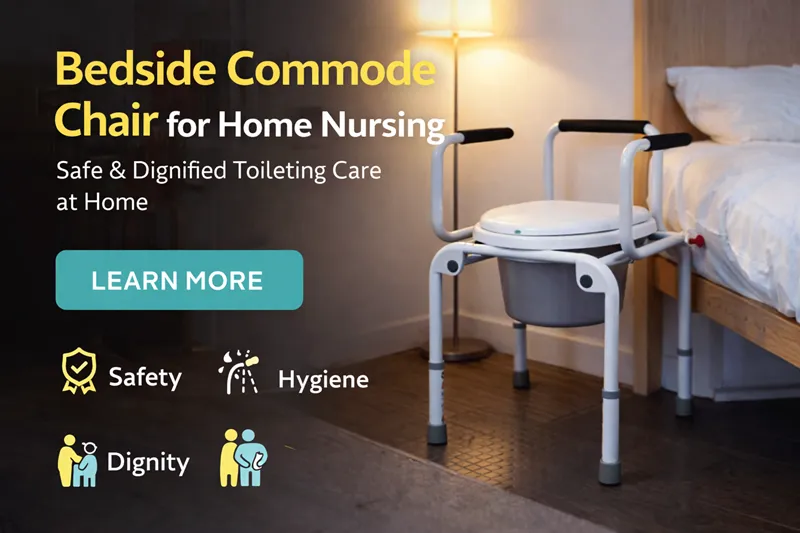
Toileting is one
such activity that carries significant physical risk and emotional stress for
patients and caregivers alike. Individuals receiving home nursing care often
suffer from reduced muscle strength, balance issues, pain, or fatigue caused by
age, surgery, or chronic illness, making bathroom visits unsafe and exhausting.
In Indian homes, bathrooms are frequently located away from bedrooms, require
walking across tiled floors, and may involve steps or narrow spaces that
further increase fall risk. A bedside commode chair eliminates the need for
these risky movements by allowing patients to manage toileting close to the
bed. This single adjustment dramatically reduces accidents, emergency
situations, and anxiety, making it one of the most essential yet underestimated
pieces of home nursing equipment.
Role of Bedside Commode Chairs in Elderly Care at Home
Elderly patients face progressive physical changes such as
joint stiffness, muscle weakness, reduced reflexes, and balance instability,
all of which make walking to the bathroom increasingly dangerous over time. In
home nursing environments, repeated bathroom trips can lead to fear of falling,
resulting in delayed toileting or dependence on caregivers for even basic
needs. A bedside commode chair provides a stable and supportive solution that
allows elderly individuals to sit and stand safely without rushing. This
promotes timely toileting, prevents bladder and bowel complications, and
restores confidence in daily routines. The psychological reassurance provided
by easy access to toileting significantly improves emotional well-being,
reduces anxiety, and helps elderly patients maintain a sense of independence,
which is vital for healthy aging at home.
Supporting Post-Surgery Recovery Through Bedside
Toileting
After surgical procedures such as knee replacement, hip
replacement, spinal surgery, or abdominal operations, patients are advised to
restrict movement to avoid strain on healing tissues. Walking to a bathroom
during this recovery phase can increase pain, disrupt surgical alignment, or
lead to falls due to weakness or dizziness. A bedside commode chair enables
patients to adhere strictly to medical advice by minimising movement while
maintaining proper toileting posture. In home nursing care, this greatly improves
recovery outcomes by reducing complications, lowering pain levels, and
encouraging patients to move only when necessary. It also provides caregivers
with greater control over patient safety during the most vulnerable phase of
recovery.
Enhancing Patient Dignity in Home Nursing Environments
Toileting is deeply personal, and dependence during this
activity can negatively affect a patient’s self-esteem and emotional health.
Many patients feel embarrassed or distressed when they require assistance for
basic bodily needs, especially during prolonged home nursing. A bedside commode
chair restores dignity by allowing patients to manage toileting privately or
with minimal help. This sense of autonomy plays a crucial role in emotional
stability, motivation, and cooperation with care routines. When patients feel
respected and in control, they are more likely to engage positively with their
recovery and long-term care plans, benefiting both physical and mental health.
Preventing Bathroom Falls in Indian Home Settings
Bathrooms are one of the most hazardous spaces in Indian
homes due to wet floors, uneven tiles, inadequate drainage, and lack of safety
fixtures. For patients under home nursing care, these conditions significantly
increase the risk of falls and serious injuries such as fractures or head
trauma. A bedside commode chair removes the need to enter the bathroom
altogether, eliminating one of the biggest daily risks. This preventive
approach reduces emergency hospital visits, long-term disability, and financial
strain on families, making it an essential safety investment rather than an
optional accessory.
Reducing Physical Strain on Home Caregivers
Caregivers often experience physical exhaustion due to
repeated lifting, balancing, and assisting patients during bathroom visits.
Over time, this can lead to back pain, joint injuries, and burnout, reducing
the quality of care provided. A bedside commode chair significantly reduces
caregiver workload by simplifying transfers and minimising physical exertion.
This allows caregivers to conserve energy, focus on medication management and
emotional support, and sustain their own health during long-term caregiving
responsibilities.
Managing Night-Time Toileting Safely and Comfortably
Night-time toileting is particularly dangerous due to low
visibility, drowsiness, urgency, and reduced coordination. Patients may feel
disoriented upon waking, increasing the likelihood of falls. A bedside commode
chair provides immediate access, eliminating the need to navigate dark hallways
or slippery floors. This enhances safety during night hours and reduces anxiety
for both patients and caregivers. Improved night-time safety also supports
better sleep quality, which is essential for recovery and overall health.
Maintaining Hygiene Standards in Home Nursing
Hygiene is a critical aspect of home nursing, especially
when patients have compromised immunity. Bedside commode chairs are designed
with removable buckets that allow easy disposal and thorough cleaning. When
cleaned after every use and disinfected regularly, they maintain high hygiene
standards without contaminating the living space. Aarogyaa Bharat educates
families on proper maintenance practices so that bedside toileting remains
safe, odour-free, and hygienic over long-term use.
Selecting the Right Bedside Commode Chair for Indian
Homes
Choosing the correct bedside commode chair requires careful
evaluation of patient weight, height, mobility level, and bedroom space. Indian
homes often have compact rooms, making size and adjustability essential
considerations. The chair must align with bed height, remain stable on tiled
floors, and support the patient comfortably. Selecting an unsuitable model can
compromise safety and comfort. Aarogyaa Bharat focuses on offering commode
chairs that are specifically suited to Indian home environments and real-world
caregiving needs.
Importance of Adjustable Height for Safe Transfers
Adjustable height plays a crucial role in safe and
comfortable transfers between bed and chair. A chair that is too low places
strain on knees and hips, while one that is too high increases instability.
Height adjustment allows caregivers to customise the chair as the patient’s
mobility improves or declines. This adaptability ensures consistent safety
throughout the home nursing journey, making the chair usable across different
recovery stages.
Role of Armrests and Back Support in Stability
Armrests and back support provide essential balance
assistance for patients with weak muscles or coordination issues. They allow
controlled sitting and standing movements, reducing the risk of sudden
collapse. These features are particularly important for stroke survivors and
paralysis patients undergoing home nursing, as they enable safer independent
use and build confidence during toileting.
Supporting Chronic Illness Management at Home
Patients with chronic conditions such as heart disease,
respiratory disorders, or neurological illnesses often experience fatigue and
limited stamina. Walking even short distances to the bathroom can worsen
symptoms like breathlessness or dizziness. A bedside commode chair conserves
energy and prevents symptom flare-ups. In long-term home nursing, this energy
conservation contributes significantly to comfort, stability, and disease
management.
Psychological Comfort and Emotional Well-Being
Emotional health directly affects physical recovery and
quality of life. Patients who feel safe, independent, and respected are more
likely to engage positively with care routines. Bedside commode chairs reduce
fear, embarrassment, and stress associated with toileting. This psychological
comfort improves mood, cooperation, and long-term care outcomes in home nursing
environments.
Preventing Urinary and Digestive Health Issues
Delaying toileting due to mobility challenges can lead to
urinary tract infections, constipation, and bladder dysfunction. A bedside
commode chair ensures timely access, preventing these secondary health
complications. Preventive care of this nature reduces medical expenses and
improves daily comfort for patients receiving home nursing.
Durability and Long-Term Use in Home Nursing
Home nursing equipment must withstand frequent daily use
without compromising safety. A bedside commode chair should feature a strong
frame, secure joints, and reliable stability components. Durable construction
ensures consistent performance over extended periods, making it a dependable
long-term solution for families managing ongoing care needs.
Integrating Bedside Commode Chairs with Other Care
Equipment
Bedside commode chairs work most effectively when integrated
with hospital beds, walkers, and wheelchairs. Proper placement enhances
accessibility and reduces caregiver effort. A well-organised care environment
improves daily routines and overall comfort for patients receiving home
nursing.
Cost-Effectiveness of Bedside Commode Chairs
Compared to the cost of treating fall-related injuries or
repeated hospital admissions, a bedside commode chair is a highly
cost-effective investment. It reduces emergencies, caregiver injuries, and
long-term complications. For families managing home nursing expenses, this
single product delivers substantial value and peace of mind.
Aarogyaa Bharat’s Commitment to Safe Home Nursing
Aarogyaa Bharat understands the practical challenges faced
by Indian families providing home nursing care. Products are selected based on
safety, usability, and real-world conditions rather than theoretical
specifications. This commitment ensures families receive reliable solutions
that genuinely improve daily care and patient well-being.
Comparison Table: Bedside Commode Chair vs Regular
Bathroom Use
|
Aspect |
Bedside
Commode Chair |
Regular
Bathroom |
|
Distance
required |
Minimal
bedside access |
Often far |
|
Fall risk |
Very low |
High |
|
Night-time
safety |
High |
Low |
|
Caregiver
effort |
Reduced |
High |
|
Hygiene
control |
Easy and
controlled |
Shared space |
|
Patient
dignity |
High |
Often
compromised |
Conclusion: Making Home Nursing Safer, Dignified, and
Sustainable
Home nursing is not just about treatment but about enabling patients to live safely and respectfully within their own homes. A bedside commode chair addresses one of the most critical daily challenges by reducing fall risks, preserving dignity, supporting caregivers, and preventing secondary health complications. In Indian homes, where bathroom safety is often a concern, this equipment becomes an essential component of effective home care. Aarogyaa Bharat remains committed to supporting families with practical, reliable home healthcare solutions that truly improve quality of life.