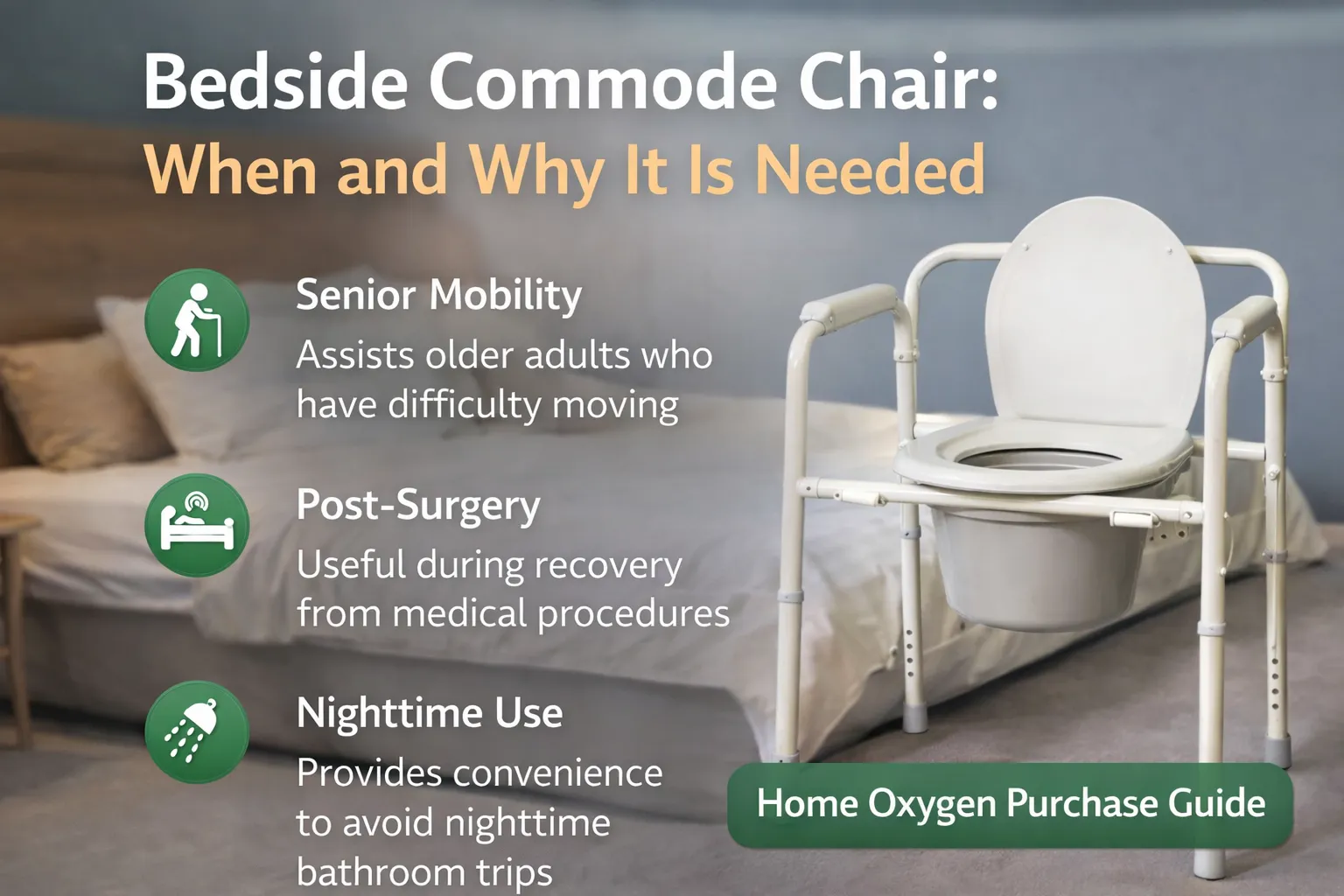
What a Bedside Commode Chair Really Is
A bedside commode chair is not just a toilet chair placed
near a bed.
It is a preventive safety solution designed for situations where walking
to the bathroom is unsafe, painful, or unpredictable.
Unlike regular bathroom aids, a bedside commode chair is
meant to:
- Eliminate
the need for walking altogether
- Reduce
night-time accidents
- Protect
dignity during vulnerable moments
- Reduce
dependence on caregivers
Its importance lies not in how it looks, but in what it prevents.
Why the Distance to the Bathroom Becomes a Problem
For a healthy adult, the distance between the bed and the
bathroom feels insignificant.
For an elderly person or a recovering patient, that same distance can feel
overwhelming.
Common age-related or medical challenges include:
- Weak
knees and hips
- Poor
balance
- Sudden
dizziness on standing
- Joint
stiffness after rest
- Urgency
due to bladder issues
At night, these challenges become more severe due to:
- Low
lighting
- Sleepiness
- Reduced
alertness
- Cold
floors
A bedside commode chair removes this dangerous journey
entirely.
When a Bedside Commode Chair Is Truly Needed
Not every household needs one immediately.
But there are very clear situations where delaying the decision increases
risk.
Elderly Individuals With Balance or Mobility Issues
As people age, balance declines gradually. Many elderly
individuals appear fine during the day but struggle significantly at night or
early morning.
They may:
- Walk
slowly
- Hold
furniture for support
- Hesitate
before standing
- Fear
falling
A bedside commode chair allows them to manage toileting without
testing their balance repeatedly.
For elderly living alone, this can be the difference between
independence and injury.
After Surgery or Hospital Discharge
Post-surgery recovery often brings strict movement
restrictions.
Surgeries such as:
- Hip
or knee replacement
- Spine
surgery
- Abdominal
procedures
make walking painful and unsafe, especially in the first few
weeks.
Doctors may advise limited movement, but toilets are usually
far from bedrooms.
A bedside commode chair:
- Protects
surgical recovery
- Prevents
unnecessary strain
- Reduces
caregiver lifting
- Encourages
faster healing
Bedridden or Semi-Bedridden Patients
For patients recovering from:
- Stroke
- Paralysis
- Severe
illness
- Neurological
conditions
Even transferring to a wheelchair can be exhausting.
A bedside commode chair minimizes movement and allows
toileting with maximum safety and hygiene, without repeated transfers.
Frequent Night-Time Urination
Many elderly experience frequent urination due to:
- Prostate
enlargement
- Diabetes
- Age-related
bladder changes
Each night-time trip to the bathroom increases:
- Fall
risk
- Anxiety
- Sleep
disruption
A bedside commode chair allows quick, safe toileting without
waking the entire household.
Homes With Unsafe Bathroom Access
In many Indian homes:
- Bathrooms
are far from bedrooms
- Floors
become slippery
- Space
is limited
- Lighting
is inadequate
Even with bathroom modifications, night-time access remains
risky.
A bedside commode chair bypasses these limitations
completely.
Why Families Often Delay
Many families hesitate because:
- The
chair feels “too medical”
- They
worry about dignity
- They
hope the condition will improve
Ironically, most families say the same thing after
installing one:
“We should have done this earlier.”
Because once in use, the chair:
- Reduces
stress immediately
- Improves
sleep for everyone
- Restores
confidence to the user
Bedside Commode Chair vs Bathroom Solutions
Bathroom aids help inside the bathroom.
A bedside commode chair helps before the bathroom becomes reachable.
That difference matters most during:
- Emergencies
- Night-time
urgency
- Sudden
weakness
For long-term home care, bedside solutions are often safer
than bathroom-dependent ones.
Safety: The Most Important Reason It Is Needed
Falls are one of the most serious risks in elderly care.
Most falls happen:
- At
night
- While
rushing
- On
the way to the toilet
A bedside commode chair removes the most dangerous part of
the routine—the walk itself.
Dignity and Emotional Well-Being
Toileting is deeply personal.
Needing help every time can lead to:
- Embarrassment
- Anxiety
- Withdrawal
A bedside commode chair allows elderly individuals to:
- Maintain
privacy
- Feel
in control
- Preserve
self-respect
This emotional benefit often improves cooperation and
overall well-being.
Impact on Caregivers
Caregivers often suffer silently from:
- Back
pain
- Sleep
deprivation
- Constant
alertness
A bedside commode chair:
- Reduces
lifting
- Reduces
night-time supervision
- Makes
care sustainable long-term
Good caregiving solutions protect both the patient and
the caregiver.
Where and How It Should Be Used
A bedside commode chair should be:
- Placed
right next to the bed
- On
a flat, non-slippery surface
- Easily
reachable when seated
Additional helpful additions:
- Night
lamp
- Privacy
screen
- Non-slip
mat
With proper care, hygiene is not an issue.
Daily:
- Empty
and clean the bucket
- Use
mild disinfectant
Weekly:
- Check
stability
- Clean
seat thoroughly
Good hygiene keeps the bedroom safe, odor-free, and
comfortable.
Why Aarogyaa Bharat Recommends Early Use
At Aarogyaa Bharat – Live Healthy, Live Better, we
see the same pattern repeatedly:
Early intervention prevents emergencies.
Families who adopt bedside commode chairs early experience:
- Fewer
accidents
- Better
sleep
- Lower
stress
- Greater
confidence
We recommend them not as a last resort, but as preventive
home care equipment.
Conclusion: When and Why a Bedside Commode Chair Is
Needed
A bedside commode chair is needed when:
- Walking
to the bathroom is unsafe
- Night-time
toileting becomes risky
- Elderly
or patients lose confidence
- Caregiving
becomes physically demanding
It is not a sign of decline.
It is a sign of thoughtful, responsible care.
By bringing the toilet closer, you protect:
- Safety
- Dignity
- Comfort
- Peace
of mind
And in home care, those things matter more than anything
else.