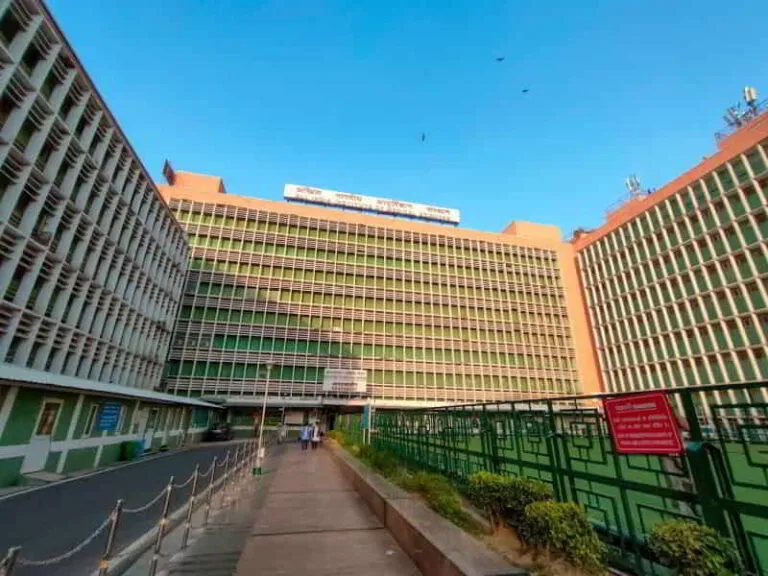
In this guide by Aarogyaa Bharat, we walk you through the top government hospitals in Delhi, their key specialties, achievements, and how they help patients get access to reliable and affordable healthcare.
💡 Note: Getting treated is only one part of the journey - managing hospital bills can be equally stressful. When expenses go beyond your budget, medical crowdfunding platforms and community support can help families raise funds for high-cost treatments.
Why Choose a Government Hospital in Delhi?
-
Low or no treatment cost for many services
-
Access to super-specialty departments (cardiology, neurology, oncology, nephrology, trauma, etc.)
-
Teaching & research hospitals with updated treatment protocols
-
Availability of government health schemes like Ayushman Bharat, CGHS, EWS quotas, and state health benefits
-
Strong focus on public health, preventive care, and community outreach
Whether you need emergency care, surgery, long-term illness management, or routine check-ups, these hospitals are designed to serve every section of society.
List of Best Government Hospitals in Delhi
1) AIIMS, New Delhi
All India Institute of Medical Sciences (AIIMS), New Delhi is widely regarded as India’s top government medical institution—for treatment, education, and research.
Founded in the 1950s through an Act of Parliament, AIIMS was envisioned by Jawaharlal Nehru and Rajkumari Amrit Kaur as a world-class center for medical education and research in South Asia.
Key Highlights of AIIMS Delhi:
-
Innovative Medical Research:
AIIMS contributes hundreds of research papers every year and plays a major role in shaping treatment guidelines and medical protocols in India. -
Excellence in Medical Education:
Offers undergraduate, postgraduate, and super-specialty programs across 40+ disciplines, producing some of the country’s best doctors and specialists. -
High-Volume, Low-Cost Patient Care:
Serves thousands of patients daily in OPD, IPD, and emergency departments, with minimal or no charges for many services. -
Rural Health Outreach:
Through the Comprehensive Rural Health Services Project at Ballabgarh (Haryana), AIIMS provides healthcare to lakhs of people, focusing on community medicine and primary healthcare. -
Global Collaborations:
Involved in international partnerships, academic exchanges, and multi-center trials, strengthening India’s presence in global medical research. -
Super Speciality Centres:
Dedicated centres for cardiac sciences, neurosciences, oncology, ophthalmology and more, offering advanced diagnostics and treatments. -
National Leader in Rankings:
AIIMS Delhi is consistently ranked among India’s top medical colleges and hospitals, recognized for cutting-edge care and strong academic standards.
2) VMMC & Safdarjung Hospital
Vardhman Mahavir Medical College (VMMC) & Safdarjung Hospital is one of the largest government hospitals in India, especially known for its multidisciplinary tertiary care.
Established during World War II as an American Army Base Hospital, it was taken over by the Government of India in 1954 and has grown enormously since then.
Key Highlights:
-
Massive Bed Capacity:
From just 204 beds at inception, it has expanded to over 3,000 beds, catering to patients from Delhi and neighboring states. -
Postgraduate Training Hub:
Since 1962, it has been a major center for postgraduate medical education, training a large number of specialists and super-specialists. -
Advanced Multi-Specialty Care:
Strong departments in general medicine, cardiology, neurosurgery, orthopedics, plastic surgery, pediatrics, obstetrics & gynecology, and more. -
Research and Innovation:
Regularly involved in clinical research and development, helping improve treatment outcomes and protocols. -
Community & Regional Outreach:
Provides healthcare services not just to Delhi but also to nearby states and neighboring countries, especially for complex referrals.
3) Dr. Ram Manohar Lohia Hospital (RMLH)
Dr. Ram Manohar Lohia Hospital (RMLH) is a centrally administered government hospital with a rich history and a strong reputation for quality care.
Initially started in 1932 as Willingdon Hospital for government staff, it was taken over by the Central Government after independence and renamed to honor freedom fighter Dr. Ram Manohar Lohia.
Key Highlights:
-
Large Capacity & Growing:
From 54 beds originally to over 1,400 beds now, with further expansion planned. -
Heavy Diagnostic Load:
Conducts thousands of CT scans, MRIs, X-rays, and laboratory tests every year, supporting a wide range of clinical services. -
High Patient Turnover:
Manages over a million OPD visits and tens of thousands of admissions and emergency cases annually, reflecting public trust and service volume. -
Dedicated Nursing Home for CGHS:
A separate 71-bed nursing home serves Central Government Health Scheme (CGHS) beneficiaries. -
Medical Education & Training:
Associated with Atal Bihari Vajpayee Institute of Medical Sciences, offering MBBS and postgraduate courses.
4) Govind Ballabh Pant Institute of Postgraduate Medical Education & Research (GB Pant Hospital)
Govind Ballabh Pant Hospital is a super-specialty government hospital in Delhi, known for its excellence in cardiac, neurological, gastrointestinal, and psychiatric care.
Inaugurated in 1964 by Prime Minister Jawaharlal Nehru, it began with 229 beds and has now expanded to around 700 beds.
Key Highlights:
-
Tertiary Super-Specialty Care:
Specializes in cardiology, neurology, gastroenterology, and psychiatry, attracting patients from all over India. -
Post-Doctoral Training Hub:
Offers DM and M.Ch. programs in cardiology, neurology, gastroenterology, cardiothoracic surgery, neurosurgery, and GI surgery. -
Research-Oriented:
A recognized center for Ph.D. and DNB programs, contributing to high-impact clinical and academic research. -
Modern Equipment:
Equipped with advanced tools like cardiovascular angiography systems, high-end X-ray systems, and automated lab technologies, enabling precise diagnosis and treatment.
5) Guru Teg Bahadur Hospital (GTBH)
Guru Teg Bahadur Hospital (GTBH) serves as a major referral and teaching hospital in East Delhi and nearby regions. Established in 1979, it became fully functional in 1987 and is affiliated with the University College of Medical Sciences (UCMS).
Key Highlights:
-
Huge Capacity:
Expanded from 350 beds to around 1,700 beds, serving patients from Delhi, UP, and neighboring states. -
Tertiary Care Specializations:
Known for services like neurosurgery, hemodialysis, peritoneal dialysis, and other complex treatments. -
Strong Neurosurgery Department:
Handles brain and spine surgeries, including emergencies, with advanced surgical setups. -
HIV & Public Health Services:
Runs a dedicated Anti-Retroviral Therapy (ART) center for HIV and AIDS patients. -
Quality Excellence Awards:
Recipient of National Quality Excellence awards recognizing its clinical outcomes and patient care standards.
6) Lok Nayak Hospital (LN Hospital)
Formerly Irwin Hospital, Lok Nayak Hospital is one of the oldest and largest government hospitals in Delhi. It was established in 1930 and has grown in parallel with the city’s expanding healthcare needs.
Key Highlights:
-
Historic and Strategic Institution:
Played a crucial role in catering to the influx of patients post-independence and has evolved into a major referral center. -
Academic Association:
Attached to Maulana Azad Medical College (MAMC), one of India’s premier medical colleges. -
High Bed Strength & Tertiary Care:
With nearly 1,600+ beds, it offers a wide range of specialties and handles a large patient load. -
Upgraded Infrastructure:
Houses advanced operation theatres, ICUs, diagnostics, and emergency & trauma facilities.
7) Dr. Baba Saheb Ambedkar Hospital (BSA Hospital)
Dr. Baba Saheb Ambedkar Hospital is a relatively newer but rapidly expanding multi-specialty government hospital in Delhi.
Inaugurated in the 1990s, it has grown into a 500-bed hospital with advanced facilities and super-specialty departments.
Key Highlights:
-
Medical College Attached:
Hosts a medical college with 100 MBBS seats, contributing to undergraduate medical education. -
Super-Specialty Services:
Offers neurosurgery, nephrology, pulmonology, urology, and other advanced treatments. -
Digital & Patient-Friendly Services:
Online OPD registration, patient helpdesks, and one-stop support centers for sensitive cases like survivors of sexual assault. -
Blood Bank & Dialysis Upgrades:
Enhanced dialysis facilities and advanced blood bank services, including plateletpheresis. -
Community Engagement:
Active in blood donation drives, health camps, and environmental initiatives like plantation campaigns.
8) Guru Gobind Singh Government Hospital
Guru Gobind Singh Government Hospital was set up to provide quality secondary-level healthcare to economically weaker sections.
Key Highlights:
-
Targeted Service Area:
A 100-bed hospital primarily serving nearby residential and low-income populations. -
Emergency & Trauma Care:
Handles a variety of emergency and medicolegal cases, crucial for the local community. -
Diagnostic Support:
Runs regular laboratory investigations, imaging, and basic specialty services. -
Focus on Maternal & Child Health:
Recognized for good performance in antenatal, postnatal, and pediatric care, with awards in maternal and child health initiatives.
9) Pt. Madan Mohan Malaviya Hospital
Named after educationist and freedom fighter Pandit Madan Mohan Malaviya, this government hospital was established in 1996 to serve the local population with comprehensive healthcare services.
Key Highlights:
-
Multi-Specialty Services:
Offers medicine, surgery, gynecology, pediatrics, orthopedics, and other specialties under one roof. -
Modern Equipment:
Equipped with updated diagnostic and therapeutic technologies. -
Dedicated Medical Team:
Skilled doctors and nursing staff focused on affordable patient care. -
Community Health Initiatives:
Regularly conducts health camps, vaccination drives, and public awareness programs.
10) Deen Dayal Upadhyay Hospital (DDU Hospital)
Deen Dayal Upadhyay Hospital (DDU) in West Delhi is a key multi-specialty government hospital, especially well-known for trauma and emergency care.
Key Highlights:
-
Bed Strength Growth:
Expanded from 50 beds to around 640 beds, including a dedicated trauma block. -
24×7 Casualty & Emergency Services:
Casualty services became fully functional round the clock by 1998, with further upgrades over time. -
Trauma Block Commissioned in 2008:
A dedicated trauma block has enhanced preparedness for accidents, injuries, and emergencies. -
Teaching & Training:
Provides training for undergraduates, postgraduates, and paramedical staff, contributing to human resource development in healthcare.
Conclusion
Government hospitals in Delhi form the backbone of public healthcare, offering high-quality, affordable, and accessible medical services to millions of people every year. Whether you need super-specialty care at AIIMS, large-scale multi-specialty support at Safdarjung, neurological and cardiac care at GB Pant, or trauma services at DDU Hospital, Delhi’s public hospitals are well-equipped to serve diverse healthcare needs.
While treatment costs in government hospitals are significantly lower than private hospitals, certain surgeries, medicines, or long-term therapies can still stretch a family’s finances. In such situations:
-
Patients can explore government schemes (Ayushman Bharat, CGHS, state health programs).
-
Families may also turn to medical crowdfunding and online fundraising platforms to seek community support for expensive treatments, ICU care, or long hospital stays.
Together, robust public hospitals, health schemes, and community-driven fundraising make quality healthcare more reachable for every citizen.