What Does “Wheelchair Size”
Actually Mean?
Wheelchair size is not one single
measurement. It includes multiple dimensions that together determine how well
the wheelchair fits the user’s body.
Key wheelchair measurements
include:
- Seat width
- Seat depth
- Seat height
- Backrest height
- Armrest height
- Footrest length
Getting this right ensures:
- Comfortable sitting
- Proper posture
- Easy transfers
- Reduced pressure points
1. How to Measure Wheelchair Seat Width (Most Important)
How to Measure:
- Ask the user to sit on a flat surface
- Measure the widest part of the hips or thighs
- Add 2 inches (5 cm) for comfort
Example:
- Hip width: 16 inches
- Seat width needed: 18 inches
Why It Matters:
- Too narrow → discomfort, pressure sores
- Too wide → poor posture, sliding
For most Indian adults, 18-inch
seat width works, but always measure.
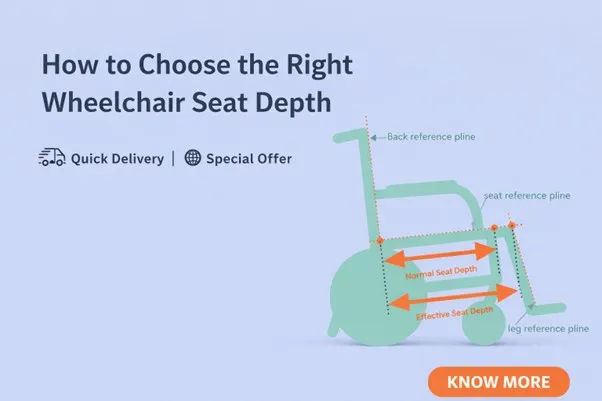
2. How to Measure Wheelchair Seat Depth
How to Measure:
- Measure from the back of the hip to the back of the
knee
- Subtract 1-2 inches
Why It Matters:
- Too deep → pressure behind knees
- Too shallow → poor thigh support
Correct seat depth ensures:
- Even weight distribution
- Comfortable long sitting
- Better blood circulation
3. How to Measure Wheelchair Seat Height (Floor to Seat)
How to Measure:
- Measure from the heel to the back of the knee
- Add cushion thickness (if used)
Ideal Result:
- Feet rest flat on footrests
- Knees at a comfortable angle
- Incorrect height can cause:
- Leg dangling
- Foot dragging
- Poor circulation
4. Measuring Backrest Height for Proper Support
How to Measure:
- Measure from seat base to:
- Lower shoulder blades → for active users
- Upper back → for elderly or weak users
Why It Matters:
- Elderly users need higher back support
- Active users may prefer lower backrest for arm movement
5. Measuring Armrest Height
Correct armrest height:
- Supports arms naturally
- Prevents shoulder strain
- Improves sitting posture
How to Measure:
- Measure from seat surface to elbow when arm is
relaxed
Too high → shoulder lift
Too low → leaning posture
6. Measuring Footrest Length (Leg Support)
Correct Footrest Length:
- Feet rest flat
- Thighs fully supported
- No pressure under thighs
Especially important for:
- Elderly users
- Post-surgery patients
- Long sitting hours
7. Special Considerations for
Indian Users
Elderly Parents
- Prefer slightly wider seat
- Higher backrest
- Cushioned seating
Post-Surgery Patients
- Adjustable leg rests
- Extra seat depth comfort
Overweight / Bariatric Users
- Higher weight capacity
- Wider seat width
- Reinforced frame
8. Common Wheelchair Sizing
Mistakes to Avoid
- Guessing size without measuring
- Buying “standard size” blindly
- Ignoring cushion thickness
- Not considering long sitting duration
- Choosing width based only on body weight
9. Should You Get Professional
Help for Measurement?
Yes, especially if:
- User is bedridden
- User has spinal issues
- Long-term wheelchair use is expected
Many providers, including Aarogyaa
Bharat, can assist with wheelchair size guidance before purchase or rental.
Conclusion
Measuring wheelchair size correctly
is not optional it is essential. Proper sizing ensures:
- Comfort
- Safety
- Good posture
- Long-term usability
For elderly parents and home-care
patients, correct measurement can make the difference between comfort and
constant discomfort.