What Is Central Sleep Apnea?
Central sleep apnea (CSA) is a sleep disorder characterized
by repeated pauses in breathing during sleep. These pauses occur because the
brain fails to send proper signals to the muscles that control breathing.
In CSA:
- The
airway remains open
- There
is no physical blockage
- Breathing
stops temporarily because the brain’s respiratory drive is reduced or
absent
Each pause may last several seconds and can happen multiple
times per hour, disrupting sleep and reducing oxygen levels in the blood.
How Central Sleep Apnea Differs from Obstructive Sleep
Apnea
Although both conditions involve breathing interruptions
during sleep, the cause is different.
- Central
Sleep Apnea: Problem with brain signalling
- Obstructive
Sleep Apnea: Physical blockage of the airway
In some individuals, both conditions may coexist, known as
complex or mixed sleep apnea.
Why Does Central Sleep Apnea Occur?
Breathing is controlled by a delicate feedback system
involving the brain, lungs, heart, and blood oxygen levels. When this system
becomes unstable, central sleep apnea can develop.
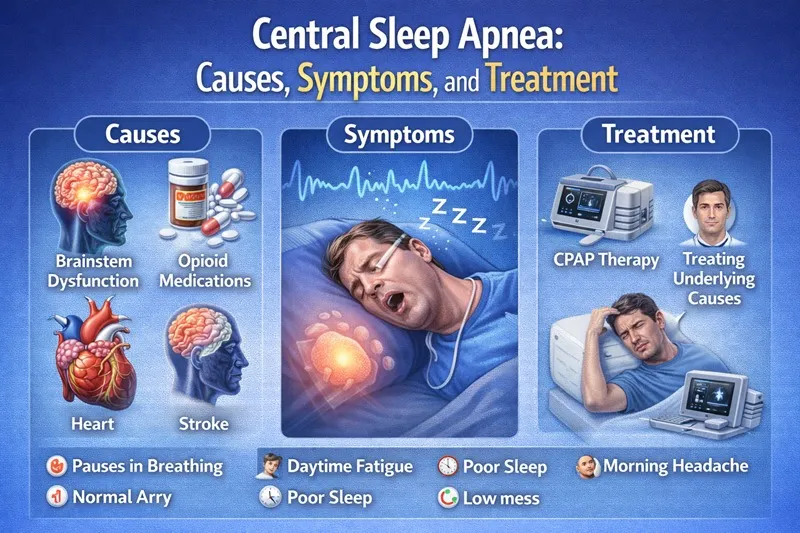
Common Causes of Central Sleep Apnea
1. Heart-Related Conditions
People with certain heart conditions, especially heart
failure, are at higher risk. Changes in blood flow and oxygen regulation can
disrupt breathing signals during sleep.
2. Neurological Disorders
Conditions affecting the brainstem the area that controls
breathing can lead to CSA. These may include:
- Stroke
- Brain
injury
- Brain
infections or tumour
3. Use of Certain Medications
Medications that suppress the central nervous system can
reduce the brain’s drive to breathe, such as:
- Opioid
pain medications
- Certain
sedatives
4. High-Altitude Exposure
At high altitudes, lower oxygen levels can temporarily
disrupt breathing control, leading to central sleep apnea in some individuals.
5. Idiopathic Central Sleep Apnea
In some cases, no clear cause is identified. This is
referred to as idiopathic CSA.
Symptoms of Central Sleep Apnea
Symptoms of CSA can be subtle and are often mistaken for
general fatigue or stress.
Common Night-time Symptoms
- Repeated
pauses in breathing during sleep
- Sudden
awakenings with shortness of breath
- Restless
or fragmented sleep
- Insomnia
or difficulty staying asleep
Daytime Symptoms
- Excessive
daytime sleepiness
- Morning
headaches
- Poor
concentration and memory issues
- Fatigue
and low energy
- Mood
changes or irritability
Because CSA does not always involve loud snoring, it may go
unnoticed without proper evaluation.
Who Is at Higher Risk of Central Sleep Apnea?
CSA is more commonly seen in:
- Older
adults
- People
with heart failure
- Individuals
with neurological conditions
- Patients
using long-term opioid medications
- Those
living at or traveling to high altitudes
Men are affected more frequently than women, though it can
occur in anyone.
How Is Central Sleep Apnea Diagnosed?
Diagnosis typically involves a detailed sleep evaluation.
Sleep Study (Polysomnography)
A sleep study is the gold standard for diagnosing CSA. It
monitors:
- Breathing
patterns
- Oxygen
levels
- Brain
activity
- Heart
rate
- Sleep
stages
The test helps distinguish central sleep apnea from
obstructive sleep apnea and other sleep disorders.
Additional Tests
Depending on the suspected cause, doctors may recommend:
- Heart
evaluation
- Neurological
assessment
- Medication
review
Why Treating Central Sleep Apnea Is Important
Untreated CSA can lead to:
- Poor
sleep quality
- Increased
risk of heart rhythm problems
- Worsening
heart failure
- Reduced
daytime functioning
- Lower
quality of life
Early treatment helps stabilize breathing, improve sleep,
and protect long-term health.
Treatment Options for Central Sleep Apnea
Treatment depends on the underlying cause and severity of
the condition.
1. Treating the Underlying Condition
Managing heart disease, neurological disorders, or adjusting
medications can significantly improve CSA.
2. Positive Airway Pressure (PAP) Therapy
Specialized breathing devices may be used to regulate
breathing during sleep.
- Continuous
Positive Airway Pressure (CPAP)
- Adaptive
Servo-Ventilation (ASV)
- Bilevel
Positive Airway Pressure (BiPAP)
These devices help maintain consistent breathing patterns.
3. Supplemental Oxygen
In some cases, oxygen therapy during sleep can reduce
breathing pauses.
4. Medication Adjustment
Reducing or changing medications that suppress breathing may
help improve symptoms.
5. Lifestyle and Supportive Measures
- Maintaining
regular sleep schedules
- Avoiding
alcohol and sedatives unless prescribed
- Sleeping
at lower altitudes when possible
Living with Central Sleep Apnea
With proper diagnosis and treatment, many people with CSA
can:
- Sleep
more peacefully
- Experience
improved daytime energy
- Reduce
health risks
- Enjoy
a better overall quality of life
Regular follow-up and adherence to treatment plans are key
to long-term success.
Conclusion
Central sleep apnea is a complex sleep disorder that occurs
when the brain fails to regulate breathing properly during sleep. Although it
is less common than obstructive sleep apnea, its impact on health can be just
as serious if ignored.
Understanding the causes, symptoms, and treatment options
empowers individuals to seek timely medical care and improve sleep quality and
overall health. With the right approach, central sleep apnea can be effectively
managed.
At Aarogyaa Bharat, we are committed to sharing clear,
trustworthy health information that helps people sleep better, live healthier,
and make informed healthcare choices.