Why Long Sitting Is Common In-Home Care Situations
In home-care settings, patients are often required to sit
for longer than healthy individuals due to reduced mobility, weakness, or
dependency. Elderly individuals may take longer during toileting due to slow
movements or balance concerns. Post-surgery patients may need to sit carefully
and slowly to avoid pain or strain. Patients with neurological conditions,
spinal injuries, paralysis, or chronic weakness may not have the strength to
stand frequently and therefore remain seated for extended periods. Caregivers
may also encourage sitting rather than repeated standing to reduce fall risk.
All these situations make long sitting unavoidable, which is why chair comfort
becomes a critical safety and health factor rather than a minor consideration.
Health Risks Associated with Poor Seating During Long
Sitting
Sitting on hard, poorly designed chairs for extended periods
can lead to serious health issues, especially for vulnerable users. Pressure
build up on the hips, thighs, and lower back can cause pain, numbness, and
reduced blood circulation. Over time, this may lead to pressure sores, skin
breakdown, joint stiffness, and worsening posture problems. Elderly individuals
and bedridden patients are particularly susceptible due to thinner skin and
reduced muscle padding. Discomfort also causes patients to rush activities,
shift unsafely, or resist using the chair, increasing fall risk. A chair
designed for long sitting comfort reduces these risks by distributing weight
evenly and supporting the body properly.
What Makes a Chair Suitable for Long Sitting Comfort
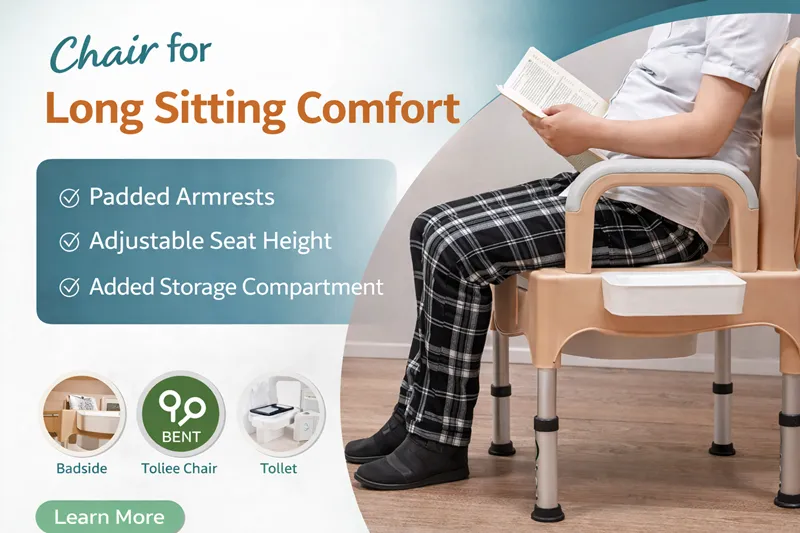
A chair suitable for long sitting comfort is designed with
ergonomics, pressure relief, and stability in mind. It typically includes a
properly contoured seat, cushioned padding, adequate seat width, and a
supportive backrest that encourages correct posture. Armrests allow users to
adjust position and support weight during sitting and standing. The seat height
is optimized to reduce knee and hip strain. Materials used must be firm enough
to provide support while soft enough to prevent pressure build up. Such chairs
are especially important in toileting and bedside care, where sitting time may
be longer than expected.
Role of Cushioning in Long Sitting Comfort
Cushioning plays a major role in determining how comfortable
and safe a chair is for extended sitting. High-quality cushioning distributes
body weight evenly, reducing pressure on sensitive areas and improving blood
circulation. For elderly individuals and patients with limited mobility,
cushioned seating prevents pain and skin damage that can occur with hard
plastic or metal surfaces. Waterproof, medical-grade cushioning ensures hygiene
while maintaining comfort. Aarogyaa Bharat recommends cushioned seating for any
chair expected to be used for long sitting, especially in toileting and bedside
care scenarios.
Importance of Backrest Support for Extended Sitting
Backrest support is essential during long sitting because it
helps maintain spinal alignment and reduces strain on the lower back. Without
proper back support, users tend to slouch or lean, which increases discomfort
and fatigue. For patients who are weak or recovering from illness, maintaining
posture requires significant effort. A supportive backrest allows users to
relax while seated, conserving energy and reducing muscle fatigue. This is
especially important for elderly individuals and post-surgery patients who may
lack core strength.
Armrests and Their Impact on Long Sitting Safety
Armrests are not just transfer aids but also play a vital
role in long sitting comfort. They allow users to shift position safely,
relieve pressure points, and support the upper body while seated. During
toileting or assisted care, armrests provide stability and reduce the risk of
sudden movements that can lead to falls. For users who sit for long durations,
armrests also reduce shoulder and neck strain by providing resting support.
Long Sitting Comfort for Elderly Users
Elderly individuals often have reduced muscle mass, joint
degeneration, and sensitive skin, making long sitting particularly
uncomfortable. Chairs designed for long sitting comfort allow seniors to sit
calmly without pain or fear, improving compliance with toileting and care
routines. Comfort also reduces agitation, anxiety, and resistance, which are
common when elderly individuals feel physically uncomfortable. Providing proper
seating comfort directly improves quality of life and emotional well-being in elderly
home care.
Long Sitting Comfort in Post-Surgery and Rehabilitation
Care
Post-surgery patients are often advised to move slowly and
avoid sudden standing or bending. Long sitting may be unavoidable during
toileting, dressing, or physiotherapy preparation. A comfortable chair allows
patients to sit without pain, protecting surgical sites and reducing strain.
Proper seating also supports gradual recovery by encouraging correct posture
and controlled movement during rehabilitation.
Benefits for Caregivers Managing Long Sitting Needs
Caregivers benefit greatly from chairs designed for long
sitting comfort because comfortable patients are calmer, more cooperative, and
less likely to rush or panic. This reduces caregiver stress and physical strain
during assistance. Comfortable seating also reduces the need for frequent
repositioning, making daily routines more efficient and sustainable.
Types of Chairs Suitable for Long Sitting Comfort
|
Chair Type |
Suitable
Users |
Comfort
Benefit |
|
Cushioned
Commode Chair |
Elderly,
chronic care |
Pressure
relief |
|
High-Back
Chair |
Weak posture
support |
Spinal
alignment |
|
Armrest-Supported
Chair |
Limited
mobility users |
Stability |
|
Height-Adjusted
Chair |
Joint pain
patients |
Reduced
strain |
|
Wide-Seat
Chair |
Bariatric
users |
Even weight
distribution |
Hygiene Considerations in Long Sitting Chairs
Chairs used for long sitting must balance comfort with
hygiene. Cushioned surfaces should be waterproof and easy to clean to prevent
moisture absorption and infection. Regular cleaning ensures that comfort does
not compromise hygiene, especially in toileting or bedside care situations.
Aarogyaa Bharat emphasizes medical-grade materials that support both comfort
and cleanliness.
Emotional Impact of Comfortable Seating
Discomfort during sitting often leads to frustration,
anxiety, and resistance, especially in elderly or dependent patients. A
comfortable chair reduces emotional distress and helps users feel respected and
cared for. Emotional comfort improves cooperation, routine adherence, and
overall mental well-being, which is crucial in long-term home care.
Why Aarogyaa Bharat Prioritizes Long Sitting Comfort
Aarogyaa Bharat understands that long sitting is a daily
reality for many home-care patients. Our seating solutions are selected to
provide ergonomic support, pressure relief, stability, and hygiene suited to
Indian home environments. By prioritizing comfort alongside safety, Aarogyaa
Bharat helps families deliver compassionate and sustainable care at home.
Conclusion
A chair designed for long sitting comfort is an essential
component of effective home healthcare. By reducing pain, preventing pressure
injuries, improving posture, and supporting emotional well-being, it enhances
both patient safety and caregiver efficiency. Whether for elderly care,
post-surgery recovery, chronic illness, or disability support, investing in
proper seating comfort is a crucial step toward dignified and safe home care.
Aarogyaa Bharat remains committed to offering thoughtfully designed solutions
that support comfort, safety, and quality of life in every stage of care.