What Is Hydrotherapy and Why It Works So Well
Hydrotherapy is the therapeutic use of water to improve
physical function, reduce pain, and support recovery. Water has unique physical
properties such as buoyancy, resistance, hydrostatic pressure, and thermal
effects that make it ideal for rehabilitation. Buoyancy reduces the effect of
gravity, allowing the body to move with less stress on joints and bones.
Resistance provided by water strengthens muscles evenly in all directions
without sudden force. Hydrostatic pressure improves circulation and reduces swelling,
while warm water relaxes muscles and decreases stiffness. Hydrotherapy
equipment is designed to harness these properties in a controlled and
repeatable way, making therapy safer and more effective than unstructured water
exercise.
Overview of Common Hydrotherapy Equipment
Hydrotherapy equipment includes a wide range of tools such
as underwater treadmills, pool steps and ramps, flotation devices, resistance
paddles, balance platforms, and aquatic exercise bikes. Each piece of equipment
serves a specific purpose in rehabilitation or fitness. Underwater treadmills
are often used for gait training, while flotation aids help beginners feel
secure in water. Among these options, swimming pool exercise bikes are unique
because they provide structured, repetitive movement that closely mimics
natural cycling, making them suitable for both rehabilitation and long-term
exercise programs.
Why the Swimming Pool Exercise Bike Is Central to
Hydrotherapy
The swimming pool exercise bike stands out because it
combines simplicity with versatility. Cycling is a familiar movement pattern
that most people understand, which reduces learning time and fear. When
performed in water, cycling becomes even more therapeutic due to reduced joint
load and increased muscle engagement from water resistance. Unlike free
swimming or random pool exercises, a pool exercise bike provides controlled
posture, alignment, and movement. This structure makes it easier for physiotherapists
to design targeted rehabilitation programs and for patients to exercise
consistently without confusion or risk.
How a Swimming Pool Exercise Bike Works in Water
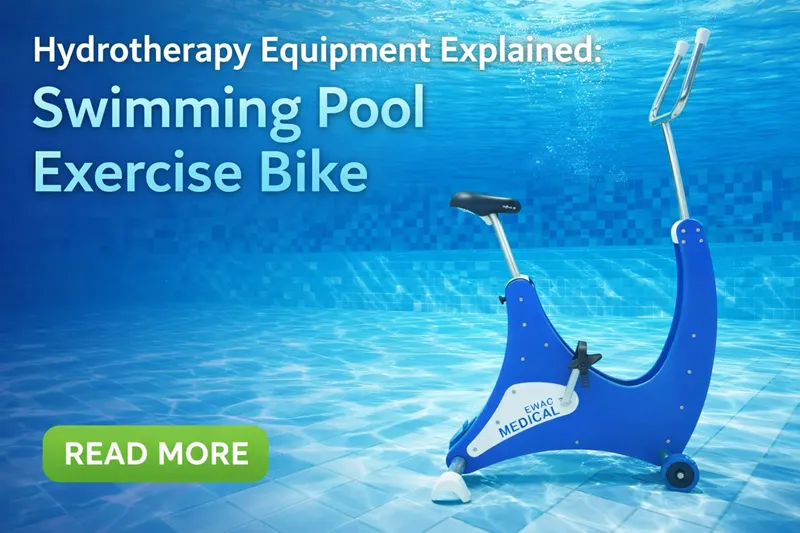
A swimming pool exercise bike is designed to be submerged in
a pool, either anchored to the pool floor or stabilized by its own weighted
base. The user sits on the bike and pedals, just like a regular stationary
cycle, but against the resistance of water instead of mechanical resistance.
Water resistance increases naturally with pedalling speed, which means
intensity is self-regulating and smooth. The deeper the water, the greater the
buoyancy effect, reducing body weight load on joints. This simple mechanism
allows users to exercise safely while benefiting from all the therapeutic
properties of water.
Role of Swimming Pool Exercise Bikes in Pain Management
Pain management is one of the biggest challenges in
rehabilitation. Pain discourages movement, and lack of movement worsens pain
over time. Swimming pool exercise bikes break this cycle by allowing pain-free
or low-pain movement. The warm water relaxes muscles, buoyancy reduces joint
compression, and gentle resistance strengthens muscles without irritation. For
patients with chronic pain conditions such as osteoarthritis, lower back pain,
or post-injury stiffness, aquatic cycling often becomes the first form of
exercise they can tolerate comfortably, making it a gateway to recovery.
Importance in Post-Surgical Hydrotherapy Programs
After surgery, especially orthopaedic procedures like knee
replacement, hip replacement, or ligament reconstruction, early movement is
critical but risky on land. Hydrotherapy bridges this gap. Swimming pool
exercise bikes allow patients to begin controlled movement earlier than
traditional physiotherapy. The cycling motion promotes blood flow, reduces
swelling, prevents muscle atrophy, and improves joint range of motion without
stressing surgical sites. This early engagement often leads to faster functional
recovery and better long-term outcomes.
Hydrotherapy for Elderly Rehabilitation and Fall
Prevention
Elderly individuals often avoid exercise due to fear of
falling or worsening pain. Hydrotherapy equipment, especially swimming pool
exercise bikes, creates a safe environment where balance is supported by water.
The seated cycling position reduces fall risk, while water provides additional
stability. Regular use improves muscle strength, joint flexibility, and
circulation, all of which contribute to better balance and reduced fall risk.
For senior care programs, aquatic cycling becomes a sustainable way to keep
elderly individuals active without fear.
Neurological Rehabilitation Using Pool Exercise Bikes
Hydrotherapy is widely used in neurological rehabilitation
for conditions such as stroke, Parkinson’s disease, and balance disorders.
Swimming pool exercise bikes provide rhythmic, repetitive movement that helps
retrain motor patterns and improve coordination. Water slows movement slightly,
giving patients more control and time to correct posture. The reduced fear of
falling allows patients to focus on movement quality rather than stability.
Over time, this improves confidence, endurance, and functional mobility.
Cardiovascular Conditioning Through Hydrotherapy
Hydrotherapy is not only about joints and muscles; it also
supports cardiovascular health. Water resistance increases heart rate and
energy expenditure without high impact. Swimming pool exercise bikes allow
users to achieve cardiovascular benefits similar to land cycling but with
significantly lower stress on joints. This makes them suitable for individuals
who need cardiac conditioning but cannot perform high-impact exercises due to
pain or injury.
Hydrotherapy Equipment vs Swimming Pool Exercise Bike
|
Aspect |
General
Hydrotherapy Equipment |
Swimming
Pool Exercise Bike |
|
Movement
structure |
Often
unstructured |
Highly
structured |
|
Ease of use |
Varies |
Very easy |
|
Joint safety |
High |
Very high |
|
Muscle
engagement |
Moderate to
high |
Consistent
and targeted |
|
Suitability
for long-term use |
Depends on
tool |
Excellent |
Customization and Progression in Hydrotherapy Programs
One of the biggest advantages of swimming pool exercise
bikes is how easily therapy can be progressed. Intensity can be increased by
pedalling faster, changing water depth, or increasing session duration. This
allows the same equipment to be used from early rehabilitation stages through
advanced conditioning. For physiotherapists, this flexibility simplifies
program design and ensures continuity of care. For patients, it means they do
not outgrow the equipment quickly.
Safety and Design Considerations in Hydrotherapy
Equipment
Hydrotherapy equipment must meet strict safety standards
because it is used in wet environments. Swimming pool exercise bikes are
typically made from corrosion-resistant materials such as stainless steel or
coated alloys. Non-slip pedals, adjustable seats, and stable frames are
essential for safe use. Proper installation and regular maintenance ensure
long-term reliability. Safety-focused design is one reason why pool exercise
bikes are trusted in clinical rehabilitation settings.
Psychological Benefits of Structured Aquatic Exercise
Rehabilitation is as much mental as it is physical. Many
patients feel discouraged by slow progress or repeated pain during land
therapy. Hydrotherapy changes this experience by making movement feel easier
and more rewarding. Swimming pool exercise bikes provide immediate feedback in
the form of smooth, pain-free motion, which boosts confidence and motivation.
This psychological uplift plays a crucial role in adherence to long-term
rehabilitation programs.
Integration into Indian Healthcare and Wellness
Ecosystems
In India, hydrotherapy is increasingly being adopted by
physiotherapy clinics, rehabilitation hospitals, wellness resorts, and senior
living communities. Swimming pool exercise bikes are particularly popular
because they cater to a wide range of users, from elderly arthritis patients to
young sports injury recoveries. Their ability to serve multiple purposes makes
them a cost-effective and future-ready investment for healthcare providers.
Conditions That Benefit from Hydrotherapy Using Pool
Exercise Bikes
|
Condition |
Therapeutic
Benefit |
|
Joint pain
and arthritis |
Reduced pain,
improved mobility |
|
Post-surgical
recovery |
Faster, safer
rehabilitation |
|
Neurological
disorders |
Better
coordination and control |
|
Elderly
mobility decline |
Improved
balance and strength |
|
Obesity-related
joint stress |
Low-impact
exercise option |
|
Chronic pain
conditions |
Sustainable
movement without flare-ups |
Long-Term Value of Swimming Pool Exercise Bikes
Unlike some rehabilitation tools that are used only
temporarily, swimming pool exercise bikes offer long-term value. Patients often
continue using them even after formal therapy ends, transitioning into
maintenance and fitness routines. This long-term usability supports sustained
health benefits, reduces relapse risk, and encourages an active lifestyle
without joint damage.
Conclusion
Hydrotherapy equipment has transformed the way
rehabilitation and pain management are approached, and the swimming pool
exercise bike is at the heart of this transformation. By combining the
therapeutic properties of water with structured, controlled cycling motion, it
offers a safe, effective, and adaptable solution for a wide range of
conditions. From joint pain and post-surgical recovery to neurological
rehabilitation and elderly fitness, swimming pool exercise bikes represent the
most practical and powerful form of hydrotherapy equipment available today. For
individuals and healthcare providers seeking long-term, pain-free movement
solutions, aquatic cycling is not just a therapy tool it is a pathway to
sustainable mobility and better quality of life.
Recovery after injury, surgery, or chronic joint pain often comes with one big question: is this therapy really worth the effort, time, and cost? Swimming pool exercise bikes are increasingly recommended by physiotherapists because they promise faster recovery with less pain and lower risk. This very detailed guide by Aarogyaa Bharat examines whether a swimming pool exercise bike is truly worth it for recovery breaking down medical benefits, rehabilitation outcomes, cost-value logic, long-term usability, and real-world recovery scenarios to help Indian families and care providers make an informed decision