Understanding Home Rehabilitation and Its Daily Physical
Demands
Home rehabilitation involves rebuilding strength, balance,
coordination, and confidence after illness, surgery, injury, or prolonged
hospitalization. Patients often experience muscle weakness, stiffness,
dizziness, reduced reflexes, and fatigue, making even short movements
physically demanding. Daily activities like standing up, walking to the
bathroom, turning, sitting, and standing again can feel exhausting and unsafe,
especially during early recovery. Toileting requires multiple coordinated
movements and exposes patients to risks such as slippery floors and poor
lighting. Without proper support, patients may avoid bathroom visits, leading
to urinary problems, constipation, dehydration, and emotional distress. A
commode chair addresses these challenges by simplifying movement, conserving
energy, and allowing patients to focus on healing rather than fear of falling
or failure.
What a Commode Chair Is and Its Role in Rehabilitation
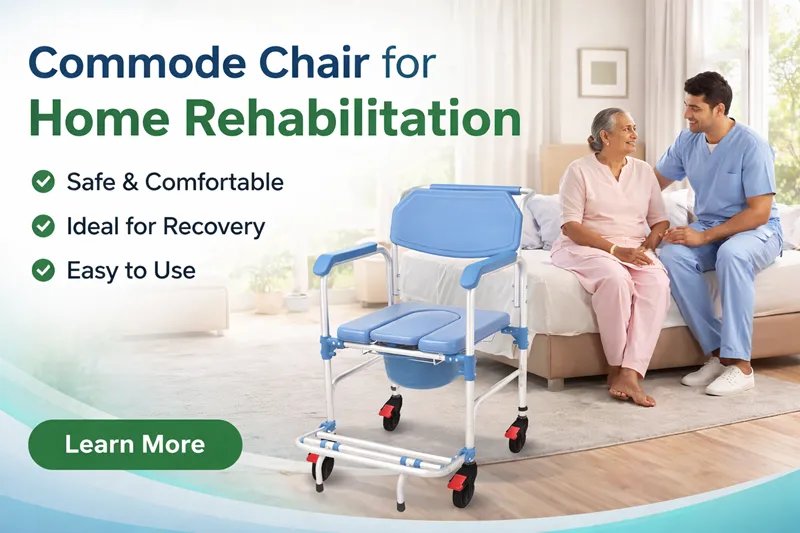
A commode chair is a portable toileting solution designed
specifically for individuals with limited mobility, balance issues, or medical
restrictions. It includes a strong frame, a comfortable seat with an opening,
armrests for leverage, a backrest for posture, and a removable bucket for waste
collection. During home rehabilitation, the chair serves as a transitional
support system that bridges the gap between total dependence and full
independence. It allows patients to practice safe sitting and standing movements
while maintaining dignity and privacy. Unlike regular toilets, a commode chair
can be placed exactly where the patient feels safest, reducing unnecessary
strain and helping them regain confidence gradually as recovery progresses.
Medical Conditions That Often Require Commode Chairs
During Recovery
Many medical conditions make traditional bathroom use unsafe
during rehabilitation. Orthopaedic surgeries such as knee replacement, hip
replacement, spinal surgery, and fracture repair restrict bending,
weight-bearing, and balance. Neurological conditions including stroke,
Parkinson’s disease, spinal cord injuries, and multiple sclerosis affect coordination
and muscle control. Elderly patients recovering from infections, ICU stays, or
chronic illness often experience generalized weakness and instability. In all
these cases, a commode chair offers controlled support, reduces effort, and
prevents accidents, allowing recovery to continue without interruption or
additional injury.
Why Toileting Safety Is a Critical Rehabilitation
Priority
Bathroom-related falls are one of the most common causes of
complications during home recovery and can undo weeks or months of
rehabilitation progress. Wet floors, uneven surfaces, poor lighting, and
fatigue combine to create dangerous conditions. A commode chair minimizes these
risks by eliminating the need for frequent bathroom trips and providing stable
support for sitting and standing. The presence of armrests allows patients to
control their movements rather than relying on sudden muscle strength. By reducing
accidents, a commode chair protects both physical health and emotional
confidence, which are equally important for sustained recovery.
Emotional and Psychological Impact of Toileting
Independence
Recovery often challenges a patient’s sense of identity and
self-worth, especially when they must rely on others for intimate daily
activities. Loss of toileting independence can lead to embarrassment, anxiety,
frustration, and social withdrawal. A commode chair restores a sense of control
and privacy by enabling patients to manage their personal hygiene with dignity.
This emotional relief reduces stress and improves mental well-being, which
directly influences physical healing. Patients who feel respected and
independent are more motivated to participate actively in physiotherapy and
follow medical advice, accelerating overall recovery.
Types of Commode Chairs Commonly Used in Home
Rehabilitation
Different rehabilitation needs require different commode
chair designs, and selecting the right type ensures comfort and safety
throughout the recovery period.
|
Type of
Commode Chair |
Suitable
For |
Key
Advantage |
|
Early-stage
recovery |
Maximum
stability |
|
|
Height
Adjustable Commode |
Post-surgery
patients |
Reduced joint
stress |
|
Assisted
mobility |
Safer
transfers |
|
|
Temporary
rehabilitation |
Easy storage |
|
|
Heavy-weight
patients |
Reinforced
support |
How to Choose the Right Commode Chair for a Patient
Choosing the correct commode chair requires understanding
the patient’s physical condition, recovery goals, and home environment. Factors
such as weight capacity, seat height, armrest strength, back support, and
bucket accessibility must be considered carefully. A chair that is too low can
strain joints, while one that is unstable can increase fall risk. Ease of
cleaning is also critical because the chair will be used multiple times daily.
Aarogyaa Bharat recommends selecting chairs designed specifically for
rehabilitation rather than generic household models to ensure safety, comfort,
and long-term usability.
Steel Versus Plastic Commode Chairs for Rehabilitation
Use
Material choice plays a major role in durability, stability,
and comfort during long recovery periods.
|
Feature |
Steel
Commode Chair |
Plastic
Commode Chair |
|
Structural
strength |
Very high |
Moderate |
|
Load handling |
High |
Limited |
|
Stability |
Excellent |
Good |
|
Longevity |
Long-term use |
Short-term
use |
|
Best suited
for |
Extended
rehabilitation |
Temporary
recovery |
Correct Placement of a Commode Chair at Home
Proper placement of the commode chair significantly improves
safety and convenience during rehabilitation. In the early stages, the chair
should be placed close to the bed on a flat, non-slip surface with adequate
lighting. Privacy arrangements help maintain dignity and emotional comfort. As
the patient gains strength, the chair can be repositioned closer to the
bathroom or used over a toilet seat if compatible. Removing obstacles, securing
rugs, and keeping essentials within reach further supports safe and independent
use
Hygiene and Infection Prevention During Long-Term
Recovery
Maintaining hygiene is essential during rehabilitation,
especially for patients with weakened immunity. The commode bucket should be
emptied and cleaned after every use, while the seat and armrests should be
disinfected daily. Regular cleaning prevents odor, bacterial growth, and skin
infections. Choosing commode chairs with smooth surfaces, removable components,
and rust-resistant frames makes hygiene maintenance easier and reduces
caregiver workload. Aarogyaa Bharat emphasizes hygiene-focused designs that
support safe long-term home use.
Caregiver Support and Safe Assistance Practices
Caregivers play a crucial role in ensuring proper and safe
use of commode chairs during recovery. Initially, patients may require
assistance with positioning, balance, and cleaning, but gradual reduction in
support encourages independence. Proper caregiver posture and technique reduce
physical strain and prevent injuries. A well-designed commode chair simplifies
caregiving by reducing lifting, bending, and repeated bathroom trips, making
daily care more manageable and less exhausting for families.
Aarogyaa Bharat’s Approach to Home Rehabilitation Support
Aarogyaa Bharat understands that recovery is not limited to
hospitals and clinics but continues at home every day. Our commode chairs are
selected with Indian homes, Indian bathrooms, and Indian caregiving realities
in mind. We prioritize safety, comfort, durability, and hygiene to support
patients throughout their rehabilitation journey. By providing reliable
home-care solutions, Aarogyaa Bharat helps families focus on healing rather
than daily challenges.
Conclusion
A commode chair is not merely a temporary convenience but a
vital rehabilitation aid that directly influences safety, dignity, emotional
well-being, and recovery outcomes. During home rehabilitation, where patients
rebuild strength and confidence step by step, the right toileting support can
prevent setbacks, reduce caregiver stress, and restore independence. By
enabling safe, hygienic, and dignified toileting, a commode chair supports both
physical healing and mental resilience. Aarogyaa Bharat remains committed to
empowering home rehabilitation with thoughtfully designed solutions that help
patients recover comfortably, confidently, and with dignity in their own homes.