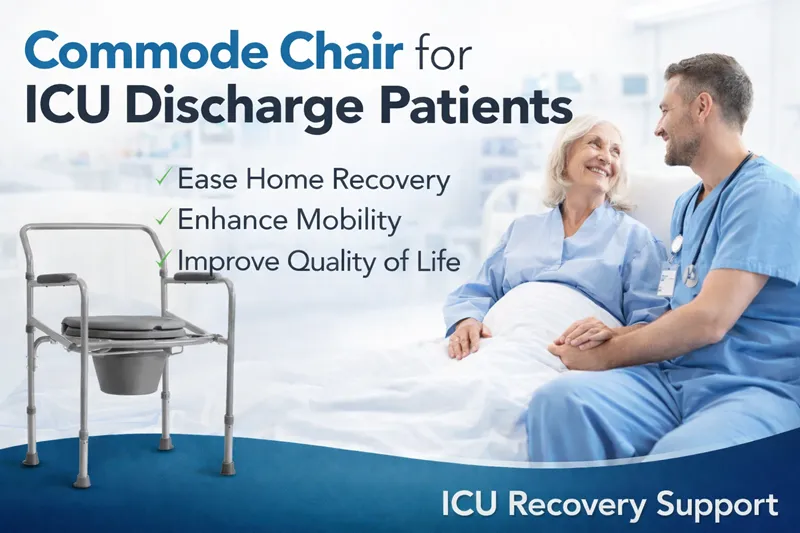
Even patients who appear clinically stable may struggle with basic movements such as standing, walking a few steps, or sitting down safely. Among all daily activities, toileting becomes one of the most dangerous and stressful tasks during this phase. A commode chair for ICU discharge patients is not a convenience product but a medically essential home-care safety solution designed to prevent falls, protect recovering organs, reduce caregiver strain, and support gradual rehabilitation with dignity. At Aarogyaa Bharat, we regularly interact with families who bring patients home after ICU discharge and assume normal bathroom use will resume within days. Unfortunately, this assumption often leads to near-falls, fainting episodes, joint injuries, wound complications, and panic situations during urgent toileting. ICU discharge patients are physiologically fragile, with poor stamina and unpredictable strength. A commode chair provides a controlled, safe, and confidence-building toileting environment that bridges the gap between critical care and full independence, making it one of the most important home-care investments after ICU recovery.
Why ICU Discharge Patients Are at High Risk During
Toileting
After ICU discharge, patients commonly experience
ICU-acquired weakness, post-intensive care syndrome, orthostatic hypotension,
and reduced neuromuscular coordination. Standing suddenly can cause dizziness
or blackouts, while walking to the bathroom may exhaust the patient before they
even reach the toilet. Surgical wounds, catheters, oxygen tubing, IV sites, or
drains further complicate movement. Toileting requires multiple actions in
quick succession, such as standing, walking, turning, lowering the body, and
standing again, all of which can overwhelm a recovering body. In Indian homes
with tiled floors, narrow bathrooms, and limited grab support, these risks are
magnified. A commode chair eliminates unnecessary movement and allows toileting
to occur in a controlled, seated position close to the bed, dramatically
reducing medical risk.
Role of a Commode Chair in Post-ICU Recovery
A commode chair acts as a transitional support tool that
allows ICU discharge patients to perform essential bodily functions without
pushing their recovering systems beyond safe limits. By reducing walking
distance and eliminating squatting or low seating, the chair helps conserve
energy, stabilise blood pressure, and prevent breathlessness. This energy
conservation is vital for healing organs, muscles, and immune function. Instead
of expending strength on risky bathroom trips, patients can focus on physiotherapy,
nutrition, and gradual mobility recovery.
Importance of Stability and Predictable Support
Stability is the most critical requirement for ICU discharge
patients, whose reflexes and balance may still be impaired. A commode chair
provides a wide, stable base with non-slip feet or lockable castors, ensuring
that the chair does not move during transfers. Armrests allow patients to use
upper-body strength rather than relying on weak legs, while supportive
backrests prevent sudden loss of posture. This predictable support reduces fear
and hesitation, encouraging patients to use the chair consistently rather than
attempting unsafe alternatives.
Preventing Falls and Medical Complications
Falls after ICU discharge can have devastating consequences,
including fractures, wound reopening, internal bleeding, or setbacks requiring
hospital readmission. Even a minor slip can reverse weeks of recovery progress.
A commode chair significantly lowers fall risk by removing the need for walking
to the bathroom and standing over slippery surfaces. This prevention-focused
approach aligns with modern post-ICU care protocols, where avoiding secondary
complications is just as important as treating the original illness.
Night-Time Safety for ICU Recovery Patients
Night-time toileting is particularly dangerous for ICU
discharge patients due to drowsiness, low blood pressure, and reduced
orientation. Many patients hesitate to wake caregivers, attempting to walk
alone, which often results in falls. A commode chair placed beside the bed
allows safe night-time toileting with minimal movement and supervision. This
not only prevents accidents but also improves sleep quality, which is essential
for healing and mental recovery.
Hygiene Management Without Physical Strain
ICU discharge patients may still have limited endurance,
making prolonged bathroom visits exhausting. Commode chairs with removable
buckets allow toileting to be completed quickly and hygienically without
extended standing or walking. Caregivers can manage waste disposal safely
without rushing the patient or risking spills. This controlled hygiene process
is especially important in small Indian homes where bathrooms may not be easily
accessible.
Supporting Caregivers During the Post-ICU Phase
Caregivers play a critical role in ICU recovery but often
face physical and emotional exhaustion. Assisting weak patients to walk,
balance, and squat puts caregivers at high risk of back injury and burnout. A
commode chair allows caregivers to guide rather than lift, reducing physical
strain and enabling safer assistance. This support helps maintain calm,
confidence, and consistency in daily care routines.
Psychological Comfort and Dignity in Recovery
Post-ICU patients often experience anxiety, fear, and loss
of confidence. Embarrassing or frightening toileting incidents can worsen
emotional distress and slow recovery. A commode chair provides privacy,
dignity, and reassurance, allowing patients to regain a sense of control over
their bodies. This psychological stability plays a significant role in overall
rehabilitation and motivation.
Comparison Table: ICU Discharge Toileting With vs Without
a Commode Chair
|
Aspect |
With
Commode Chair |
Without
Commode Chair |
|
Walking
distance |
Minimal |
Long |
|
Fall risk |
Very low |
Very high |
|
Energy
expenditure |
Low |
High |
|
Caregiver
strain |
Reduced |
Severe |
|
Night-time
safety |
Excellent |
Poor |
|
Recovery
support |
High |
Low |
|
Readmission
risk |
Reduced |
Increased |
Choosing the Right Commode Chair for ICU Discharge
Patients
Families should choose a commode chair with strong frame
construction, adjustable height, supportive armrests, stable feet or lockable
castors, and easy hygiene management. Comfort and stability should be
prioritised over compactness alone. Aarogyaa Bharat helps families select
commode chairs specifically suited for post-ICU recovery, ensuring safety
without compromising dignity or home practicality.
Long-Term Benefits During Rehabilitation
As strength improves, the commode chair continues to serve
as a safety net during gradual mobility restoration. Patients can transition
from full dependence to partial independence at their own pace without
pressure. This gradual progression reduces setbacks, builds confidence, and
supports sustainable recovery without repeated emergencies.
Why Aarogyaa Bharat Recommends Commode Chairs After ICU
Discharge
Aarogyaa Bharat understands that ICU discharge is a
medically vulnerable phase that requires proactive safety planning. By
recommending commode chairs as part of post-ICU home care, we help families
prevent avoidable accidents, reduce caregiver stress, and support smoother
recovery journeys. Our focus remains on practical, evidence-based solutions
that work in real Indian home environments.
Conclusion
A commode chair for ICU discharge patients is not a temporary convenience but a critical recovery aid that protects fragile bodies, supports caregivers, and prevents dangerous complications. By reducing falls, conserving energy, improving hygiene management, and restoring dignity, it plays a vital role in successful post-ICU rehabilitation. For families committed to safe, compassionate home recovery, a commode chair is one of the most important decisions they can make. Aarogyaa Bharat remains dedicated to guiding families through this crucial transition with safety-first home-care solutions.