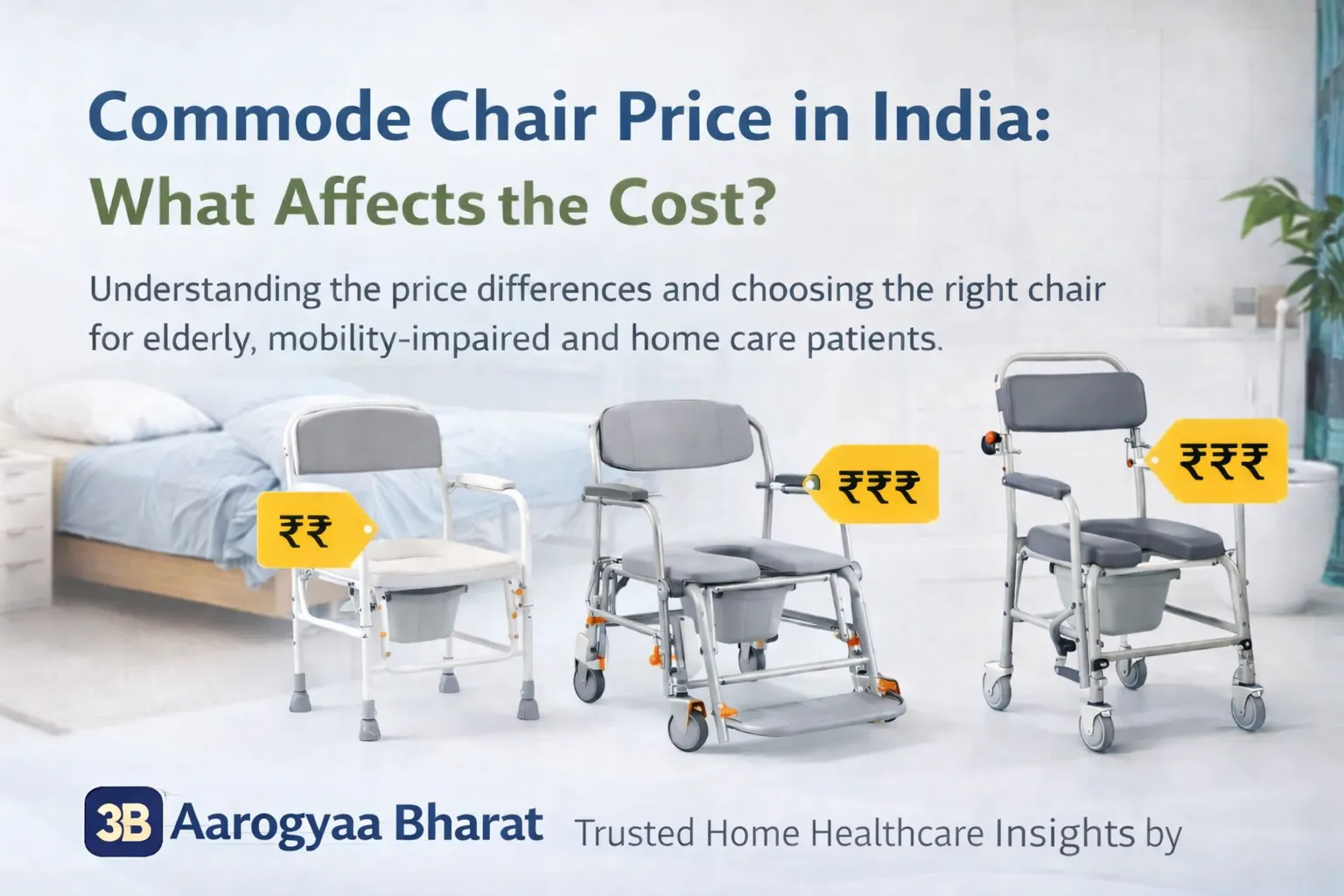
Why Commode Chair Pricing Needs Serious Attention
- A commode chair is not furniture.
-
It is daily-use medical support equipment.
Unlike a wheelchair that may be used occasionally, a
commode chair is often used:
- Multiple
times a day
- At
night when balance is poor
- By
weak, elderly, or post-surgery patients
- In
bathrooms or bedrooms where falls are dangerous
This means design quality, strength, hygiene, and
ergonomics matter far more than appearance.
When pricing is misunderstood, families often face:
- Chairs
shaking during use
- Pain
while sitting or standing
- Repeated
repairs
- Early
replacement
- Emotional
stress for the patient
Understanding price = preventing these outcomes.
The Wide Price Range of Commode Chairs in India (Reality
Check)
In India, commode chair prices typically fall anywhere
between:
- ₹2,500
on the low end
- ₹18,000+
on the high end
This range exists because commode chairs are made for very
different users, not because sellers are overcharging randomly.
A chair meant for:
- a
mildly weak senior
is very different from one meant for - a
fully dependent, bedridden patient
Yet many buyers compare them side by side.
How the Intended Patient Changes the Price Entirely
- This is the most overlooked factor.
- Mild Mobility Support (Lower Cost Range)
Patients who:
- Can
walk a little
- Have
reasonable balance
- Need
support mainly for sitting
These users can manage with basic static commode chairs,
which are naturally cheaper.
Partial Dependence (Mid Cost Range)
Patients who:
- Need
help standing
- Are
post-surgery
- Use
the chair multiple times daily
They require:
- Better
seat height
- Armrests
- Stronger
frames
This pushes cost upward.
Full Dependence (Higher Cost Range)
Patients who:
- Cannot
walk safely
- Are
transferred by caregivers
- Use
the chair for toileting and bathing
They require:
- Wheels
with brakes
- Strong
chassis
- Waterproof
materials
These chairs are engineering-heavy, which reflects in
pricing.
The Truth About “Cheap” Commode Chairs
Low-cost commode chairs usually reduce cost in invisible
places:
- Thinner
metal pipes
- Weak
welding joints
- Low-quality
plastic buckets
- No
weight testing
- No
long-term stability checks
Initially, they look fine.
Problems appear after weeks of use.
Common complaints include:
- Chair
wobbling
- Bucket
cracking
- Screws
loosening
- Seat
becoming uncomfortable
This is why price must be judged by daily performance, not
first impression.
Frame Material: Where Price and Safety Intersect


- Affordable
- Heavy
- Can
rust over time
Often used in entry-level models.
Powder-Coated Steel (Mid Price)
- Better
corrosion resistance
- Longer
lifespan
- More
stable
Ideal for bedroom use.
Aluminium (Higher Price)
- Lightweight
- Rust-free
- Easier
for elderly handling
Preferred for premium home-care setups.
Material choice alone can double the price, but it also
doubles usability.
Seat Design: A Silent Price Influencer
Seat design rarely shows up in product listings, but it
deeply affects cost.
Cheaper chairs usually have:
- Narrow
seats
- Hard
plastic
- Flat
surfaces
Premium chairs offer:
- Wider
ergonomic seats
- Rounded
edges
- Padded
or contoured design
For patients who sit for longer durations, seat comfort
directly affects pain, posture, and confidence.
This is a hidden but crucial cost factor.
Height Adjustability: Why It Costs More (And Why It’s
Worth It)
Height-adjustable commode chairs are always more expensive.
Why?
Because they require:
- Telescopic
legs
- Precision
holes
- Locking
pins
- Load
testing at different heights
But height adjustability is critical for:
- Knee
replacement patients
- Hip
surgery recovery
- Very
tall or very short users
Incorrect height causes:
- Knee
strain
- Unsafe
standing
- Falls
This feature alone can increase price by 20–30%, but it also
prevents injuries.
Wheels and Brakes: Not All Wheels Are Equal


Cost increases due to:
- Medical-grade
castors
- Load-bearing
brakes
- Reinforced
base frame
Cheap wheels:
- Jam
easily
- Do
not lock properly
- Become
dangerous during transfer
Good brakes can literally save lives during patient movement.
The Bucket System: Hygiene Has a Price
Low-cost buckets:
- Thin
plastic
- Retain
odor
- Crack
under cleaning
High-quality buckets:
- Thick
medical-grade plastic
- Smooth
interiors
- Splash-resistant
lids
Since buckets are cleaned multiple times daily, quality
matters more than appearance.
Bathroom Use vs Bedroom Use: Pricing Differences
Bedroom-Only Chairs
- No
waterproofing needed
- Lower
cost
Bathroom / Shower Chairs
- Rust-resistant
materials
- Drainage-friendly
design
- Non-slip
surfaces
These features raise cost but are mandatory for wet
environments.
Manufacturing Standards & Quality Control
A chair manufactured with:
- Weight
testing
- Weld
inspection
- Stability
certification
Will always cost more than:
- Mass-produced,
unchecked products
At Aarogyaa Bharat, products are selected based on real
home-care feedback, not just specifications.
One-Time Cost vs Long-Term Cost (Most Buyers Miss This)
A ₹3,000 chair replaced twice in a year
= ₹6,000 spent + stress + discomfort
A ₹7,000 chair used for 3 years
= lower yearly cost + safety + peace of mind
True cost is measured over time, not at checkout.
How to Choose the Right Commode Chair Based on Budget
(Smart Way)
Tight Budget
Choose:
- Static
chair
- Strong
steel frame
- Correct
height
Avoid:
- Wheels
- Foldable
joints
Mid Budget
Choose:
- Height-adjustable
chair
- Better
seat comfort
- Strong
bucket
Best for most Indian homes.
Higher Budget
Choose:
- Wheeled
or shower commode
- Aluminium
frame
- Long-term
durability
Ideal for dependent patients.
Why Aarogyaa Bharat Pricing Feels “Higher” But Saves
Money
At Aarogyaa Bharat – Live Healthy, Live Better, pricing
reflects:
- Medical
usability
- Indian
home conditions
- Elderly
safety needs
- Long-term
reliability
We don’t sell products that look good online but fail in
real homes.
Conclusion: Price Is Not About Money Alone
The price of a commode chair in India reflects:
- Safety
- Comfort
- Engineering
- Dignity
Buying the cheapest chair often costs more—in pain, stress,
and replacement.
Buying the right chair once protects:
- The
patient
- The
caregiver
- The
household