Understanding What a Bedpan Is and How It Is Used
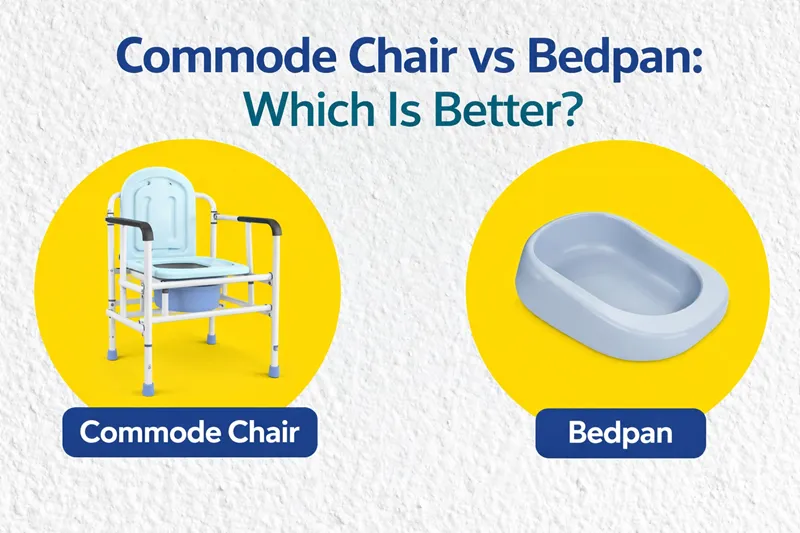
A bedpan is a shallow container designed to be placed under
a person who is lying in bed and unable to sit or stand for toileting. It
requires the patient to remain in a supine or semi-lying position while a
caregiver lifts, turns, or slides the pan into place. Bedpans are traditionally
used in hospitals for completely bedridden patients, unconscious individuals,
or those under strict movement restrictions. In home care, bedpans are often
chosen due to low cost or lack of awareness about alternatives. However, using
a bedpan requires significant physical effort from caregivers, causes
discomfort for patients, and poses hygiene and dignity challenges, especially
when used repeatedly over time.
Understanding What a Commode Chair Is and How It Works
A commode chair is a portable toileting chair that allows a
person to sit upright while using a toilet-like setup, usually with a removable
waste bucket underneath. It can be placed beside the bed, in a room, or even
over a Western toilet. Commode chairs support sitting posture, provide armrests
and backrests for balance, and allow users to toilet with dignity and control.
Unlike bedpans, commode chairs encourage safe movement, upright posture, and
partial or full independence, making them suitable for a much wider range of
users in home-care settings.
Differences in Patient Comfort and Physical Experience
Patient comfort is one of the most significant differences
between a commode chair and a bedpan. Using a bedpan requires lying flat or
awkwardly positioned, often causing pressure on the lower back, hips, and
tailbone. Many patients experience pain, muscle strain, or inability to
evacuate comfortably due to unnatural posture. In contrast, a commode chair
allows natural sitting posture, which supports normal bowel and bladder
function, reduces strain, and improves comfort. Over time, the physical discomfort
caused by repeated bedpan use can lead to constipation, urinary retention, and
increased distress.
Impact on Patient Dignity and Emotional Well-Being
Toileting is a deeply personal activity, and loss of dignity
in this area can be emotionally damaging. Bedpan use often requires full
caregiver involvement, exposure, and prolonged waiting, which can cause
embarrassment, shame, and frustration, especially for adults accustomed to
independence. Many patients describe bedpan use as humiliating, leading to
withdrawal or resistance to care. A commode chair, on the other hand, allows
privacy, upright posture, and faster completion, preserving dignity and self-respect.
Emotional comfort plays a critical role in recovery, cooperation, and mental
health.
Mobility, Independence, and Psychological Impact
A bedpan reinforces complete dependency, as the patient must
rely entirely on a caregiver for positioning, placement, and removal. This
dependency can negatively affect confidence and motivation, particularly in
patients who are capable of limited movement. A commode chair supports partial
or full independence by encouraging safe sitting and standing. Even when
assistance is required, the patient participates actively, which preserves a
sense of autonomy. This psychological benefit is crucial for elderly individuals,
post-surgery patients, and those in rehabilitation.
Safety and Fall Risk Comparison
From a safety perspective, bedpans reduce fall risk only for
patients who are truly unable to move at all, but they introduce other risks
such as caregiver strain, improper positioning, and skin injuries. Commode
chairs reduce fall risk by eliminating long walks to the bathroom while still
allowing safe upright toileting. For patients who can sit or stand with
support, a commode chair is far safer than attempting bedpan use or walking to
a bathroom. Choosing the wrong option can increase the risk of falls, injuries,
or setbacks.
Caregiver Effort and Physical Strain
Using a bedpan places significant physical demand on
caregivers, who must lift, turn, and reposition patients’ multiple times a day
and night. This repetitive strain increases the risk of back injuries, fatigue,
and burnout. Commode chairs greatly reduce caregiver effort by allowing
patients to sit independently or with minimal support. This makes long-term
home care more sustainable and safer for caregivers, particularly elderly
spouses or family members.
Hygiene, Cleanliness, and Infection Risk
Hygiene management is more complex with bedpans, as
spillage, incomplete cleaning, and prolonged contact with waste are common.
Bedpans often require immediate cleaning and disinfection, which may be
challenging at night or in shared households. Commode chairs typically feature
removable buckets that are easier to handle, clean, and disinfect discreetly.
Better hygiene reduces infection risk, odor, and discomfort, especially in
long-term use.
Suitability for Short-Term vs Long-Term Use
Bedpans are generally suitable only for very short-term or
hospital-level care when movement is medically restricted. Prolonged bedpan use
at home often leads to physical discomfort, emotional distress, and caregiver
exhaustion. Commode chairs are suitable for both short-term recovery and
long-term home care, adapting to changing mobility levels. Their versatility
makes them a more future-proof solution.
Use in Indian Home Environments
Indian homes often lack adjustable beds, trained caregivers,
or dedicated hygiene areas, making bedpan use particularly challenging.
Cultural emphasis on privacy and dignity further complicates prolonged bedpan
use. Commode chairs fit better into Indian home environments by offering
discreet, flexible, and safe toileting without structural modifications or
medicalised setups.
Special Considerations for Elderly Users
Elderly individuals often experience joint pain, stiffness,
and fear of dependency. Bedpan use can be physically painful and emotionally
distressing for seniors. A commode chair allows elderly users to toilet in a
familiar sitting posture, preserving dignity and reducing fear. This
significantly improves acceptance and consistency of use.
Special Considerations for Completely Bedridden Patients
For patients who are completely bedridden, unconscious, or
under strict movement restrictions, a bedpan may still be necessary. However,
even in these cases, caregivers should use proper technique, supportive
bedding, and frequent repositioning to minimise discomfort and complications.
Commode chairs are not suitable for patients who cannot safely sit upright at
all.
Comparison Table: Commode Chair vs Bedpan
|
Feature |
Commode
Chair |
Bedpan |
|
Patient
posture |
Upright
sitting |
Lying
position |
|
Comfort level |
High |
Low |
|
Dignity |
Preserved |
Often
compromised |
|
Independence |
Partial to
full |
None |
|
Caregiver
effort |
Low to
moderate |
High |
|
Long-term use |
Suitable |
Not
recommended |
|
Hygiene
control |
Better |
Difficult |
|
Fall
prevention |
High |
Limited |
|
Indian home
suitability |
Excellent |
Poor |
Cost vs Value Perspective
While bedpans are cheaper initially, the hidden costs in
caregiver strain, discomfort, hygiene challenges, and emotional distress are
significant. Commode chairs may have a higher upfront cost, but they provide
far greater value through safety, comfort, independence, and reduced medical
complications. In long-term home care, commode chairs are more economical and
humane.
Why Aarogyaa Bharat Recommends Commode Chairs Over
Bedpans
Aarogyaa Bharat prioritises solutions that protect dignity,
safety, and sustainability in home care. While acknowledging that bedpans have
limited medical use cases, we strongly recommend commode chairs for most
home-care situations where sitting is possible. Our approach focuses on
empowering patients, easing caregiver burden, and preventing avoidable
complications.
Conclusion
When comparing a commode chair vs a bedpan, the difference
is not merely about equipment but about quality of life, dignity, and safety.
Bedpans serve a narrow purpose for completely bedridden patients under strict
medical conditions, while commode chairs offer a far superior solution for the
majority of home-care scenarios. By enabling upright posture, independence,
comfort, and hygiene, commode chairs transform toileting from a distressing
task into a manageable daily routine. For Indian families navigating home care,
choosing a commode chair over a bedpan is a decision that protects both
patients and caregivers. Aarogyaa Bharat remains committed to guiding families
toward choices that uphold dignity and long-term well-being.