This is where a commode chair for Indian
toilet becomes an essential home-care solution. It bridges the gap between
traditional toilet setups and modern mobility needs, allowing users to maintain
hygiene, dignity, and safety without drastic bathroom modifications. This
detailed buying guide by Aarogyaa Bharat explains when a commode chair is
needed for Indian toilets, how it works, what features to look for, and how to
choose the right option for long-term comfort and safety.
Why Indian Toilets Become Difficult with Age or Illness
Indian toilets require squatting, balance, and lower-body
strength, all of which reduce with age or illness. Elderly people often suffer
from arthritis, osteoporosis, knee degeneration, or muscle weakness, making
squatting painful and risky. Post-surgery patients, especially after knee
replacement, hip surgery, spinal procedures, or cardiac operations, are
strictly advised not to squat. Even younger patients recovering from illness or
injury may struggle with balance and stamina. In such situations, continuing to
use an Indian toilet without support significantly increases the risk of falls,
fractures, and delayed recovery. A commode chair offers a safe seated
alternative without forcing families to rebuild or replace the toilet.
What Is a Commode Chair for Indian Toilet and How It Is
Used
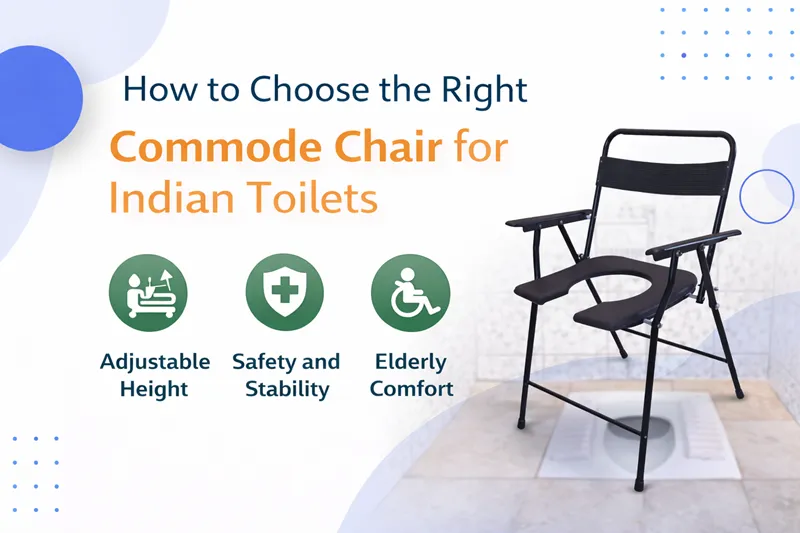
A commode chair for an Indian toilet is designed to allow
users to sit comfortably over or near an Indian-style toilet instead of
squatting. Depending on the design, the chair may be placed directly over the
Indian toilet opening or used as a standalone commode with a removable bucket.
It typically includes a strong frame, a seat with an opening, armrests for
support, and anti-slip legs or wheels. The user sits on the chair at a
comfortable height, uses armrests for balance, and avoids knee strain entirely.
This setup makes toileting safer, less painful, and more dignified, especially
for those who cannot squat at all.
When a Commode Chair Is Needed for Indian Toilets
A commode chair becomes necessary when squatting is unsafe
or impossible. This includes elderly individuals with joint pain, patients
recovering from orthopaedic or spinal surgery, people with neurological
conditions like stroke or Parkinson’s disease, and individuals with obesity or
balance disorders. It is also highly recommended for pregnant women in later
stages, people with severe back pain, and patients with temporary weakness
after hospitalization. In many homes, a commode chair is used as a preventive
measure to avoid accidents rather than waiting for an injury to occur.
Types of Commode Chairs Suitable for Indian Toilets
There are different types of commode chairs that can be used
with Indian toilets depending on space, mobility level, and usage preference. A
fixed commode chair without wheels is suitable for users who can walk short
distances and need only seated support. A height-adjustable commode chair
allows alignment with the Indian toilet opening, improving comfort and hygiene.
A commode wheelchair is ideal for users who cannot walk safely to the bathroom
and need assisted movement. Some commode chairs are designed specifically to be
placed over an Indian toilet, while others function as independent units with
buckets, making them suitable even when bathroom access is difficult.
Key Features to Look for in a Commode Chair for Indian
Toilets
Choosing the right commode chair requires careful attention
to safety and comfort. Frame strength is critical because the chair must
support full body weight securely. Steel or reinforced aluminium frames provide
better durability and stability. Seat height should be appropriate so that the
user can sit comfortably without bending knees excessively. Armrests are
essential for balance and support while sitting and standing. Anti-slip rubber
tips or lockable wheels prevent movement on wet bathroom floors. The seat
opening should align properly with the toilet or bucket to maintain hygiene.
Easy-to-clean materials are important because bathrooms are high-moisture
environments.
Comfort Considerations for Daily Use
Comfort is not a luxury but a necessity, especially for
elderly users who may use the commode chair multiple times a day. A
well-designed seat with smooth edges reduces pressure on thighs and hips.
Proper back support, if available, helps users sit with confidence. Armrests
reduce strain on knees and lower back by allowing controlled movement. For
users with chronic pain or weakness, these comfort features significantly
improve daily quality of life and encourage consistent use without fear.
Safety in Wet and Slippery Bathroom Conditions
Bathrooms with Indian toilets are often wet, increasing slip
risk. A commode chair provides a stable seated position, reducing the chance of
losing balance. Chairs with anti-slip legs or rubber tips grip the floor
firmly. If wheels are present, strong locking brakes are essential. Proper
placement of the chair over or near the toilet opening ensures that waste
disposal remains hygienic without spills. With correct installation and daily
checks, a commode chair makes Indian toilet usage much safer.
Commode Chair vs Converting to Western Toilet
Many families consider converting an Indian toilet to a
western toilet when mobility issues arise. While this is an option, it involves
significant cost, plumbing changes, and space requirements. In rented homes or
older buildings, conversion may not even be possible. A commode chair offers a
faster, more affordable, and flexible alternative. It can be used immediately,
moved as needed, and removed when no longer required, making it a practical
solution for both short-term and long-term needs.
Renting or Buying a Commode Chair for Indian Toilet Use
Renting a commode chair is suitable for short-term needs
such as post-surgery recovery or temporary illness. It reduces upfront cost and
avoids long-term storage concerns. Buying a commode chair is more appropriate
for elderly care or chronic conditions where long-term use is expected.
Ownership ensures availability and allows users to become familiar with the
chair, improving confidence and routine. Aarogyaa Bharat offers both rental and
purchase options to suit different care durations.
Price Range of Commode Chairs for Indian Toilets in India
Prices vary depending on design, material quality,
adjustability, and mobility features. Basic fixed commode chairs are more
affordable and suitable for users who can walk independently. Adjustable and
wheelchair commode chairs cost more due to added safety and mobility benefits.
While budget matters, it is important to prioritize stability, comfort, and
safety over the lowest price, especially for elderly users.
Comparison Table: Choosing the Right Commode Chair for
Indian Toilet
|
Feature |
Basic
Commode Chair |
Adjustable
Commode Chair |
Commode
Wheelchair |
|
Squatting
required |
No |
No |
No |
|
Mobility
support |
Low |
Medium |
High |
|
Suitable for
elderly |
Yes |
Yes |
Yes |
|
Caregiver
assistance |
Medium |
Medium |
Low |
|
Bathroom
modification needed |
No |
No |
No |
Common Mistakes Families Make While Buying
Many families choose a commode chair without checking height compatibility with the Indian toilet, leading to discomfort or hygiene issues. Others ignore weight capacity, risking instability. Choosing chairs without armrests or anti-slip features compromises safety. Another common mistake is assuming the chair is only for severe illness, when in reality early use can prevent accidents and injuries.
Conclusion
A commode chair for Indian toilet use is a practical, safe, and dignified solution for individuals who cannot squat comfortably or safely. It allows families to adapt traditional bathroom setups to modern healthcare needs without expensive renovations. By choosing the right commode chair based on mobility, comfort, and safety features, users can maintain independence while significantly reducing the risk of falls and injuries. Aarogyaa Bharat remains committed to helping families make informed decisions and providing reliable home healthcare solutions that fit real Indian homes and real care needs.