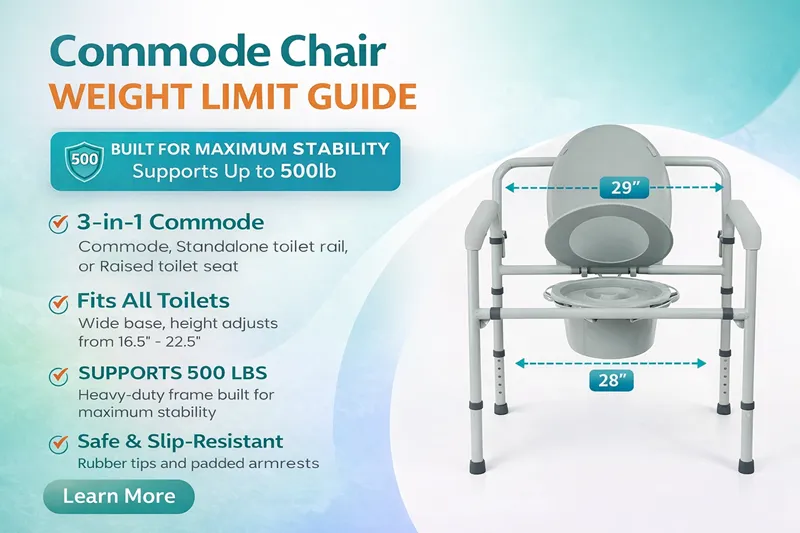
What Does Weight Limit Mean in a Commode Chair
The weight limit of a commode chair refers to the maximum
body weight that the chair can safely support under normal use conditions
without compromising stability or structural integrity. This limit includes not
only the user’s static body weight but also dynamic forces generated during
sitting, standing, leaning, and shifting. When a person sits down abruptly or
pushes up using armrests, the actual load on the chair can temporarily exceed
body weight. Therefore, the stated weight limit is a safety-tested threshold
designed to account for these forces. Using a chair beyond its rated capacity
increases the risk of metal fatigue, joint failure, leg bending, and sudden
collapse.
Why Weight Limit Is Critical for Safety and Fall
Prevention
Falls caused by commode chair failure are often severe
because they occur during vulnerable moments when users are partially seated or
standing. A chair that is overloaded may appear stable initially but can fail
suddenly due to repeated stress. Even slight bending or wobbling can cause
fear, hesitation, or sudden movements that trigger falls. Elderly individuals,
bariatric users, and patients with limited mobility are particularly at risk
because they rely heavily on the chair for support. Selecting a commode chair
with an appropriate weight limit ensures predictable performance and reduces
fall risk significantly.
Common Mistakes Families Make When Ignoring Weight Limits
Many families underestimate the importance of weight limits,
assuming that all commode chairs are built similarly. Some choose lightweight
or foldable models for convenience, unaware that these often have lower weight
capacities. Others purchase standard chairs for heavier users to save cost, not
realizing the long-term safety risk. Another common mistake is ignoring weight
changes over time, especially in patients with fluid retention, obesity, or
long-term illness. These errors can lead to unsafe use and eventual accidents.
Understanding Dynamic Weight vs Static Weight
Static weight refers to the user’s body weight when seated
calmly, while dynamic weight includes additional forces generated during
movement. Standing up, sitting down, leaning sideways, or using armrests can
significantly increase load on the chair. A chair rated exactly at the user’s
body weight may still be unsafe due to dynamic forces. Safety experts recommend
choosing a chair with a weight limit comfortably above the user’s actual weight
to account for these variations.
Weight Limit Considerations for Elderly Users
Elderly individuals often rely heavily on armrests while
standing or sitting, transferring much of their body weight through the chair.
Sudden weakness, imbalance, or fatigue can cause uneven loading. Even if an
elderly person is not overweight, a higher weight limit provides additional
stability and safety margin. Chairs with higher capacity tend to have wider
bases, thicker frames, and stronger joints, which improve confidence and reduce
wobbling.
Weight Requirements for Bariatric Users
Bariatric users require specially designed commode chairs
with reinforced frames, wider seats, and higher weight capacities. Using
standard chairs for bariatric users is extremely dangerous and often leads to
early failure. Bariatric commode chairs are engineered to distribute weight
evenly and handle higher dynamic loads safely. Selecting the correct bariatric
chair is essential for dignity, comfort, and safety.
Impact of Weight Limit on Chair Durability and Longevity
Using a commode chair within its rated weight limit
significantly extends its lifespan. Overloading accelerates metal fatigue,
joint loosening, and structural deformation, even if failure is not immediate.
Chairs used beyond capacity may develop hidden weaknesses that lead to sudden
collapse later. Proper weight matching ensures long-term durability and
consistent performance.
Weight Limit and Long Sitting Scenarios
Long sitting places sustained pressure on the chair frame
and seat. Chairs with insufficient weight capacity may sag or deform over time,
causing discomfort and instability. Higher weight-rated chairs are designed to
handle prolonged load without compromising structure, making them suitable for
long sitting needs.
Caregiver Safety and Weight Capacity
Caregivers often assist patients during transfers,
unintentionally adding their own weight or force to the chair. A higher weight
capacity provides additional safety margin during assisted movements, reducing
risk for both patient and caregiver.
Types of Commode Chairs by Weight Capacity
|
Chair
Category |
Typical
Weight Limit |
Suitable
Users |
|
Standard
Commode Chair |
Up to 100 kg |
Average
adults |
|
Heavy-Duty
Commode Chair |
120-150 kg |
Elderly,
assisted users |
|
180-250 kg |
Bariatric
patients |
|
|
Up to 90 kg |
Temporary use |
|
|
Reinforced
Adjustable Chair |
150 kg+ |
Long-term
care |
How to Choose the Right Weight Limit for Your Needs
Choosing the right weight limit involves considering the
user’s current weight, possible weight changes, mobility level, need for
assistance, and duration of use. A safety buffer of at least 20-30 percent
above body weight is recommended. Aarogyaa Bharat guides families to select
chairs that provide adequate safety margin rather than minimal compliance.
Signs That a Commode Chair Is Overloaded
Warning signs of overloading include wobbling, creaking
sounds, visible bending, loose joints, difficulty maintaining balance, and
reduced user confidence. If any of these signs appear, the chair should be
replaced immediately with a higher-capacity model.
Weight Limit in Adjustable and Foldable Commode Chairs
Adjustable and foldable chairs offer convenience but may
have lower weight limits due to movable parts. It is important to verify
capacity before use. High-quality adjustable chairs are reinforced to maintain
safety even at higher capacities, but cheaper models may not be suitable for
heavier users.
Why Aarogyaa Bharat Emphasizes Weight-Safe Selection
Aarogyaa Bharat understands that safety failures are often
caused by incorrect equipment selection rather than misuse. Our commode chairs
are clearly rated, tested, and recommended based on real user needs in Indian
home-care environments. By prioritising weight-safe selection, Aarogyaa Bharat
helps families prevent accidents and ensure dignified care.
Long-Term Cost Benefits of Choosing the Right Weight
Limit
While higher-capacity chairs may cost more initially, they
reduce the risk of replacement, injury, and medical expenses. Investing in the
correct weight-rated chair is more economical over time and provides peace of
mind.
Conclusion
A commode chair weight limit guide is essential knowledge
for safe, dignified, and sustainable home care. Choosing a chair that matches
or exceeds the user’s weight requirements prevents falls, injuries, equipment
failure, and emotional distress. Whether for elderly care, bariatric use,
post-surgery recovery, or long-term disability, weight-appropriate commode
chairs are a foundational safety decision. Aarogyaa Bharat remains committed to
helping families choose the right equipment that protects lives and preserves
dignity.