What Is an Audiometer?
An audiometer is a medical device used to measure a person’s
hearing ability. It generates sounds of varying frequencies and intensities and
delivers them through headphones, ear inserts, or bone vibrators. The patient’s
responses are recorded to assess hearing sensitivity and create an audiogram.
Audiometers are essential tools in:
- ENT
clinics
- Hospitals
and diagnostic centre's
- Hearing
aid centre's
- Occupational
health departments
- Schools
and paediatric care settings
Why Are There Different Types of Audiometers?
Hearing testing requirements differ based on:
- Patient
age and cooperation level
- Type
of hearing loss suspected
- Clinical
environment (clinic, hospital, field testing)
- Need
for screening versus detailed diagnosis
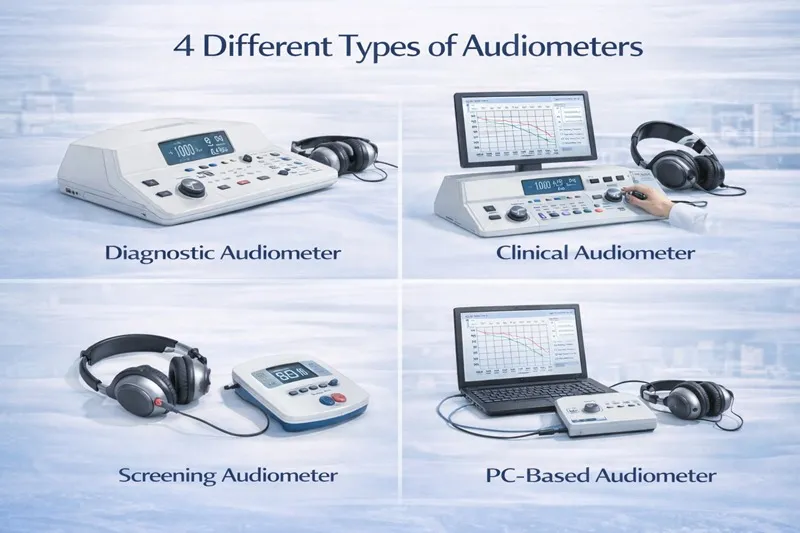
To meet these varied needs, audiometers are categorized into
different types based on complexity, portability, and diagnostic capability.
1. Screening Audiometer
A screening audiometer is designed for quick and basic
hearing assessments rather than detailed diagnosis.
Purpose
- Identify
possible hearing loss
- Decide
whether further testing is required
Where It Is Used
- Schools
and colleges
- Community
health camps
- Occupational
health screenings
- Primary
care clinics
Key Features
- Simple
controls
- Limited
frequency and intensity range
- Fast
test process
Advantages
- Easy
to operate
- Time-efficient
- Cost-effective
Limitations
- Cannot
determine type or severity of hearing loss
- Not
suitable for clinical diagnosis
Human Insight:
Screening audiometers act as the first checkpoint, ensuring hearing problems
are not overlooked.
2. Diagnostic Audiometer
A diagnostic audiometer is a more advanced device used for
comprehensive hearing evaluation.
Purpose
- Detailed
assessment of hearing thresholds
- Identification
of hearing loss type and degree
Where It Is Used
- ENT
clinics
- Hospitals
- Audiology
centre's
Key Features
- Wide
frequency and intensity range
- Air
and bone conduction testing
- Speech
audiometry support
Advantages
- High
accuracy
- Comprehensive
diagnostic capability
- Suitable
for adults and children
Limitations
- Requires
trained professionals
- Higher
cost compared to screening devices
Clinical Value:
Diagnostic audiometers form the backbone of professional audiology practice.
3. Portable Audiometer
A portable audiometer combines functionality with mobility,
making it ideal for field and remote testing.
Purpose
- Conduct
audiometry outside traditional clinical settings
Where It Is Used
- Rural
health programs
- Workplace
safety audits
- Home
visits
- Mobile
medical units
Key Features
- Lightweight
and compact
- Battery-operated
- Basic
to moderate diagnostic functions
Advantages
- High
mobility
- Easy
setup
- Expands
access to hearing care
Limitations
- Limited
features compared to full diagnostic units
- Environmental
noise may affect accuracy
Human Insight:
Portable audiometers bring hearing care closer to people who may not otherwise
access it.
4. Computer-Based (PC-Based) Audiometer
A computer-based audiometer uses software integrated with a
computer to perform audiometric tests.
Purpose
- Advanced
testing with digital accuracy
- Data
storage and analysis
Where It Is Used
- Modern
ENT clinics
- Hospitals
and research centre's
- Hearing
aid fitting centre's
Key Features
- Software-driven
testing
- Automated
test protocols
- Digital
record management
Advantages
- High
precision
- Easy
report generation
- Integration
with patient records
Limitations
- Requires
computer system
- Higher
setup cost
- Dependence
on software updates
Clinical Value:
PC-based audiometers support modern, data-driven audiology workflows.
Comparison of the 4 Types of Audiometers
|
Type |
Best For |
Complexity |
Portability |
|
Screening
Audiometer |
Basic hearing
checks |
Low |
Medium |
|
Diagnostic
Audiometer |
Detailed
clinical diagnosis |
High |
Low |
|
Portable
Audiometer |
Field and
remote testing |
Medium |
High |
|
Computer-Based
Audiometer |
Advanced
digital audiology |
High |
Medium |
How to Choose the Right Audiometer
When selecting an audiometer, consider:
- Purpose
of testing (screening vs diagnosis)
- Patient
demographics (children, adults, elderly)
- Testing
environment
- Budget
and training availability
- Need
for digital records and reports
Choosing the right audiometer ensures accurate results, patient comfort, and long-term value.
Benefits of Using the Right Audiometer
- Accurate
hearing assessment
- Early
detection of hearing loss
- Improved
treatment planning
- Better
patient experience
- Reliable
documentation and follow-up
Conclusion
Understanding the 4 different types of audiometers helps
healthcare professionals, clinics, and institutions choose the right equipment
for accurate and effective hearing assessment. From quick screenings to
advanced digital diagnostics, each type serves a specific role in hearing
healthcare.
At Aarogyaa Bharat, our mission is to make medical equipment
knowledge accessible and practical helping you make informed decisions that
improve patient care and clinical outcomes.