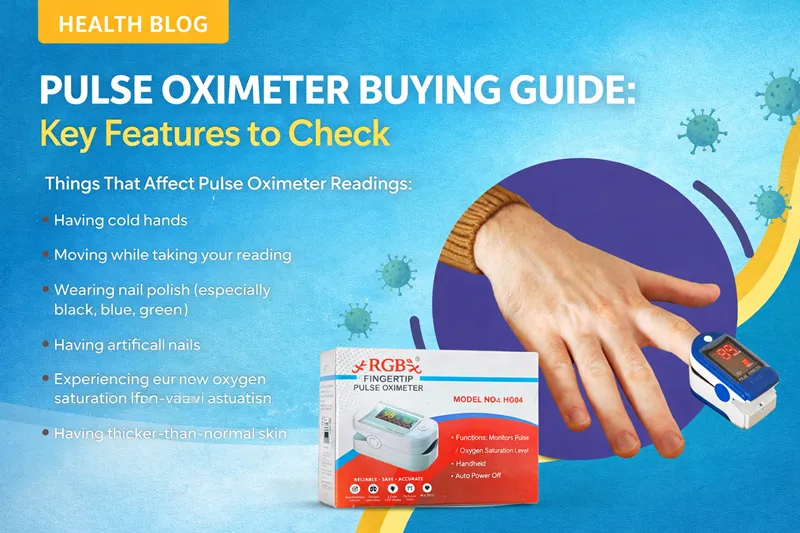
Despite their small size and simple appearance, pulse oximeters are sophisticated electronic medical devices that rely on optical sensors, calibration algorithms, and internal signal processing. Unfortunately, many low-cost models available online are poorly calibrated, built with low-grade components, and marketed using misleading claims about accuracy and performance. Buying such a device may result in false readings, unnecessary panic, or dangerous delays in seeking medical attention during real health emergencies.
Choosing the right pulse oximeter is therefore not a matter of price or brand popularity alone. It requires a clear understanding of technical features, clinical reliability, usability factors, and long-term durability. For elderly patients, COVID recovery cases, people with asthma or COPD, and caregivers managing home care, a pulse oximeter becomes a daily safety tool rather than a one-time gadget.
This Pulse Oximeter Buying Guide has been created to help you make an informed, medically safe, and value-driven purchase decision. It explains in detail the essential features that truly matter when selecting a pulse oximeter for home use, elderly monitoring, respiratory care, and emergency preparedness. Instead of relying on marketing jargon, this guide focuses on real-world performance, clinical relevance, and long-term reliability.
Whether you are buying your first pulse oximeter or upgrading from an older, less reliable model, understanding these features will protect you from unreliable devices and ensure that you invest in a clinically dependable tool that supports your family’s health and peace of mind for years to come.
What Is a Pulse Oximeter?
A pulse oximeter is a compact, non-invasive electronic medical device that measures the percentage of oxygen saturation in the blood, commonly referred to as SpO₂. It also records pulse rate and, in many advanced models, displays waveform patterns and perfusion index values. The device works by emitting red and infrared light through a fingertip or earlobe and measuring how much of that light is absorbed by oxygenated versus deoxygenated hemoglobin.
The internal algorithm of a pulse oximeter analyzes this light absorption data to calculate oxygen saturation levels in real time. Because oxygenated blood absorbs more infrared light while deoxygenated blood absorbs more red light, the ratio between these two values allows the device to estimate oxygen levels without drawing blood. This optical measurement method makes pulse oximeters safe, painless, and suitable for continuous monitoring.
Pulse oximeters are widely used in hospitals, ambulances, clinics, intensive care units, and now increasingly in home-care environments. Doctors rely on them to detect early hypoxia in conditions such as pneumonia, asthma attacks, heart failure, sleep apnea, and post-surgical recovery. In COVID-19 care, pulse oximeters became life-saving tools for identifying silent hypoxia before visible symptoms appeared.
For home users, pulse oximeters provide real-time insight into respiratory health trends without requiring medical visits. This makes them invaluable for elderly care, chronic disease management, fitness tracking, and emergency preparedness. However, the reliability of these readings depends entirely on the quality of the device being used.
With technological advancements, fingertip pulse oximeters have become compact, affordable, and widely accessible. However, this mass availability has also led to a flood of low-grade products that look professional but fail to meet clinical accuracy standards. Understanding what makes a pulse oximeter truly reliable is therefore essential for safe health monitoring.
Why Buying the Right Pulse Oximeter Matters
Choosing a high-quality pulse oximeter is not merely a convenience decision; it is a medical safety decision that can directly affect patient outcomes. Incorrect readings can lead to false reassurance when oxygen levels are dangerously low, or unnecessary panic when the readings appear abnormally low despite normal health. Both situations can be harmful, particularly for elderly individuals and patients with respiratory or cardiac conditions.
Low-quality pulse oximeters often use poorly calibrated sensors, weak light-emitting diodes, and outdated processing algorithms. These devices may show fluctuating oxygen levels, random drops, or inconsistent pulse readings even when the user is resting comfortably. Such unreliable performance reduces trust in the device and makes it unsuitable for serious medical monitoring.
During the COVID-19 pandemic, many patients experienced silent hypoxia, where oxygen levels dropped dangerously without noticeable symptoms. In such cases, only an accurate pulse oximeter could alert caregivers and patients in time for medical intervention. A low-grade device might fail to detect this drop, delaying hospitalization and increasing the risk of severe complications or death.
A reliable pulse oximeter provides stable, consistent readings that allow users to track health trends over time. This trend-based monitoring is far more valuable than single-point readings because it helps doctors assess whether a patient’s condition is improving or deteriorating. Reliable data enables better clinical decision-making and more timely treatment.
Investing in a high-quality pulse oximeter may cost slightly more upfront, but it ensures long-term safety, dependable performance, and peace of mind. When it comes to health monitoring, accuracy and reliability should always take priority over price.
Key Features to Check Before Buying a Pulse Oximeter
1. Accuracy and Medical Certification
Accuracy is the single most critical feature of any pulse oximeter, as all medical decisions based on its readings depend on this factor. A clinically reliable device should offer an SpO₂ accuracy margin of ±2 percent within the 70 to 100 percent oxygen saturation range, which is the medically relevant measurement zone for most users. Pulse rate accuracy should ideally remain within ±2 beats per minute to ensure reliable heart rate monitoring.
Certified pulse oximeters undergo clinical validation and calibration against arterial blood gas standards, which are considered the gold standard for oxygen measurement. This calibration ensures that the device’s readings closely match hospital-grade instruments under controlled testing conditions. Without proper calibration, a pulse oximeter’s readings may deviate significantly from true oxygen levels.
Always check for certifications such as CE (European compliance), FDA (United States Food and Drug Administration), ISO (International Organization for Standardization), or BIS (Bureau of Indian Standards). These certifications indicate that the device meets minimum safety, quality, and performance standards required for medical equipment. Devices lacking any recognized certification should be avoided for serious health monitoring.
Medical-grade or hospital-grade pulse oximeters are typically more reliable than generic consumer models. Although they may cost slightly more, they deliver consistent accuracy and long-term dependability. For elderly patients, children, and individuals with respiratory conditions, investing in certified accuracy is non-negotiable.
A pulse oximeter without proper certification may still display numbers on the screen, but those numbers cannot be trusted for medical decisions. When your health or your loved one’s life may depend on these readings, accuracy must always come first.
2. Display Type and Screen Quality
The display is the primary interface between the user and the pulse oximeter, making its quality extremely important for usability and safety. A poor-quality screen can make even accurate readings difficult to interpret, especially for elderly users or individuals with low vision. Display clarity directly affects how quickly and correctly a user can understand their oxygen levels.
OLED displays are currently considered the best option for pulse oximeters because they provide higher brightness, deeper contrast, and multi-color visuals. These features make SpO₂ values, pulse rates, waveform patterns, and bar graphs easier to read in both bright daylight and low-light environments. LED displays are acceptable but may struggle with visibility in direct sunlight or dim rooms.
A good pulse oximeter display should include auto-rotation functionality so that the readings adjust automatically when the device is rotated. This feature ensures comfortable viewing regardless of hand orientation or finger position. For elderly users who may have limited dexterity, this greatly improves usability.
Large digits are another essential feature, particularly for senior citizens and visually impaired users. Small fonts may look sleek but become impractical during real-world use. A clear, large-font display reduces reading errors and minimizes user frustration.
Advanced displays may also show pulse waveforms and bar graphs, which help verify signal stability and reading reliability in real time. A stable waveform indicates proper sensor placement and good signal quality, while erratic waveforms may signal movement artifacts or poor blood flow.
3. Measurement Speed and Stability
Measurement speed determines how quickly a pulse oximeter produces usable readings after the finger is inserted. A high-quality device should stabilize within five to ten seconds, providing reliable data almost immediately. Slow response times often indicate weak sensors or inefficient internal processing algorithms.
Delayed readings can be frustrating for home users and unsuitable for emergency situations where every second matters. If a pulse oximeter takes too long to stabilize, users may remove their finger prematurely or misinterpret unstable readings as accurate values.
Stability is just as important as speed. A reliable pulse oximeter should produce steady readings without sudden fluctuations when the user remains still. Constantly changing values suggest poor sensor quality, inadequate signal filtering, or low-grade internal electronics.
Stable waveform visualization further confirms proper signal capture. A smooth, continuous waveform indicates good blood flow detection, while a jittery or broken waveform usually signals movement artifacts, cold fingers, or sensor misalignment.
Consistent performance over repeated measurements is a strong indicator of overall device quality. A pulse oximeter that produces different readings every time under identical conditions cannot be trusted for long-term health monitoring.
4. Sensor Quality and Finger Fit
The internal optical sensor is the heart of a pulse oximeter, as it determines how accurately the device captures blood oxygen levels. High-quality sensors use advanced dual-wavelength LEDs and sensitive photodiodes to measure light absorption precisely across different skin tones and blood flow conditions.
Comfortable silicone padding inside the finger clip ensures consistent pressure and prevents light leakage, both of which are essential for accurate readings. A loose or uncomfortable fit can distort measurements and cause frequent reading errors.
Finger size compatibility is another crucial factor, particularly for elderly users and children. Some low-cost pulse oximeters work poorly on small or thin fingers, resulting in unstable or incorrect readings. A good device should be tested for multi-size finger support.
Anti-slip internal linings help prevent finger movement during measurement, further improving reading stability and accuracy. This is especially important for elderly patients who may have shaky hands or limited control over finger placement.
High-quality sensors also perform better in low blood circulation conditions, such as cold hands or peripheral vascular disease. This ensures reliable readings even when circulation is compromised.
5. Battery Type and Power Efficiency
Battery reliability is essential for emergency use and daily monitoring, as a dead battery can render a pulse oximeter useless at critical moments. Most pulse oximeters use either AAA batteries or built-in rechargeable lithium batteries, each with its own advantages.
AAA battery models are convenient because replacement batteries are easily available in local stores and pharmacies. This makes them ideal for rural areas or emergency kits where charging facilities may not be readily accessible.
Rechargeable models are more eco-friendly and eliminate the need for frequent battery replacements. However, they depend on regular charging and may become unusable if the battery degrades over time.
Auto power-off is a crucial feature that conserves battery life by shutting down the device automatically when not in use. This prevents accidental battery drain and extends the overall lifespan of the device.
A low battery indicator is equally important, as it warns users before battery failure disrupts monitoring. This feature allows timely battery replacement or recharging, ensuring uninterrupted health tracking.
6. Additional Monitoring Parameters
Modern pulse oximeters often provide additional health indicators beyond basic SpO₂ and pulse rate, enhancing the depth and usefulness of health monitoring. These extra metrics can offer valuable insights into circulation quality and respiratory stability.
Perfusion Index (PI) measures blood flow strength and helps assess peripheral circulation. It is particularly useful for ICU patients, elderly individuals, and those with vascular conditions, as it provides an additional layer of physiological data.
Some advanced models display respiratory rate, pulse waveform trends, and plethysmography graphs. These features assist doctors in diagnosing breathing irregularities and monitoring patient recovery more effectively.
Bluetooth-enabled pulse oximeters can sync data to smartphone apps, allowing long-term trend tracking and remote doctor consultations. This is especially useful for telemedicine and chronic disease management.
Although these advanced features are not essential for all users, they significantly enhance monitoring capabilities for high-risk patients and long-term health tracking.
7. Alarm Function for Safety
Alarm alerts are life-saving features for continuous home monitoring, particularly for elderly patients and respiratory care users. They notify caregivers and patients when oxygen levels drop below safe thresholds or when pulse rates become abnormal.
Low SpO₂ alarms are essential for COVID recovery patients, COPD individuals, and people with sleep apnea. These alerts ensure immediate medical attention during oxygen desaturation episodes, even if the patient is asleep.
Pulse rate alarms help detect tachycardia or bradycardia in elderly patients with heart conditions. Early detection of abnormal heart rates can prevent serious cardiac events.
Adjustable alarm thresholds allow users to customize alerts based on doctor recommendations and individual health conditions. This personalization ensures that alarms remain clinically relevant rather than overly sensitive.
Audible and vibration alerts ensure warnings are noticed even in noisy environments or during nighttime use, providing an additional layer of safety.
8. Ease of Use for Elderly and Home Patients
Pulse oximeters should be simple enough for elderly users to operate independently without technical assistance. Complicated menus, tiny buttons, or confusing interfaces reduce usability and increase the risk of incorrect operation.
One-button operation is ideal because it minimizes confusion and ensures measurements start instantly without additional steps. This simplicity is especially important for senior citizens and individuals with cognitive limitations.
Lightweight and compact designs improve comfort during long monitoring sessions and make the device easy to carry while traveling. Heavy or bulky devices can cause discomfort and discourage regular use.
Clear on-screen labels and intuitive icons help users interpret readings correctly without medical training. This reduces reliance on caregivers and increases patient independence.
User-friendly designs also improve compliance, ensuring that patients monitor their oxygen levels regularly rather than avoiding the device due to complexity.
9. Build Quality and Durability
Build quality determines how long a pulse oximeter will last under regular use. Cheap plastic bodies crack easily and suffer from hinge failures, making the device unreliable over time.
Shock-resistant casing protects internal electronics from accidental drops, which are common during daily home use. This durability is particularly important for elderly users who may have reduced grip strength.
Scratch-resistant screens maintain visibility over years of use, ensuring that readings remain easy to read without glare or distortion.
A strong hinge mechanism ensures the clip opens and closes smoothly without loosening over time. Weak hinges reduce finger grip stability and compromise reading accuracy.
High-quality build materials also improve hygiene by resisting discoloration and surface degradation from repeated cleaning.
10. Brand Reputation and After-Sales Support
Brand credibility reflects long-term quality consistency and manufacturing reliability. Reputable brands invest in calibration accuracy, medical-grade components, and regulatory compliance.
Customer reviews offer real-world insight into device reliability, durability, and ease of use. Consistently positive feedback indicates strong product performance.
Warranty coverage protects against manufacturing defects, sensor failures, and display issues. A longer warranty period often signals manufacturer confidence in product quality.
Responsive customer support ensures fast resolution for technical issues or replacements, which is critical for medical devices that may be needed urgently.
Choosing a trusted supplier also reduces the risk of counterfeit or substandard products entering your healthcare routine.
Conclusion
A pulse oximeter is not just another electronic gadget; it is a medical safety device that plays a critical role in respiratory health monitoring. Choosing the right model can literally save lives during silent hypoxia, respiratory emergencies, and chronic disease episodes.
Instead of focusing on price alone, prioritize accuracy, certification, alarm features, display quality, ease of use, and after-sales support. A slightly higher upfront cost ensures long-term peace of mind, consistent performance, and reliable health monitoring.
Why Buy from Aarogyaa Bharat?
At Aarogyaa Bharat - Live Healthy, Live Better, we provide clinically tested pulse oximeters designed specifically for Indian home-care needs. Our devices feature high-accuracy sensors, elderly-friendly designs, strong build quality, and warranty-backed reliability.
We offer pan-India delivery, expert healthcare support, and trusted after-sales service to ensure that your health monitoring remains uninterrupted and dependable.