



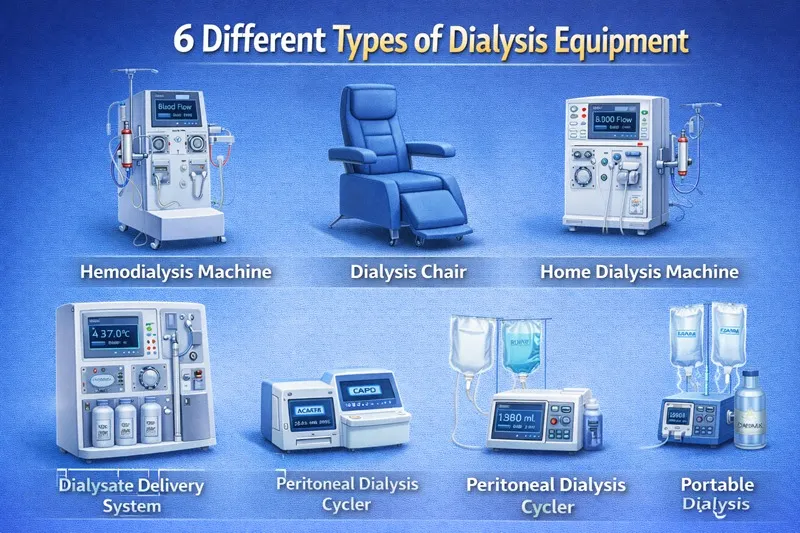
What Is Dialysis and Why Is Equipment So Important?
Dialysis is a medical process that removes:
- Waste
products (like urea and creatinine)
- Excess
salts and electrolytes
- Extra
fluids
from the blood when the kidneys are no longer able to do so
effectively.
Dialysis equipment is crucial because:
- Blood
must be cleaned safely and accurately
- Fluid
balance must be precisely controlled
- Treatment
often happens multiple times a week
- Even
small equipment errors can have serious consequences
That’s why dialysis systems are carefully designed,
monitored, and maintained.
Types of Dialysis: A Quick Overview
Dialysis is broadly divided into two main types:
- Haemodialysis
- Blood is filtered outside the body
- Peritoneal
Dialysis - Blood is filtered inside the body using the abdominal
lining
Each type requires different equipment, designed for
specific clinical needs.
1. Haemodialysis Machine
The haemodialysis machine is the central device used in
dialysis centers and hospitals.
What It Does
- Pumps
blood out of the patient’s body
- Passes
it through a filter (dialyzer)
- Returns
cleaned blood back to the body
Where It’s Used
- Dialysis
centre's
- Hospitals
- Some
advanced home dialysis setups
Why It’s Important
This machine precisely controls:
- Blood
flow rate
- Dialysate
flow
- Treatment
duration
- Safety
alarms
Haemodialysis machines are the backbone of centre-based
dialysis care.
2. Dialyzer (Artificial Kidney)
The dialyzer is often called the “artificial kidney.”
What It Does
- Filters
waste and excess fluids from the blood
- Uses
a semi-permeable membrane
How It Works
- Blood
flows on one side of the membrane
- Dialysate
flows on the other
- Waste
moves across the membrane by diffusion
Why It Matters
The dialyzer directly affects:
- Dialysis
efficiency
- Patient
comfort
- Treatment
effectiveness
Different dialyzers are chosen based on patient size,
condition, and treatment goals.
3. Dialysis Water Treatment System
Dialysis uses large volumes of water, and that water must be
extremely pure.
What It Does
- Removes
bacteria, chemicals, and impurities
- Produces
medical-grade water for dialysis
Why It’s Critical
Contaminated water can lead to:
- Serious
infections
- Toxic
reactions
- Long-term
complications
Water treatment systems are one of the most important safety
components in any dialysis unit.
4. Peritoneal Dialysis (PD) Cycler Machine
A peritoneal dialysis cycler is used for automated
peritoneal dialysis, usually at home.
What It Does
- Automatically
fills and drains dialysis fluid
- Performs
exchanges while the patient sleeps
Who Uses It
- Patients
on long-term peritoneal dialysis
- Those
who prefer home-based treatment
Why Patients Prefer It
- Greater
independence
- Fewer
hospital visits
- Ability
to dialyze overnight
PD cyclers support a more flexible lifestyle for many
patients.
5. Dialysis Access Equipment
Dialysis requires a safe and reliable way to access the
bloodstream or abdominal cavity.
Common Types
- Arteriovenous
(AV) fistula needles
- Dialysis
catheters
- PD
catheters
Why It’s Important
Good access ensures:
- Adequate
blood flow
- Reduced
infection risk
- Comfortable
treatment sessions
Access equipment plays a major role in long-term dialysis
success.
6. Dialysis Monitoring and Safety Equipment
Modern dialysis is heavily monitored to protect patients.
Examples
- Blood
pressure monitors
- Air
bubble detectors
- Temperature
and conductivity sensors
- Alarm
systems
Why It Matters
These devices:
- Detect
problems early
- Prevent
complications
- Ensure
patient safety during treatment
Monitoring equipment allows healthcare staff to respond
quickly to any issue.
How Dialysis Equipment Works Together
During a typical haemodialysis session:
- Blood
leaves the body through access equipment
- The
haemodialysis machine controls flow
- The
dialyzer cleans the blood
- Treated
water and dialysate support filtration
- Monitoring
systems ensure safety
- Clean
blood returns to the patient
Each piece of equipment must work flawlessly as part of a
single system.
Dialysis Equipment in Hospitals vs Home Care
- Hospitals
& Centre's: Large, high-capacity machines, strict monitoring
- Home
Dialysis: Compact machines, user-friendly design, patient training
Both setups aim for the same goal safe, effective blood
purification.
Why Understanding Dialysis Equipment Matters for Patients
and Caregivers
When patients and families understand dialysis equipment:
- Fear
and anxiety reduce
- Treatment
adherence improves
- Complications
are identified early
- Communication
with healthcare providers becomes easier
Conclusion
Understanding the 6 different types of dialysis equipment
helps patients, caregivers, and healthcare professionals appreciate how
dialysis supports life when kidney function fails. From powerful haemodialysis
machines to home-friendly peritoneal dialysis cyclers, each device plays a
vital role in maintaining balance, health, and dignity for patients.
Dialysis is not just a procedure it’s an ongoing partnership
between technology, healthcare teams, and patients. At Aarogyaa Bharat, we are
committed to sharing clear, trustworthy medical knowledge that supports
informed decisions and better outcomes.





