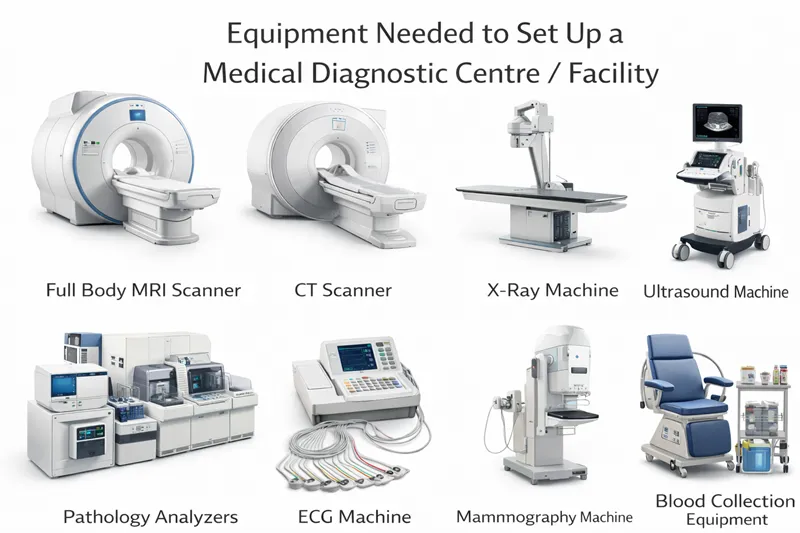
A typical diagnostic centre setup broadly includes Clinical
Laboratory Equipment and Medical Imaging Equipment. Together, these departments
form the backbone of modern diagnostics, supporting doctors with precise,
timely, and actionable data.
Understanding a Medical Diagnostic Centre
A medical diagnostic centre or facility is a specialized
healthcare unit where clinical tests and imaging investigations are conducted
on patient samples such as blood, urine, stool, semen, bone marrow, and other
body fluids, as well as through non‑invasive imaging techniques. The primary
objective is to provide reliable diagnostic information that aids in:
- Disease
diagnosis
- Monitoring
treatment progress
- Preventing
complications
- Promoting
preventive healthcare
Whether it is a standalone diagnostic centre or part of a
hospital ecosystem, the quality of equipment directly impacts patient outcomes.
Key Components of a Diagnostic Centre Setup
A fully functional diagnostic centre generally consists of:
- Clinical
Laboratory (Pathology & Biochemistry)
- Imaging
& Radiology Department
- Supporting
Infrastructure & Safety Equipment
Let’s explore each category in detail.
1. Clinical Laboratory Equipment
The clinical laboratory is where biological samples are
analyzed to understand a patient’s health status. Essential laboratory
equipment includes:
a) Hematology Equipment
- Cell
Counter / Hematology Analyzer - Measures blood components such as RBCs,
WBCs, hemoglobin, and platelets
- ESR
Analyzer - Determines erythrocyte sedimentation rate to detect
inflammation
b) Biochemistry Equipment
- Biochemistry
Analyzer - Measures enzymes, glucose, lipids, liver and kidney function
parameters
- Electrolyte
Analyzer - Evaluates sodium, potassium, chloride, and other electrolytes
- Blood
Gas Analyzer (ABG Machine) - Analyzes arterial blood gases and acid‑base
balance
c) Urine & Special Analyzers
- Urine
Analyzer - Performs routine urine examinations
- Coagulation
Analyzer - Assesses blood clotting parameters
- Immunoassay
Analyzer - Used for hormone, infection, and tumor marker testing
d) Basic Laboratory Accessories
- Centrifuges
- Microscopes
- Refrigerators
for sample storage
- Incubators
- Autoclaves
- Pipettes
and lab consumables
2. Medical Imaging Equipment
Imaging plays a vital role in non‑invasive diagnosis and
disease monitoring. A diagnostic centre may include the following imaging
systems depending on its scope:
a) X‑Ray Imaging Systems
- Digital
X‑Ray Machine
- CR
(Computed Radiography) System
Used for skeletal imaging, chest examinations, trauma
assessment, and more.
b) Ultrasound Equipment
- Ultrasound
Scanner - For abdominal, obstetric, cardiac, and soft tissue imaging
c) Advanced Imaging Systems
- CT
Scanner (Computed Tomography) - Provides cross‑sectional imaging for
trauma, oncology, and neurology
- MRI
(Magnetic Resonance Imaging) - High resolution imaging of soft tissues,
brain, spine, and joints
d) Specialized Imaging Equipment
- Bone
Densitometer (DEXA Scan) - Measures bone mineral density
- Mammography
System - Breast cancer screening and diagnosis
3. Supporting Infrastructure & Safety Equipment
In addition to diagnostic equipment, a medical diagnostic
centre must include:
- Radiation
protection accessories (lead aprons, shields)
- UPS
and power backup systems
- PACS
and RIS software
- Air
conditioning and ventilation systems
- Biomedical
waste management tools
- Fire
safety and emergency equipment
Regulatory and Compliance Considerations
Setting up a diagnostic centre also requires compliance
with:
- AERB
approvals for radiation equipment
- NABL
accreditation for laboratories
- Biomedical
waste management rules
- Local
health authority licenses
Compliance ensures patient safety, legal protection, and
operational credibility.
Choosing the Right Equipment Partner
Selecting high‑quality, certified equipment from a trusted
supplier ensures:
- Accurate
diagnostic results
- Long
equipment life
- Reliable
after‑sales support
- Compliance
with healthcare standards
Platforms like Aarogyaa Bharat help healthcare providers
source genuine diagnostic equipment and consumables under one roof.
Frequently Asked Questions (FAQs)
Q1. What are the basic departments required in a medical
diagnostic centre?
A typical diagnostic centre requires two core departments: a
Clinical Laboratory for sample testing and an Imaging & Radiology
department for diagnostic imaging such as X-ray, ultrasound, CT, or MRI.
Q2. Is NABL accreditation mandatory for diagnostic
laboratories?
While NABL accreditation is not legally mandatory, it is
highly recommended as it ensures quality, accuracy, and credibility of test
results and builds trust among patients and doctors.
Q3. Which imaging equipment should be installed first in
a new diagnostic centre?
Most diagnostic centres begin with Digital X-ray and
Ultrasound systems, as they are cost-effective, widely used, and require
relatively lower infrastructure compared to CT or MRI.
Q4. What factors should be considered while selecting
diagnostic equipment?
Key factors include test accuracy, regulatory compliance,
service support, scalability, space availability, and power requirements.
Choosing certified equipment from a reliable supplier is essential.
Conclusion
A medical diagnostic centre is only as strong as the
equipment it operates. From laboratory analyzers to advanced imaging systems,
each piece plays a vital role in patient care. Careful planning, quality
equipment selection, and regulatory compliance are key to building a diagnostic
facility that delivers accuracy, trust, and better health outcomes.
At Aarogyaa Bharat, we support healthcare providers in
setting up diagnostic centres that meet modern medical standards and serve
communities with excellence.