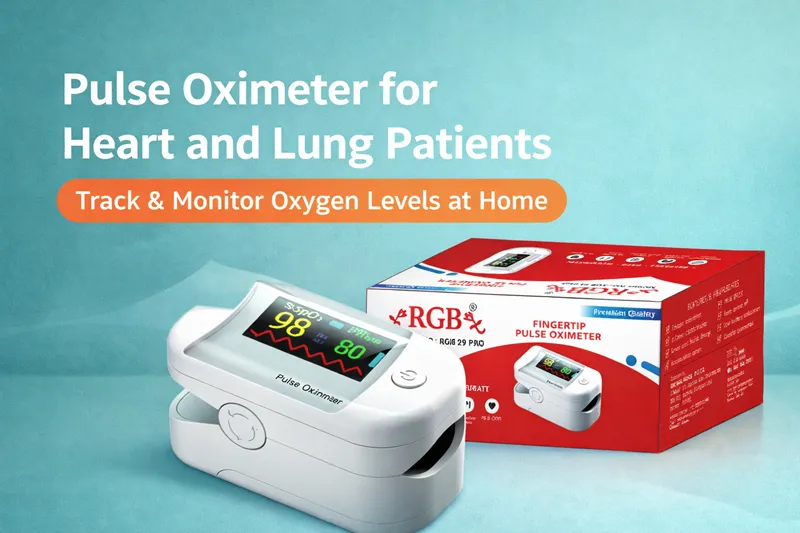
This is why doctors increasingly recommend daily oxygen saturation monitoring at home using a pulse oximeter, especially for elderly patients, post-surgery recovery cases, long COVID patients, and individuals with chronic heart or lung disease. A pulse oximeter is a simple, non-invasive medical device that measures blood oxygen levels and heart rate in real time, allowing patients and caregivers to detect early signs of deterioration before symptoms become severe.
However, many families feel confused about how pulse
oximeters work, who truly needs one, what readings are normal, how often
monitoring should be done, which features matter most, and how to interpret
warning signs correctly. This comprehensive guide by Aarogyaa Bharat explains
why pulse oximeters are essential for heart and lung patients, how they work,
who benefits most, how to choose the right device, how to use it properly at
home, what readings mean, when to seek medical help, and how to integrate oxygen
monitoring into long-term disease management so that every household can
monitor health with confidence and clarity.
Why Oxygen Monitoring Is Critical for Heart and Lung
Patients
Heart and lung diseases directly affect the body’s ability
to deliver oxygen to vital organs, making oxygen saturation monitoring one of
the most important aspects of daily health management for these patients. In
lung conditions such as COPD, asthma, pulmonary fibrosis, bronchiectasis, and
post-COVID lung damage, airflow obstruction, inflammation, or scarring reduces
oxygen exchange in the lungs, leading to chronic or intermittent hypoxemia. In
heart conditions such as heart failure, coronary artery disease, and
arrhythmias, the heart struggles to pump oxygen-rich blood efficiently
throughout the body, causing tissue oxygen deprivation even when lung function
appears normal.
Low oxygen levels place continuous stress on the brain,
heart, kidneys, and muscles, increasing the risk of confusion, chest pain,
fatigue, organ damage, and sudden medical emergencies. What makes this
situation particularly dangerous is that oxygen levels can drop significantly
before noticeable symptoms appear, especially in elderly patients or
individuals with long-standing chronic disease who have adapted to low oxygen
levels over time.
A pulse oximeter provides a simple, real-time snapshot of
oxygen saturation and heart rate, allowing early detection of worsening
disease, infection, medication side effects, or post-surgical complications.
Regular monitoring empowers patients and caregivers to take proactive action
rather than reacting to emergencies, making it an essential tool for long-term
heart and lung disease management.
How a Pulse Oximeter Works
A pulse oximeter is a small, clip-style medical device that
fits over a fingertip and uses light-based technology to measure blood oxygen
levels and pulse rate. It emits two types of light, red and infrared, through
the fingertip, and sensors on the other side detect how much light is absorbed
by oxygenated and deoxygenated hemoglobin in the blood.
By analyzing these light absorption patterns, the device
calculates oxygen saturation as a percentage, known as SpO₂, and displays it
along with heart rate. This process is completely non-invasive, painless, and
takes only a few seconds to produce a reading.
For heart and lung patients, this technology provides a fast
and reliable way to track oxygen levels during rest, physical activity, sleep,
and illness, making it an invaluable home monitoring tool.
Who Needs a Pulse Oximeter at Home
A pulse oximeter is beneficial for a wide range of patients
who require close monitoring of oxygen levels and heart function.
Patients with COPD, asthma, pulmonary fibrosis, interstitial
lung disease, bronchiectasis, and post-COVID lung damage use pulse oximeters to
detect oxygen drops during flare-ups, infections, or physical exertion. Heart
patients with heart failure, coronary artery disease, arrhythmias, valve
disorders, and post-cardiac surgery recovery rely on oxygen monitoring to
detect early signs of cardiac strain and decompensation.
Elderly individuals with reduced lung capacity, smokers,
obese patients, and people with sleep apnea benefit from daily oxygen tracking
to prevent nighttime hypoxemia and sudden health deterioration. Post-surgical
patients, especially those recovering from lung, heart, or major abdominal
surgery, use pulse oximeters to ensure stable oxygen levels during recovery.
COVID recovery patients and individuals with long COVID
symptoms also use pulse oximeters to monitor delayed oxygen drops that may not
be immediately noticeable.
What Are Normal Oxygen Levels for Heart and Lung Patients
Understanding what constitutes a normal oxygen level is
critical for interpreting pulse oximeter readings correctly.
For healthy adults, normal oxygen saturation typically
ranges between ninety-five and one hundred percent. For patients with chronic
lung disease, acceptable baseline levels may be slightly lower, often between
eighty-eight and ninety-four percent, depending on individual medical
conditions and doctor recommendations.
Readings consistently below ninety percent are generally
considered low and may require medical evaluation. Sudden drops in oxygen
levels, even if they remain above ninety percent, can also indicate worsening
disease, infection, or fluid buildup in heart failure patients.
Heart rate readings should also be monitored alongside
oxygen levels. Abnormally high or low heart rates in combination with low
oxygen levels may signal cardiac distress and require immediate medical
attention.
Doctors often establish individualized target oxygen ranges
for heart and lung patients, and caregivers should always follow these
personalized guidelines rather than relying solely on general population
standards.
How to Use a Pulse Oximeter Correctly at Home
Using a pulse oximeter correctly is essential for obtaining
accurate readings and avoiding false alarms.
Before taking a reading, the patient should rest quietly for
at least five minutes, avoid cold hands, and remove nail polish or artificial
nails that can interfere with light transmission. The device should be placed
securely on the fingertip, ideally on the index or middle finger, and the hand
should be kept still at heart level during measurement.
Once the device stabilizes, typically within five to ten
seconds, record both the oxygen saturation and heart rate values. Readings
should be taken at the same times each day to track trends rather than relying
on isolated measurements.
For patients on oxygen therapy, readings should be taken
both with and without oxygen support if advised by a doctor, to assess therapy
effectiveness.
Key Features to Look for in a Pulse Oximeter
Choosing the right pulse oximeter requires more than picking
the cheapest model available online. Certain features directly impact accuracy,
reliability, and ease of use.
Accuracy certification is the most important factor. Look
for devices that are medically certified and approved for clinical use. Display
quality matters, especially for elderly users, so choose a device with a
bright, easy-to-read screen and adjustable brightness.
Battery life is important for daily monitoring, so select a
device with long battery backup or rechargeable capability. Alarm functions
that alert users when oxygen levels fall below preset thresholds add an extra
layer of safety for high-risk patients.
Data storage and Bluetooth connectivity are useful for
long-term tracking and sharing readings with doctors, especially for chronic
disease management.
Common Causes of Inaccurate Pulse Oximeter Readings
Pulse oximeters are reliable, but certain conditions can
cause inaccurate or misleading readings.
Cold fingers, poor circulation, nail polish, artificial
nails, and dark skin pigmentation can interfere with light absorption.
Excessive hand movement during measurement can cause unstable readings.
Severe anemia, carbon monoxide exposure, and poor peripheral
perfusion can also affect accuracy.
To minimize errors, readings should always be taken under
consistent conditions, and abnormal values should be confirmed with repeat
measurements or medical-grade devices when in doubt
How Often Should Heart and Lung Patients Monitor Oxygen
Levels
The frequency of oxygen monitoring depends on disease
severity, medical advice, and symptom stability.
Stable patients may only need to check oxygen levels once or
twice daily, while high-risk patients, post-surgical cases, and individuals
recovering from infections may require monitoring several times per day.
Patients on oxygen therapy should measure levels before,
during, and after therapy sessions to assess effectiveness.
Any sudden or unexplained change in readings should be
documented and discussed with a healthcare provider
When to Seek Medical Help Based on Pulse Oximeter
Readings
Pulse oximeter readings should always be interpreted
alongside symptoms and medical history.
Immediate medical attention is required if oxygen saturation
falls below eighty-eight percent, remains persistently below ninety percent
despite oxygen therapy, or drops suddenly by more than three to four percent
from baseline.
Warning symptoms such as chest pain, severe breathlessness,
confusion, bluish lips or fingertips, dizziness, or irregular heartbeat in
combination with low oxygen levels require urgent medical evaluation.
Pulse oximeters are monitoring tools, not diagnostic
devices, and abnormal readings should always be confirmed and evaluated by a
doctor.
Pulse Oximeter vs Other Oxygen Monitoring Methods
|
Feature |
Pulse
Oximeter |
Arterial
Blood Gas Test |
Hospital
Monitoring System |
|
Invasiveness |
Non-invasive |
Invasive
blood draw |
Non-invasive |
|
Speed |
Instant |
Lab
processing time |
Continuous |
|
Home Use |
Yes |
No |
No |
|
Cost |
Low |
High |
Very high |
|
Accuracy |
High for
trends |
Very high |
Very high |
|
Convenience |
Excellent |
Poor |
Moderate |
Why Aarogyaa Bharat Recommends Pulse Oximeters for Home
Care
At Aarogyaa Bharat, we believe that daily oxygen monitoring
is a cornerstone of safe home care for heart and lung patients. We recommend
medically certified pulse oximeters because they provide early warning signs,
empower families with real-time data, and reduce unnecessary hospital visits.
We guide families in selecting devices based on disease
type, age, ease of use, display clarity, alarm features, and long-term
monitoring needs. Our mission is to help patients manage chronic disease
proactively and live with greater confidence and safety.
Conclusion
A pulse oximeter for heart and lung patients is not just a gadget; it is a life-saving monitoring tool that provides critical insights into respiratory and cardiac health on a daily basis. The right pulse oximeter can detect early warning signs, prevent emergencies, support recovery, and improve long-term disease management. Choosing a reliable, medically accurate device and using it correctly is one of the most important decisions a family can make for a patient with heart or lung disease. With expert guidance, consistent monitoring, and timely medical action, home oxygen tracking can be safe, effective, and stress-free.