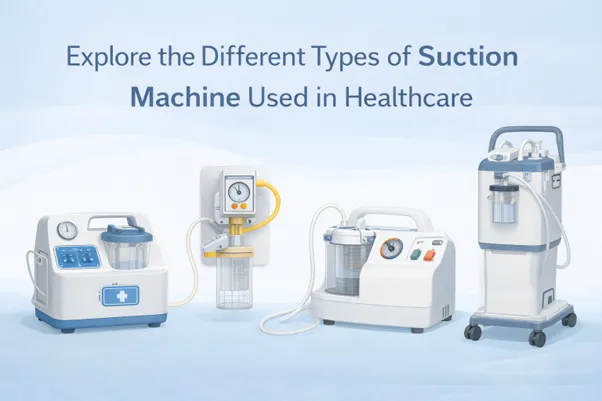
Despite their importance, suction machines are often
underestimated during procurement, leading to mismatched capacity, poor
performance, or safety risks. Understanding the different types of suction
machines used in healthcare is crucial for choosing the right equipment for
each clinical scenario.
At Aarogyaa Bharat, we guide healthcare providers,
biomedical teams, and buyers with practical, usage-oriented equipment
knowledge. This comprehensive guide covers types of suction machines, their
working principles, applications, advantages, limitations, buying
considerations, and FAQs.
What Is a Suction Machine?
A suction machine (suction apparatus) is a medical device
used to remove fluids, secretions, blood, vomit, mucus, or foreign materials
from a patient’s airway, surgical site, or body cavity.
It creates negative pressure (vacuum) that pulls unwanted
material through tubing into a collection canister.
suction machine medical
Why Suction Machines Are Critical in Healthcare
Suction machines are used to:
- Maintain
clear airways
- Prevent
aspiration
- Improve
oxygenation
- Support
emergency resuscitation
- Ensure
visibility during surgery
Without effective suction, even routine procedures can
become life-threatening.
Suction Machine in Clinical Use
How Does a Suction Machine Work?
The basic working principle involves:
- Motor
or vacuum source generates negative pressure
- Suction
tubing connects patient area to canister
- Fluids
are aspirated and collected safely
- Filters
prevent contamination and overflow
The strength of suction is measured in mmHg or kPa.
medical suction working principle
Broad Classification of Suction Machines
Suction machines are classified based on:
- Power
source
- Mobility
- Application
- Capacity
1. Manual Suction Machines
Manual suction machines operate without electricity, using
hand-operated pumps.
Common Examples
- Hand-held
suction pump
- Foot-operated
suction
Applications
- Emergency
first aid
- Field
use
- Remote
locations
Advantages
No power required
Lightweight
Highly portable
Limitations
Limited suction power
Not suitable for prolonged use
manual suction machine
2. Electric Suction Machines
Electric suction machines use a motor-driven vacuum pump and
are the most widely used type in healthcare.
Applications
- Hospitals
- Clinics
- ICUs
- Nursing
homes
Advantages
Consistent suction
Adjustable pressure
Reliable for long procedures
Limitations
Requires power supply
electric suction machine
Electric Suction Machine in Hospital
3. Portable Suction Machines
Portable suction machines are compact, lightweight, and
often battery-operated.
Applications
- Ambulances
- Emergency
rooms
- Home
healthcare
- Patient
transport
Advantages
Mobility
Battery backup
Quick deployment
Limitations
Lower capacity compared to OT units
portable suction machine
4. Wall-Mounted Suction Units
These units are permanently installed in:
- ICUs
- Operation
theatres
- Emergency
wards
They are connected to central vacuum systems.
Advantages
High suction power
Continuous operation
Minimal floor space usage
Limitations
Fixed location
Higher infrastructure cost
wall mounted suction unit
Wall-Mounted Suction in ICU
5. Surgical Suction Machines
Designed specifically for operation theatres.
Key Features
- High
flow rate
- Large
collection jars
- Silent
operation
- Foot-switch
control
Applications
- General
surgery
- Orthopaedics
- Gynaecology
- ENT
procedures
surgical suction machine
6. Dental Suction Machines
Used in dental clinics to:
- Remove
saliva
- Maintain
dry working area
Types
- Low-volume
evacuators
- High-volume
suction systems
dental suction machine
7. Suction Machines for Home Healthcare
These are designed for:
- Tracheostomy
care
- COPD
patients
- Bedridden
patients
Key Features
- Low
noise
- Easy
operation
- Compact
design
home suction machine
Home Care Suction Machine
Key Technical Specifications to Consider
When choosing a suction machine, evaluate:
- Maximum
vacuum pressure
- Flow
rate (L/min)
- Canister
capacity
- Noise
level
- Power
source
- Filtration
system
Clinical Applications of Suction Machines
Suction machines are used in:
- Airway
management
- Surgical
procedures
- Labor
and delivery
- ICU
and ventilator care
- Emergency
trauma care
Maintenance & Infection Control
Proper maintenance is critical:
- Regular
canister cleaning
- Filter
replacement
- Tubing
sterilization
- Motor
servicing
Poor maintenance can cause cross-infection risks.
Common Mistakes While Buying Suction Machines
Ignoring suction capacity
Choosing non-medical grade devices
Overlooking noise levels
Not checking service support
Using home units in hospitals
Regulatory & Quality Standards
Suction machines should comply with:
- ISO
medical device standards
- IEC
electrical safety norms
- Local
health authority approvals
Certified devices ensure patient and operator safety.
Future Trends in Suction Technology
- Quieter
motors
- Smart
pressure regulation
- Disposable
canister systems
- Integrated ICU vacuum monitoring
Conclusion
Suction machines are critical support devices across
healthcare settings. From emergency airway management to precision surgical
procedures, choosing the right type of suction machine directly impacts patient
safety and clinical efficiency.
At Aarogyaa Bharat, we recommend selecting suction machines
based on clinical application, capacity needs, safety standards, and long-term
reliability, ensuring dependable performance in every situation.