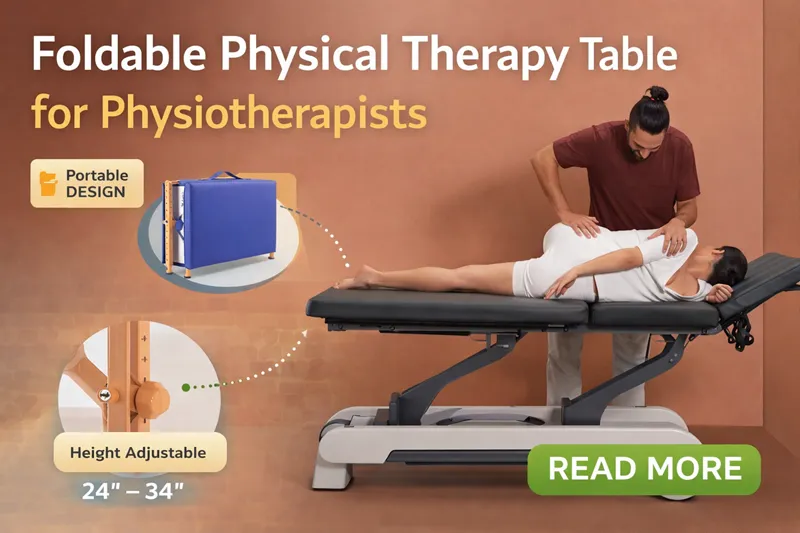
Why the Therapy Table Is a Critical Tool for
Physiotherapists
Physiotherapists rely heavily on manual techniques that
require controlled pressure, precise joint positioning, and sustained posture.
A therapy table is not a passive surface; it actively affects how treatment is
delivered. If the table height is incorrect, therapists compensate with poor
posture. If the table is unstable, techniques become guarded and less
effective. If the padding is inadequate, patients tense up, reducing treatment
response. A foldable physical therapy table designed for professional use
ensures that physiotherapists can focus fully on clinical reasoning and
hands-on skill rather than battling equipment limitations during every session.
The Shift Toward Mobile and Hybrid Physiotherapy Practice
The physiotherapy profession in India is undergoing a major
shift. Increasing numbers of physiotherapists now offer home visits, corporate
wellness programs, sports event coverage, and community-based rehabilitation.
Even clinic-based therapists often work across multiple locations. This hybrid
model demands equipment that can move with the therapist without sacrificing
treatment quality. Foldable physical therapy tables enable physiotherapists to
deliver clinic-grade care anywhere, expanding professional reach while
maintaining consistency. This adaptability is no longer optional it is a
competitive and clinical necessity.
Professional Identity and Patient Trust
Patients often judge the quality of physiotherapy not only
by outcomes but by the professionalism of the setup. A stable, clean,
well-designed foldable therapy table immediately establishes credibility and
trust. In contrast, therapy conducted on beds or improvised surfaces can create
doubt, discomfort, and reduced confidence. For physiotherapists, especially
those working independently or visiting homes, a foldable physical therapy
table reinforces professional identity and reassures patients that they are
receiving structured, evidence-based care rather than a compromised
alternative.
Ergonomics and Therapist Health: A Long-Term Perspective
One of the most overlooked aspects of physiotherapy practice
is therapist health. Years of bending, lifting, and applying force on poorly
designed surfaces lead to chronic back pain, shoulder injuries, and wrist
strain among physiotherapists. A foldable physical therapy table with
adjustable height allows therapists to maintain neutral spinal alignment and
optimal joint angles during treatment. Over thousands of sessions, this
ergonomic advantage significantly reduces cumulative strain. For physiotherapists,
investing in the right table is not just about patient care it is about
protecting their own bodies and sustaining long, healthy careers.
Height Adjustability as a Clinical Necessity
Different physiotherapy techniques require different working
heights. Joint mobilization, soft tissue release, neurological facilitation,
and post-surgical exercises all demand precise positioning. A foldable physical
therapy table with reliable height adjustment allows therapists to adapt
instantly to each technique and patient profile. For patients with limited
mobility, correct height also ensures safer transfers and reduces fear during
sessions. Height adjustability transforms the table from a static surface into
a dynamic clinical tool.
Stability and Force Transmission in Manual Therapy
Manual therapy depends on accurate force transmission from
therapist to patient. Any wobble, flex, or instability dissipates force and
compromises technique. High-quality foldable physical therapy tables are
engineered with reinforced frames, locking leg mechanisms, and wide base
designs that eliminate movement under load. This stability allows
physiotherapists to apply techniques confidently and safely, whether performing
spinal mobilization, joint traction, or resisted exercises. In mobile and home
settings, where floors may be tiled or uneven, table stability becomes even
more critical.
Weight Capacity and Clinical Inclusivity
Physiotherapists treat patients of all body types, including
overweight and bariatric individuals. A foldable physical therapy table with
high weight capacity ensures safe, inclusive care without hesitation or risk.
Insufficient weight capacity forces therapists to modify techniques or avoid
certain treatments altogether, which compromises outcomes. Choosing a table
that comfortably exceeds typical patient weights future-proofs the therapist’s
practice and supports ethical, inclusive care delivery.
Padding Quality and Its Impact on Treatment Response
Patient comfort directly influences neuromuscular response
during therapy. Poor padding causes discomfort, pressure points, and protective
muscle tension, all of which reduce treatment effectiveness. Professional-grade
foldable physical therapy tables use high-density, multi-layer foam that
maintains firmness while distributing pressure evenly. This allows patients to
relax fully, enabling better joint mobility, muscle release, and neurological
response. For long sessions or sensitive patients, padding quality can be the
difference between progress and resistance.
Portability Without Compromising Clinical Standards
Physiotherapists who travel between locations need equipment
that is easy to carry but uncompromising in performance. A well-designed
foldable physical therapy table folds smoothly, locks securely, and balances
weight distribution for safe carrying. Portability should never mean fragility.
The best tables withstand daily transport, frequent setup, and repeated load
without loosening joints or degrading performance. This reliability is
essential for physiotherapists who depend on their equipment as much as their
hands-on skill.
Safety Features That Support Confident Practice
Safety is a shared responsibility between therapist and
equipment. Foldable physical therapy tables should include non-slip feet,
rounded edges, secure locking systems, and stable leg angles. These features
protect patients during transfers and protect therapists during force
application. In neurological rehabilitation, geriatric care, and post-surgical
therapy, where balance and reaction time may be compromised, safety-focused
table design significantly reduces risk and anxiety during sessions.
Versatility Across Physiotherapy Specializations
Physiotherapists often specialize, but many also treat
diverse conditions. A foldable physical therapy table must support orthopaedic
rehab, neurological therapy, sports physiotherapy, paediatric care, geriatric
care, and pain management. Versatile table design allows use across modalities
without adjustment fatigue or compromise. This versatility is especially
valuable for independent practitioners and small clinics that cannot afford
multiple specialized tables.
Features Physiotherapists Should Prioritize in a Foldable
Therapy Table
|
Feature |
Clinical
Importance |
|
Adjustable
height |
Therapist
ergonomics and precision |
|
High
stability |
Safe force
application |
|
Strong frame |
Long-term
durability |
|
High weight
capacity |
Inclusive
patient care |
|
Quality
padding |
Better
patient response |
|
Easy
portability |
Mobile
practice efficiency |
Workflow Efficiency and Session Quality
Physiotherapists often work with tight schedules. Equipment
that is difficult to set up, adjust, or clean wastes valuable treatment time.
Foldable physical therapy tables designed for professionals open quickly,
adjust smoothly, and clean easily. This efficiency allows therapists to focus
on assessment, treatment, and patient education rather than logistics. Over a
full day of sessions, small efficiencies add up to significantly better
workflow and reduced fatigue.
Impact on Patient Compliance and Outcomes
Patients are more likely to continue physiotherapy when
sessions are comfortable, safe, and professional. A foldable physical therapy
table improves patient experience by offering consistent comfort and security.
This encourages adherence to long-term rehabilitation plans, which is one of
the strongest predictors of successful outcomes. For physiotherapists, better
compliance means better results and stronger professional reputation.
Cost vs Career Value for Physiotherapists
While high-quality foldable physical therapy tables require
investment, evaluating them purely on price misses the bigger picture. A
durable, ergonomic table reduces therapist injury risk, improves treatment
outcomes, enhances patient trust, and supports practice expansion into home and
mobile care. Over years of use, the cost per session becomes negligible
compared to the professional value delivered. For physiotherapists, a good
table is not an expense it is career infrastructure.
Hygiene and Professional Standards
Physiotherapists must maintain high hygiene standards,
especially in post-surgical and neurological care. Foldable physical therapy
tables with wipe-clean upholstery and corrosion-resistant frames simplify
infection control across multiple locations. Easy cleaning protects patients,
maintains professional credibility, and complies with modern healthcare
expectations.
Long-Term Role Beyond Active Treatment
Even after acute rehabilitation ends, physiotherapists often
support maintenance, preventive care, and wellness programs. Foldable physical
therapy tables remain relevant across all these phases. They support stretching
routines, posture correction, manual therapy, and preventive interventions,
making them a lifelong asset in physiotherapy practice.
Physiotherapy Practice With vs Without a Professional
Foldable Table
|
Aspect |
Improvised
Surface |
Foldable
Therapy Table |
|
Treatment
precision |
Limited |
High |
|
Therapist
posture |
Poor |
Ergonomic |
|
Patient
comfort |
Inconsistent |
Optimized |
|
Safety |
Compromised |
High |
|
Professional
image |
Weak |
Strong |
Conclusion
For physiotherapists, a foldable physical therapy table is
far more than a convenience it is a core professional tool that directly shapes
clinical outcomes, therapist health, and patient trust. In a healthcare
landscape that increasingly values mobility, home care, and flexible service
delivery, foldable tables enable physiotherapists to practice at the highest
standard anywhere. By prioritizing stability, ergonomics, safety, and
durability, physiotherapists can protect their bodies, elevate their practice,
and deliver consistently excellent care. Investing in the right foldable
physical therapy table is not just a practical decision it is a professional
commitment to quality, longevity, and patient-centred rehabilitation.
Choosing between a foldable and a fixed physical therapy table is a critical decision for clinics, hospitals, physiotherapists, and home rehabilitation setups. The choice directly impacts treatment quality, therapist ergonomics, patient safety, space utilization, and long-term operational costs. This very detailed comparison guide by Aarogyaa Bharat explains the real-world differences between foldable and fixed physical therapy tables, going far beyond surface-level features to help Indian healthcare providers, therapists, and families make an informed, future-ready decision.