Why Physical Therapy Tables Matter More Than People Realize
In physiotherapy and rehabilitation, outcomes are not defined only by exercises or therapist expertise. The therapy surface plays a silent yet critical role in patient confidence, therapist posture, treatment precision, and overall safety. A poorly chosen therapy table can cause discomfort, instability, therapist fatigue, and even injury risks, while the right table enhances mobility training, manual therapy effectiveness, and long-term recovery consistency. In India, where physiotherapy services range from large hospitals to compact home-care setups, understanding whether a foldable or fixed therapy table suits your environment is essential.
Understanding Foldable Physical Therapy Tables in the Indian Context
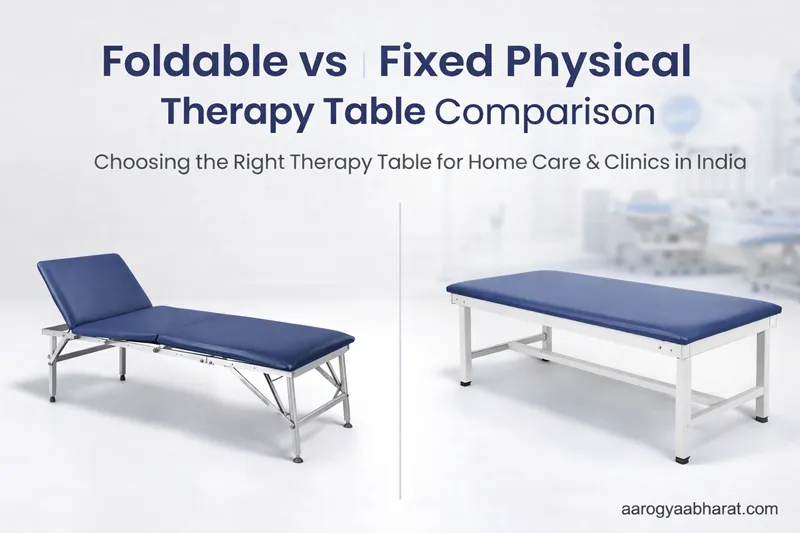
Foldable physical therapy tables are designed for flexibility, mobility, and space optimization. These tables typically feature collapsible legs, lightweight frames, and compact designs that allow easy transportation and storage. In Indian cities where physiotherapists frequently travel for home visits, or where families manage rehabilitation in limited living spaces, foldable tables provide a practical solution. They are commonly used for elderly rehabilitation, post-surgical physiotherapy, neurological recovery, and temporary therapy setups where permanent installation is not feasible. Foldable tables are especially popular among independent physiotherapists, home-care agencies, and caregivers who need reliable yet movable equipment without investing in heavy infrastructure.
Understanding Fixed Physical Therapy Tables and Their Clinical Importance
Fixed physical therapy tables are non-folding, permanently placed therapy platforms built for stability, durability, and continuous use. These tables are typically heavier, sturdier, and designed to support intensive manual therapy, traction, and advanced rehabilitation techniques. Fixed tables are most commonly found in hospitals, physiotherapy clinics, orthopedic centers, sports rehabilitation units, and long-term care facilities. In Indian healthcare environments where patient volumes are high and treatments are complex, fixed tables provide consistency, superior weight handling, and professional treatment ergonomics that support therapists over long working hours.
Foldable vs Fixed Physical Therapy Table: Structural and Functional Comparison
| Aspect | Foldable Physical Therapy Table | Fixed Physical Therapy Table |
|---|---|---|
| Design | Collapsible and portable | Permanent and non-folding |
| Space Requirement | Minimal, ideal for homes | Requires dedicated therapy room |
| Portability | Easy to carry and transport | Not portable |
| Stability | Moderate to good (depends on quality) | Very high stability |
| Weight Capacity | Suitable for light to medium patients | Suitable for heavy and bariatric patients |
| Setup Time | Quick setup and fold | One-time installation |
| Typical Use | Home visits, temporary rehab | Clinics, hospitals, long-term rehab |
Space Challenges in Indian Homes and Clinics
One of the most important considerations in India is space. Many urban apartments, independent houses, and joint family homes do not have dedicated therapy rooms. Foldable therapy tables allow families to conduct rehabilitation sessions in bedrooms or living areas and store the table afterward without disrupting daily routines. This flexibility is invaluable for elderly parents, post-operative patients, and stroke survivors receiving physiotherapy at home. Fixed tables, on the other hand, require a designated space with sufficient clearance for therapist movement and patient transfers. Clinics that handle daily patient appointments benefit from fixed tables because they maintain consistent positioning, eliminate setup time, and create a professional environment that builds patient trust.
Patient Comfort, Safety, and Confidence During Therapy
Patient comfort is directly influenced by table stability, cushioning, and height alignment. Fixed therapy tables provide superior stability, making them ideal for patients with balance issues, paralysis, obesity, or severe mobility limitations. The rigid structure reduces unwanted movement during transfers, stretching, and manual therapy, which enhances patient confidence and reduces fall risk. Foldable tables can still offer excellent comfort when built with high-quality materials and proper locking mechanisms. They are well-suited for elderly patients, post-surgical rehabilitation, and general physiotherapy where extreme force or traction is not required. However, therapists must ensure the table is properly locked and placed on an even surface for maximum safety.
Therapist Ergonomics and Daily Workload Impact
Physiotherapists often work long hours, and poor ergonomics can lead to chronic back, shoulder, and wrist strain. Fixed therapy tables often feature better height stability and accessory compatibility, allowing therapists to maintain proper posture during manual therapy and exercise guidance. This makes them ideal for clinics handling high patient volumes and intensive treatment protocols. Foldable tables are designed for convenience rather than prolonged daily use. While they support standard therapy effectively, therapists performing multiple sessions per day may experience fatigue faster compared to working on fixed tables. However, for mobile physiotherapists who prioritize travel efficiency, foldable tables remain the preferred option.
Cost, Investment, and Long-Term Value Considerations
Cost is a major decision factor in India. Foldable physical therapy tables are generally more affordable, making them accessible to independent therapists, startups, and families managing home rehabilitation. They require lower initial investment and are easy to replace or upgrade. Fixed therapy tables involve higher upfront costs but deliver long-term value through durability, minimal maintenance, and professional performance. Clinics that expect consistent patient flow often find fixed tables more economical over time due to their longer lifespan and ability to support diverse treatment modalities.
Choosing the Right Table Based on Use Case
| Use Case | Recommended Table Type |
|---|---|
| Home physiotherapy for elderly parents | Foldable |
| Post-surgery recovery at home | Foldable |
| Mobile physiotherapy services | Foldable |
| Small rented clinic | Foldable or compact fixed |
| High-volume physiotherapy clinic | Fixed |
| Hospital or rehabilitation center | Fixed |
| Neurological and spinal rehab | Fixed |
| Bariatric patient therapy | Fixed |
Can Clinics Benefit from Using Both Types?
Many modern Indian physiotherapy practices successfully use both foldable and fixed therapy tables. Fixed tables are used inside clinics for regular appointments and complex treatments, while foldable tables support home visits and outreach programs. This hybrid approach maximizes service reach without compromising treatment quality.
Why Aarogyaa Bharat Is a Trusted Name in Physiotherapy Equipment
Aarogyaa Bharat focuses on practical, Indian-friendly healthcare solutions designed for real-world use. Our range of foldable and fixed physical therapy tables is curated to meet the needs of physiotherapists, clinics, caregivers, and families. Every product emphasizes safety, durability, patient comfort, and therapist usability, ensuring reliable rehabilitation outcomes across home-care and clinical settings.
Conclusion
The decision between a foldable and fixed physical therapy table depends on space, patient profile, treatment intensity, and long-term goals. Foldable tables provide unmatched flexibility and convenience for home-based care and mobile physiotherapy, while fixed tables deliver superior stability and professional performance for clinics and hospitals. By carefully evaluating your rehabilitation environment, you can choose a table that enhances safety, comfort, and therapeutic outcomes. Aarogyaa Bharat remains committed to supporting India’s growing rehabilitation ecosystem with dependable, well-designed physiotherapy solutions.