What Is a Transit Wheelchair?
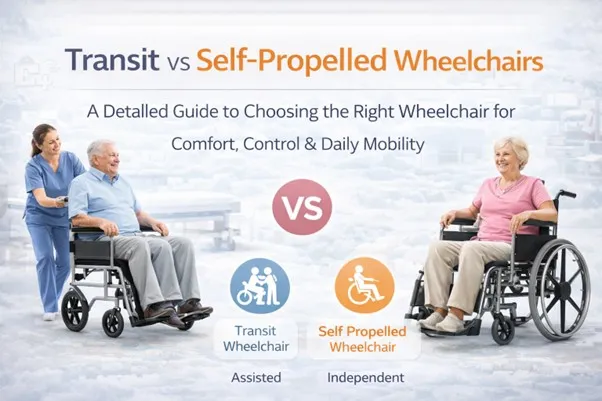
A transit wheelchair is designed to be:
- Pushed
by a caregiver
- Used
for short distances
- Compact
and lightweight
Key Characteristics
- Small
rear wheels
- No
hand rims
- Lighter
frame
- Easy
folding
Transit wheelchairs do not allow independent self-movement.
What Is a Self-Propelled Wheelchair?
A self-propelled wheelchair is designed for:
- Independent
movement
- Longer
usage durations
- Outdoor
mobility
Key Characteristics
- Large
rear wheels
- Hand
rims for pushing
- Stronger
frame
- Better
stability
Self-propelled wheelchairs promote freedom and autonomy.
Core Difference at a Glance
|
Feature |
Transit
Wheelchair |
Self-Propelled
Wheelchair |
|
Rear Wheels |
Small |
Large |
|
Independence |
No |
Yes |
|
Caregiver
Required |
Always |
Optional |
|
Weight |
Lighter |
Heavier |
|
Outdoor Use |
Limited |
Good |
|
Cost |
Lower |
Higher |
Independence vs Assistance: The Biggest Deciding Factor
Choose Transit Wheelchair If:
- User
has weak arms
- Stroke
or paralysis present
- Elderly
with limited strength
- Caregiver
always available
Choose Self-Propelled If:
- User
has arm strength
- Wants
independence
- Goes
outdoors frequently
- Needs
long sitting durations
Independence is not just physical it affects mental
well-being.
Physical Strength & Medical Condition
Transit Wheelchair Works Best For:
- Stroke
patients
- Severe
arthritis
- Advanced
age
- Temporary
injury
Self-Propelled Works Best For:
- Spinal
injury patients
- Young
adults
- Rehab
users
- Partial
mobility users
Medical condition should always guide selection.
Indoor vs Outdoor Usage Patterns
Transit Wheelchairs
- Ideal
indoors
- Hospitals
& clinics
- Smooth
floors
- Narrow
Indian homes
Self-Propelled Wheelchairs
- Suitable
for outdoors
- Rough
roads
- Longer
distances
- Independent
travel
Using a transit wheelchair outdoors causes fatigue and
discomfort.
Caregiver Impact & Fatigue
Transit wheelchairs:
- Increase
caregiver workload
- Require
constant presence
Self-propelled wheelchairs:
- Reduce
caregiver dependency
- Allow
rest periods
Caregiver health is part of patient care.
Weight, Portability & Storage
Transit Wheelchairs
- Lighter
- Easier to fold
- Ideal for travel
- Fits car boots
Self-Propelled Wheelchairs
Heavier
More space required
If frequent transport is needed, transit models are easier.
Safety Considerations
Transit Wheelchair Safety
- Strong
brakes
- Anti-tip
wheels
- Caregiver
control
Self-Propelled Safety
- Brakes
must be user-friendly
- Anti-tip
essential for beginners
Safety depends on who controls movement.
Cost Comparison (India)
|
Type |
Approx
Price |
|
Transit
Wheelchair |
₹5,000 -
₹8,000 |
|
Self-Propelled
Wheelchair |
₹7,000 -
₹15,000 |
Self-propelled costs more but may reduce caregiver expense
long-term.
Rent vs Buy Based on Wheelchair Type
Rent Transit If:
- Temporary
injury
- Post-surgery
- Short-term
need
Buy Self-Propelled If:
- Long-term
use
- Independence
needed
- Rehab
goals
Aarogyaa Bharat offers both types for rent and purchase
with expert guidance.
Common Mistakes Families Make
- Buying transit wheelchair for independent user
- Buying self-propelled for weak elderly patient
- Ignoring caregiver availability
- Not testing wheel size
Correct choice prevents frustration.
Decision Checklist (Use This Before Buying)
- Can the user push the wheelchair?
- Is a caregiver always available?
- Indoor or outdoor use?
- Short-term or long-term?
- Storage & transport needs?
Answer honestly.
Conclusion: Choose Control, Not Convenience
The decision between transit and self-propelled wheelchairs
is about who controls mobility.
- Transit
wheelchairs prioritize assisted safety
- Self-propelled
wheelchairs prioritize independence
The right choice:
- Matches
physical ability
- Respects
lifestyle
- Reduces
frustration
- Improves
dignity
A wheelchair should fit the person not force the person to
fit the wheelchair.