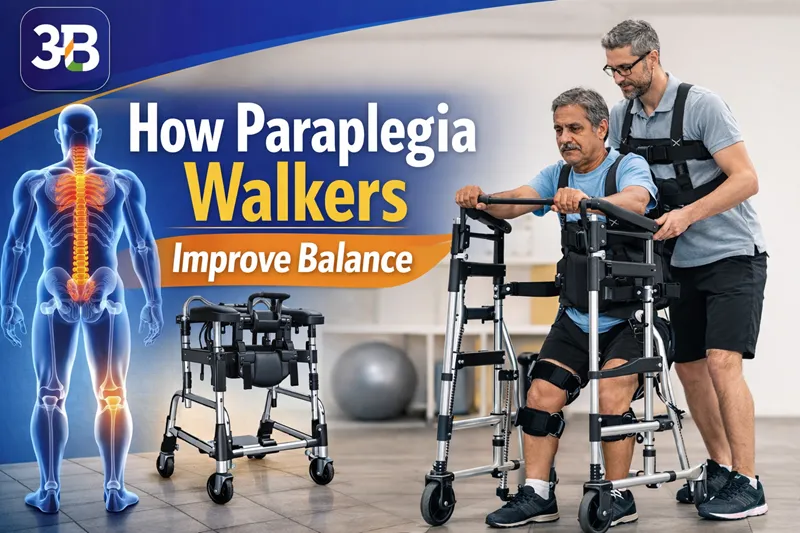
Understanding Balance Challenges in Paraplegia
Rehabilitation
Balance is one of the most complex aspects of recovery after
spinal cord injury because it involves coordination between muscles, nerves,
posture alignment, and sensory feedback. Individuals with paraplegia often
experience reduced trunk stability, weakened lower-limb muscles, and altered
proprioception, which makes standing and walking difficult without support.
Rehabilitation walkers act as external stabilization systems that allow
patients to practice upright positioning safely while gradually re-training
balance mechanisms. Aarogyaa Bharat emphasizes that balance recovery is not
only about muscle strength but also about rebuilding confidence, reducing fear
of falling, and enabling the nervous system to adapt through repetitive
supported movement. Walkers create a controlled environment where patients can
focus on posture correction and controlled weight shifting without excessive
risk, making them essential tools in modern neuro-rehabilitation programs.
The Science Behind Walker-Assisted Balance Training
Paraplegia walkers improve balance by expanding the base of
support and redistributing body weight through the upper limbs and torso. This
redistribution reduces instability and allows patients to maintain upright
posture for longer periods, which is critical for activating core muscles and
improving spinal alignment. During physiotherapy sessions, walkers provide
tactile feedback that helps the brain understand body position in space,
improving coordination over time. Aarogyaa Bharat highlights that repeated
standing and stepping exercises performed with walkers stimulate neural
pathways that contribute to better balance control, even when lower-limb
movement remains limited. The structured frame of the walker acts as a
stabilizing anchor, allowing patients to practice balance without relying
solely on muscle strength.
Types of Paraplegia Walkers That Enhance Balance
Different walker designs support different stages of
rehabilitation and levels of balance control. Standard walkers provide maximum
stability during early standing exercises, while reciprocal walkers encourage
alternating movement patterns that challenge dynamic balance. Gait trainers
include harness systems that help patients practice balance safely during
stepping exercises, especially in intensive rehabilitation programs. Posterior
walkers promote upright posture by positioning the support frame behind the
user, which encourages natural alignment and reduces forward leaning. Aarogyaa
Bharat recommends selecting walker types based on physiotherapy goals, as the
right design can significantly influence balance improvement outcomes.
Table: Walker Types and Their Role in Balance Training
|
Walker
Type |
Balance
Support Level |
Rehabilitation
Stage |
Key
Stability Benefit |
|
Very High |
Early
recovery |
Static
balance training |
|
|
Reciprocal
Walker |
High |
Mid-stage
rehab |
Dynamic
balance practice |
|
Gait Trainer |
Maximum |
Intensive
therapy |
Full-body
stabilization |
|
Posterior
Walker |
Moderate |
Advanced
recovery |
Posture
improvement |
Static Balance Improvement Through Supported Standing
One of the most effective ways paraplegia walkers improve
balance is through static standing exercises. During early physiotherapy
sessions, patients often begin with simple upright positioning while holding
the walker handles. This allows muscles in the core, shoulders, and back to
activate gradually, improving stability over time. Standing with support also
enhances circulation and reduces stiffness caused by prolonged sitting.
Aarogyaa Bharat explains that even short periods of supported standing can help
retrain balance reflexes and build endurance, creating a foundation for more
advanced rehabilitation exercises.
Dynamic Balance Training with Controlled Movement
As recovery progresses, physiotherapists introduce dynamic
balance exercises that involve stepping, turning, and shifting weight from one
side to the other. Reciprocal walkers are particularly effective during this
phase because they allow alternating arm movements that mimic natural walking
mechanics. These controlled movements challenge balance while maintaining
safety, helping patients develop coordination and confidence. Aarogyaa Bharat
stresses that dynamic balance training should always progress gradually,
ensuring that movements remain controlled and aligned with the patient’s
rehabilitation plan.
Table: Balance Exercises Using Paraplegia Walkers
|
Exercise
Type |
Physiotherapy
Goal |
Safety Tip |
Balance
Benefit |
|
Static
Standing |
Posture
alignment |
Therapist
supervision |
Core
stability |
|
Weight
Shifting |
Side balance
control |
Slow
movements |
Improved
coordination |
|
Assisted
Stepping |
Dynamic
balance |
Maintain
upright posture |
Functional
mobility |
|
Turning
Practice |
Directional
control |
Wide turns |
Fall risk
reduction |
Neurological Adaptation and Sensory Feedback
Balance improvement in paraplegia rehabilitation is closely
linked to neurological adaptation. Walkers provide consistent sensory input
through the hands and arms, which helps the brain understand body positioning
and adjust movements accordingly. Repetitive practice with walker support
encourages neuroplasticity, allowing patients to develop new movement patterns
even when nerve damage limits full recovery. Aarogyaa Bharat highlights that
this sensory feedback is one of the most powerful benefits of walker-based
therapy, as it helps patients regain a sense of body awareness that is often
lost after injury.
Posture Correction and Core Stability Development
Maintaining correct posture is essential for improving
balance, and walkers provide a structured framework that encourages upright
alignment. Improper posture can lead to muscle fatigue and increase the risk of
falls, making height adjustment and ergonomic handle positioning critical.
Physiotherapists often use walkers to guide patients into proper alignment,
ensuring that shoulders remain relaxed and the spine stays neutral. Aarogyaa
Bharat emphasizes that improved posture not only enhances balance but also
reduces long-term strain on joints and muscles.
Psychological Confidence and Fear Reduction
Balance recovery is not purely physical; emotional
confidence plays a major role in rehabilitation success. Many paraplegia
patients experience fear of falling, which can limit participation in therapy.
Walkers create a sense of security that encourages patients to attempt
movements they might otherwise avoid. Achieving small milestones, such as
standing longer or taking assisted steps, builds confidence and motivates
continued progress. Aarogyaa Bharat believes that walker-based balance training
helps restore independence and emotional resilience during recovery.
Role of Caregivers in Supporting Balance Training
Caregivers provide essential support during walker-based
rehabilitation by ensuring safe movement and monitoring fatigue. Standing
beside the patient rather than pulling from behind helps maintain natural
balance patterns. Clear communication and patience help reduce anxiety during
exercises, while proper training prevents caregiver injury. Aarogyaa Bharat
recommends caregiver education sessions with physiotherapists to ensure that
assistance techniques remain safe and effective.
Common Mistakes That Reduce Balance Improvement
Incorrect walker height, leaning forward excessively, or
rushing movements can reduce the effectiveness of balance training. Patients
should focus on slow, controlled exercises and maintain consistent posture
throughout each session. Aarogyaa Bharat advises avoiding slippery floors,
loose rugs, and cluttered spaces during rehabilitation, as environmental
hazards can undermine balance progress.
Long-Term Benefits of Balance Training with Paraplegia
Walkers
Regular walker-based rehabilitation can lead to improved
endurance, better circulation, and enhanced functional mobility. Even when full
walking independence is not achieved, improved balance allows patients to
transfer safely between wheelchair and bed, participate in daily activities,
and maintain overall physical health. Aarogyaa Bharat highlights that balance
improvement contributes to long-term independence and quality of life for
individuals living with paraplegia.
Conclusion
Paraplegia walkers play a crucial role in improving balance
by providing stability, encouraging posture correction, and enabling safe
weight-bearing exercises during physiotherapy. Through consistent practice,
neurological adaptation, and structured rehabilitation, these walkers help
patients rebuild confidence and regain functional mobility. Aarogyaa Bharat
encourages families and caregivers to view walker-based balance training as a
holistic recovery approach that integrates physical therapy, emotional support,
and adaptive mobility solutions to enhance long-term independence and quality
of life.