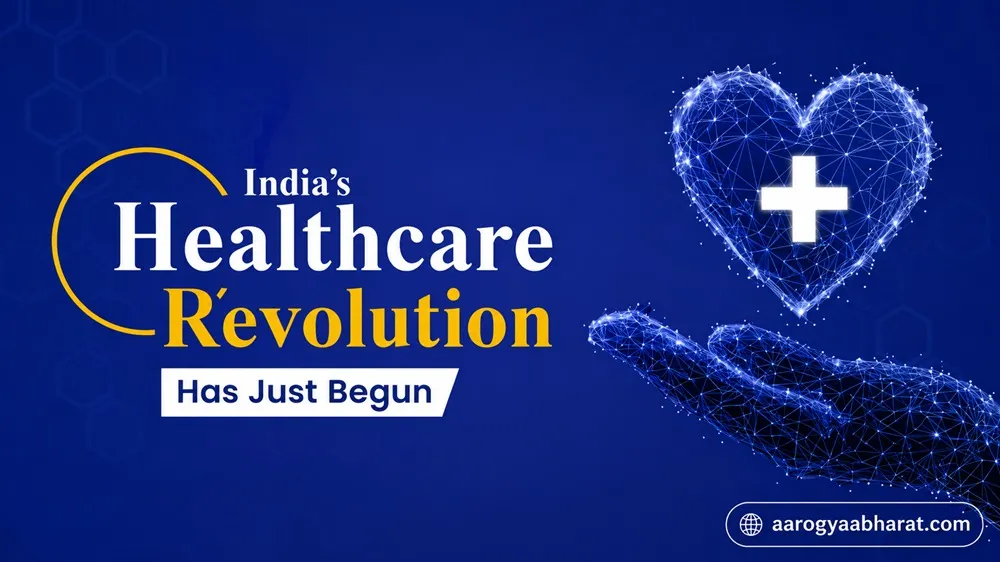
A New Era of Healthcare Transformation in India
India is standing at the beginning of one of the biggest
healthcare transformations in its history. Over the last few years, healthcare
awareness, digital technology, medical innovation, and infrastructure
development have accelerated rapidly across the country. What was once
considered a slow and developing healthcare system is now evolving into a
modern, technology-driven, and patient-focused ecosystem. The vision of Viksit
Bharat is strongly connected to healthcare because a healthy population is the
foundation of a strong nation. India’s healthcare revolution is no longer a
future possibility it has already begun, and its impact will continue to grow
in the coming decades.
Digital Healthcare Is Changing the Way India Receives
Care
Technology is becoming the backbone of India’s healthcare
ecosystem. Telemedicine platforms, online consultations, digital patient
records, AI-powered diagnostics, and mobile healthcare applications are
transforming how patients access medical services. People living in remote
areas can now connect with doctors through smartphones and receive medical
guidance without traveling long distances. Digital healthcare is reducing
treatment delays, improving efficiency, and making healthcare services more
accessible and affordable for millions of people. As internet connectivity and
smartphone usage continue to grow, digital healthcare will become an essential
part of everyday life across India.
Artificial Intelligence Is Reshaping Healthcare
Artificial intelligence is rapidly becoming one of the most
powerful tools in modern healthcare. AI-based systems are helping doctors
analyze medical reports, detect diseases earlier, improve diagnostics, and
support faster clinical decisions. From radiology and pathology to patient
monitoring and predictive healthcare analytics, artificial intelligence is
improving healthcare accuracy and efficiency. AI-driven healthcare solutions
can help reduce the workload on medical professionals while increasing the speed
of diagnosis and treatment planning. As healthcare technology evolves further,
AI will continue to play a major role in building smarter and more efficient
healthcare systems across India.
Healthcare Accessibility Is Improving Across India
One of the biggest achievements of India’s healthcare
transformation is the increasing focus on accessibility. Healthcare services
are gradually reaching smaller cities,
towns, and rural villages through government initiatives, healthcare startups,
mobile clinics, and telemedicine services. Medical
equipment, diagnostic services, oxygen support, home
healthcare, and specialist consultations are becoming more available in
regions that previously lacked healthcare infrastructure. This expansion is
helping reduce the healthcare gap between urban and rural India and ensuring
that more citizens receive timely medical support. Accessible healthcare is
essential for creating a healthier and more inclusive nation.
Affordable Healthcare Is Becoming a National Priority
Affordability has always been one of the biggest healthcare
challenges in India, but the healthcare revolution is creating solutions that
make medical care more cost-effective for ordinary citizens. Healthcare
startups, medical technology companies, digital healthcare platforms, and
affordable diagnostic services are helping reduce treatment costs while
improving healthcare quality. Home
healthcare services, medical equipment rentals, preventive healthcare
programs, and digital consultations are making healthcare more affordable for
middle-class and rural families. A healthcare system that combines quality with
affordability is critical for achieving the goals of Viksit Bharat.
Home Healthcare Is Transforming Patient Experience
India’s healthcare revolution is also changing how people
receive care at home. Many patients now prefer home healthcare services for
post-surgery recovery, elderly care, chronic disease management, and rehabilitation support.
Medical equipment such as oxygen
concentrators, hospital
beds, wheelchairs, BiPAP
systems, and patient monitoring devices are increasingly being used in home
settings. Home healthcare provides greater comfort, reduces hospital overcrowding, and
supports faster patient recovery. As India’s elderly population continues to
grow, home-based healthcare solutions will become even more important in the
future healthcare ecosystem.
Healthcare Startups Are Driving Innovation
Indian healthcare startups are playing a major role in
transforming the medical industry through innovation and technology. From
telemedicine platforms and AI-based healthcare tools to health-tech
applications and affordable medical devices, startups are creating practical
solutions for real healthcare challenges. These companies are improving
healthcare efficiency, expanding access to services, and introducing modern
technologies that support doctors, hospitals, and patients. Startups are also
helping create employment opportunities and accelerating healthcare
modernization across India. Innovation-driven entrepreneurship is becoming one
of the strongest pillars of India’s healthcare revolution.
Medical Infrastructure Is Growing Rapidly
India is witnessing major improvements in healthcare
infrastructure through the expansion of hospitals, diagnostic centers, medical
colleges, emergency care systems, and specialized treatment facilities. Modern hospitals are
adopting advanced technologies such as robotic surgery systems, smart ICUs,
digital monitoring systems, and automated healthcare management platforms.
Investment in healthcare infrastructure is helping improve patient care quality
and treatment capacity across the country. Along with urban healthcare
development, efforts are also being made to strengthen district hospitals and
rural healthcare centers to ensure balanced growth nationwide.
Preventive Healthcare Is Becoming More Important
India’s healthcare revolution is not only focused on
treatment but also on prevention and wellness. People are becoming more aware
of fitness, nutrition, mental health, regular health checkups, and early
disease detection. Preventive healthcare helps reduce long-term medical
expenses and lowers the burden on hospitals by identifying
health issues before they become critical. Digital health tracking devices,
wearable technology, wellness applications, and preventive healthcare programs
are encouraging healthier lifestyles among citizens. This shift toward
preventive healthcare is essential for building a healthier population in the
long term.
Rural Healthcare Is Entering a New Phase
Rural healthcare development is one of the most important
aspects of India’s healthcare transformation. Many villages are now gaining
access to telemedicine services, portable diagnostic systems, digital
consultations, and mobile healthcare support that were previously unavailable.
Government healthcare programs and private healthcare initiatives are working
together to improve rural healthcare infrastructure and accessibility. The
integration of technology into rural healthcare is helping bridge the gap between cities and villages, ensuring
that quality healthcare reaches underserved communities. Strong rural
healthcare systems are essential for achieving inclusive national development.
Emergency Healthcare Systems Are Becoming Stronger
India is also improving its emergency healthcare systems
through better ambulance networks, oxygen infrastructure, ICU expansion,
emergency medical
equipment, and digital healthcare coordination. During medical
emergencies, faster healthcare response can save lives and reduce
complications. Technology-driven emergency systems, GPS-enabled ambulances,
telemedicine support, and portable medical devices are improving emergency
preparedness across healthcare facilities. Strengthening emergency healthcare
infrastructure is helping India build a more resilient and future-ready
healthcare system capable of handling large-scale healthcare challenges more
effectively.
Technology and Data Will Shape the Future of Healthcare
The future of Indian healthcare will be deeply connected
with data, automation, and smart technologies. Digital health records, AI
analytics, wearable devices, remote patient monitoring, and cloud-based
healthcare systems will improve healthcare efficiency and personalization.
Technology will help doctors make better clinical decisions, improve patient
outcomes, and reduce operational costs. Data-driven healthcare systems will
also support disease tracking, healthcare planning, and public health management
at a national level. India is rapidly moving toward a smarter and more
connected healthcare ecosystem that can support millions of people efficiently.
Challenges Still Exist but the Direction Is Positive
Despite major progress, India’s healthcare system still
faces challenges such as uneven healthcare access, shortages of medical
professionals, infrastructure gaps, and affordability concerns in some regions.
Rural healthcare systems require further strengthening, and healthcare
awareness still needs improvement in many communities. However, the overall
direction of India’s healthcare journey remains highly positive because
innovation, investment, digital transformation, and public awareness are
increasing rapidly. With continuous efforts from government bodies, healthcare
organizations, startups, and medical professionals, these challenges can
gradually be overcome.
The Future of Healthcare in Viksit Bharat
The future of healthcare in India looks more promising than
ever before. By 2047, India is expected to become one of the world’s leading
healthcare ecosystems driven by digital healthcare, medical innovation,
artificial intelligence, affordable treatment, and patient-centred care.
Healthcare services will become faster, smarter, more accessible, and more
connected across urban and rural regions. India’s healthcare revolution will
not only improve the lives of millions of citizens but also contribute to economic
growth, productivity, and national development. A healthy nation is the
foundation of a developed nation, and healthcare will remain one of the
strongest pillars of Viksit Bharat.
Conclusion
India’s healthcare revolution has already begun, and its impact is transforming the country in powerful ways. From digital healthcare and AI-powered systems to affordable treatment, home healthcare, and rural healthcare development, India is building a modern healthcare ecosystem focused on accessibility, innovation, and patient care. The combination of technology, healthcare awareness, infrastructure growth, and entrepreneurship is creating a stronger foundation for the future. As India continues moving toward the vision of Viksit Bharat, healthcare transformation will play one of the most important roles in building a healthier, smarter, and more developed nation for generations to come.