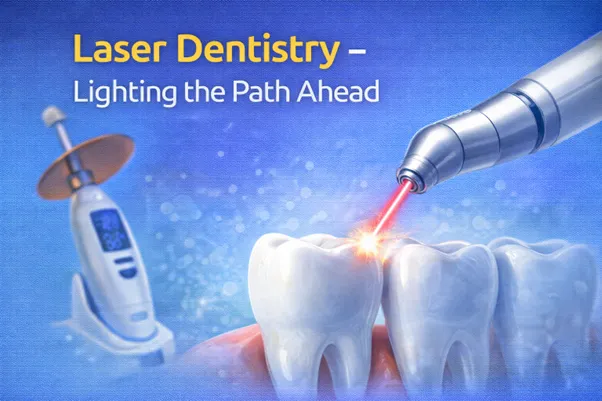
No other healthcare discipline has benefited as much from
advancements in light-based technology as dentistry. The introduction of
light-cure technology revolutionized dental treatments, allowing dentists to
use photo-activated materials in sealants, cements, and composites. This
significantly expanded treatment possibilities while reducing chair time and
improving patient comfort.
Today, laser dentistry represents the next leap offering
precision, safety, and efficiency that traditional dental tools often struggle
to match.
What Is Laser Dentistry?
Laser dentistry uses focused light energy to perform a wide
range of dental procedures. The term “laser” stands for Light Amplification
by Stimulated Emission of Radiation. In simple words, lasers produce an
intense beam of light that can cut, shape, disinfect, or remove tissue
with exceptional accuracy.
Depending on the procedure, lasers can be used on:
- Soft
tissues (gums, oral lesions)
- Hard
tissues (teeth, bone)
This versatility makes lasers an invaluable tool in modern
dental clinics.
How Laser Technology Changed Dentistry
Before lasers, dental procedures relied heavily on drills,
scalpels, and sutures. While effective, these tools often caused discomfort,
bleeding, and anxiety especially among children and first-time patients.
Laser dentistry changed that by offering:
- Minimal
or no pain
- Reduced
bleeding
- Lower
risk of infection
- Faster
healing
- Shorter
treatment times
For many patients, laser dentistry has transformed the
dental experience from something feared to something manageable and even
comfortable.
Types of Dental Lasers
Dental lasers are broadly classified into two categories:
1. Soft Tissue Lasers
Used for procedures involving gums and soft oral tissues,
such as:
- Gum
reshaping
- Treatment
of gum disease
- Removal
of oral lesions
- Frenectomy
(tongue-tie release)
2. Hard Tissue Lasers
Used for teeth and bone procedures, including:
- Cavity
detection and removal
- Tooth
preparation for fillings
- Treating
tooth sensitivity
- Bone
contouring
Each laser type is designed for specific wavelengths to
ensure safety and precision.
Common Dental Procedures Using Lasers
Laser dentistry is used across multiple dental specialties,
including:
Cavity Detection and Treatment
Lasers can detect cavities at an early stage and remove
decayed tissue with minimal damage to healthy tooth structure.
Gum Disease Treatment
Laser periodontal therapy removes infected tissue and
bacteria while preserving healthy gums often without stitches.
Teeth Whitening
Laser-activated whitening speeds up the bleaching process
and enhances results.
Gum Contouring
Used for cosmetic dentistry to reshape gums for a more
balanced smile.
Oral Surgery and Lesion Removal
Lasers offer precise cuts with minimal bleeding, making
recovery faster and more comfortable.
Advantages of Laser Dentistry
Laser dentistry offers numerous benefits over conventional
methods:
Reduced pain and discomfort
Minimal bleeding and swelling
Lower need for anesthesia
Faster healing and recovery
Reduced risk of infection
High precision and accuracy
Ideal for children and anxious patients
For patients with dental anxiety, lasers often eliminate the
fear associated with drills and surgical instruments.
Is Laser Dentistry Safe?
Yes, laser dentistry is FDA-approved and clinically safe
when performed by trained professionals. Dentists undergo specialized training
to use dental lasers correctly and safely.
Protective measures, such as safety glasses, are used during
procedures to protect both patients and practitioners.
Limitations of Laser Dentistry
While laser dentistry offers many advantages, it does have
some limitations:
- Not
all procedures can be performed using lasers
- Laser
equipment can be expensive
- Some
treatments may still require traditional tools
- Not
all dental clinics are fully equipped with laser systems
However, as technology advances, these limitations continue
to decrease.
Laser Dentistry and Patient Comfort
One of the biggest advantages of laser dentistry is patient
comfort. Many procedures can be performed with little or no anesthesia, reduced
noise, and minimal post-procedure discomfort.
This makes laser dentistry especially beneficial for:
- Children
- Elderly
patients
- Patients
with dental phobia
- Patients
requiring multiple procedures
The Future of Laser Dentistry
As technology advances, laser dentistry is expected to
become more widespread and affordable. Future innovations may include:
- More
compact laser devices
- Enhanced
precision with AI integration
- Expanded
applications in implantology and orthodontics
Laser dentistry is not just a trend it represents the future
of minimally invasive dental care.
Why Choose Modern Dental Technology?
At Aarogyaa Bharat, we believe that understanding modern
healthcare technologies empowers patients to make better decisions. From
advanced dental equipment to patient-friendly solutions, technology plays a key
role in improving outcomes and quality of life.
Laser dentistry is a perfect example of how innovation can
enhance both clinical effectiveness and patient experience.
Frequently Asked Questions (FAQs)
Q1. Does laser dentistry hurt?
Most laser dental procedures cause little to no pain and
often require less anesthesia than traditional treatments.
Q2. Is laser dentistry more expensive?
Costs may be slightly higher for some procedures, but
reduced recovery time and fewer follow-up visits often balance the expense.
Q3. Can lasers replace all dental tools?
No. Lasers complement traditional tools but do not completely replace them.
Conclusion
Laser dentistry has truly illuminated the future of dental
care. By combining precision, comfort, and efficiency, it allows dentists to
deliver superior treatment while enhancing patient experience.