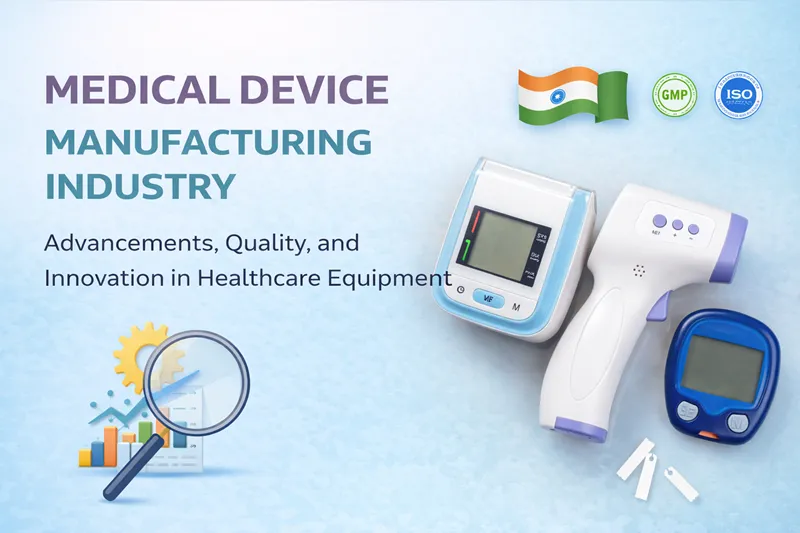
With growing healthcare demands, aging populations, rising
chronic diseases, and rapid technological advancements, the medical device
manufacturing industry continues to expand at a steady pace. Its contribution
goes beyond product development it directly influences patient safety, clinical
outcomes, healthcare efficiency, and system sustainability. As healthcare
evolves, this industry plays an increasingly vital role in shaping the future
of medical care.
Overview of the Medical Device Manufacturing Industry
The medical device manufacturing industry includes companies
involved in the design, development, testing, and production of medical
equipment and devices. These devices are used across hospitals, clinics,
diagnostic laboratories, research institutions, and home healthcare
environments.
Products manufactured range from basic consumables such as
syringes and gloves to advanced diagnostic imaging systems, monitoring devices,
and therapeutic equipment. Manufacturers work closely with doctors, nurses,
biomedical engineers, and healthcare institutions to understand clinical needs
and translate them into safe, effective, and usable medical devices. This
collaboration ensures products align with real-world medical practices and
patient requirements.
Growth of the Medical Device Manufacturing Industry
The medical device manufacturing industry has witnessed
consistent and structured growth over the past decade. Increased healthcare
investments, expanding medical infrastructure, and improved access to
healthcare services have driven demand globally.
Government initiatives supporting healthcare expansion,
local manufacturing, and regulatory reforms have further accelerated growth.
Many countries, including India, are encouraging domestic production to reduce
import dependency and strengthen supply chain resilience. This growth has
improved both global distribution networks and local manufacturing
capabilities, ensuring wider access to essential medical devices.
Types of Products in the Medical Device Manufacturing
Industry
The industry produces a broad and diverse range of medical
devices designed to support different stages of healthcare delivery. These
include:
- Medical
consumables such as syringes, masks, gloves, and disposables
- Surgical
instruments and operating room equipment
- Diagnostic
devices for imaging, pathology, and point-of-care testing
- Patient
monitoring systems for wards, ICUs, and emergency care
- Rehabilitation
and mobility products for recovery and long-term care
In addition, manufacturers are increasingly developing
technology-driven devices such as smart monitors, portable diagnostics, and
connected healthcare equipment. This wide product spectrum enables
comprehensive care across preventive, diagnostic, therapeutic, and
rehabilitative services.
Manufacturing Processes and Infrastructure
Medical device manufacturing relies heavily on precision
engineering, controlled environments, and advanced production techniques.
Modern manufacturing facilities are equipped with automation, robotics, clean
rooms, and real-time quality control systems.
Each stage of production from raw material sourcing and
component assembly to final testing and packaging is carefully monitored.
Validation and traceability are maintained throughout the process to ensure
safety and consistency. Strong manufacturing infrastructure allows companies to
scale production while maintaining quality, meeting both routine demand and
emergency healthcare needs.
Quality Standards and Regulatory Framework
Strict quality standards govern the medical device
manufacturing industry due to the direct impact devices have on patient health
and safety. Manufacturers must comply with national and international
regulatory frameworks, including ISO quality management systems, CE
certification, GMP practices, and local regulatory authority requirements.
Quality assurance processes involve detailed testing, risk
assessment, validation, and documentation. Regulatory compliance ensures that
medical devices are safe, effective, reliable, and approved for clinical use.
These standards also build trust among healthcare providers and patients.
Role of Innovation and Technology
Innovation is a major driving force in the medical device
manufacturing industry. Continuous research and development enable the creation
of more accurate, efficient, and user-friendly medical devices.
Technologies such as automation, digital design, simulation
software, and data-driven manufacturing improve production efficiency and
reduce errors. Innovation also supports the development of minimally invasive
tools, portable devices, and patient-centric solutions. As healthcare needs
evolve, innovation ensures manufacturers remain aligned with global clinical
standards and expectations
Global and Indian Market Perspective
Globally, the medical device manufacturing industry supports
healthcare systems across developed and emerging economies. Hospitals, clinics,
and research institutions rely on a steady supply of quality medical devices to
function effectively.
India has emerged as a strong and reliable manufacturing hub
due to its skilled workforce, cost efficiency, and growing regulatory maturity.
Indian manufacturers supply medical devices to both domestic healthcare
providers and international markets across Asia, Africa, the Middle East, and
beyond. This has strengthened India’s position in the global healthcare
ecosystem.
Importance of Medical Device Manufacturers in Healthcare
Medical device manufacturers directly influence the quality,
safety, and efficiency of healthcare delivery. Reliable devices improve
diagnostic accuracy, enhance treatment effectiveness, and support continuous
patient monitoring.
Manufacturers also help healthcare providers maintain
operational efficiency by ensuring device availability, consistency, and
reliability. Their role is essential for building resilient and sustainable
healthcare systems capable of meeting current and future challenges.
Role of Aarogyaa Bharat in the Industry
Aarogyaa Bharat supports the medical device manufacturing
industry by connecting verified manufacturers with healthcare providers and
buyers. We focus on sourcing compliant, quality-assured medical devices
suitable for hospitals, clinics, diagnostics, and home healthcare.
Our platform emphasizes transparency, reliability, and
nationwide accessibility. By simplifying procurement and logistics, Aarogyaa
Bharat helps healthcare providers access trusted medical devices efficiently,
strengthening the overall healthcare supply chain.
Future Outlook of the Medical Device Manufacturing
Industry
The future of the medical device manufacturing industry is
strongly driven by innovation, technology, and personalized healthcare trends.
Growing demand for home-based care, remote monitoring, and smart medical
devices will continue to fuel industry expansion.
Manufacturers investing in research, digital transformation,
and regulatory compliance will lead the market. As healthcare systems worldwide
focus on efficiency and accessibility, the medical device manufacturing
industry is expected to play an even larger role in global healthcare delivery.
Conclusion
The medical device manufacturing industry is vital to modern
healthcare systems. Its continuous growth supports improved patient care,
medical efficiency, and healthcare accessibility across the world.
With strong manufacturing capabilities, innovation, and regulatory compliance, the industry continues to evolve and expand. Platforms like Aarogyaa Bharat strengthen the connection between manufacturers and healthcare providers, ensuring that quality medical devices reach those who need them most.