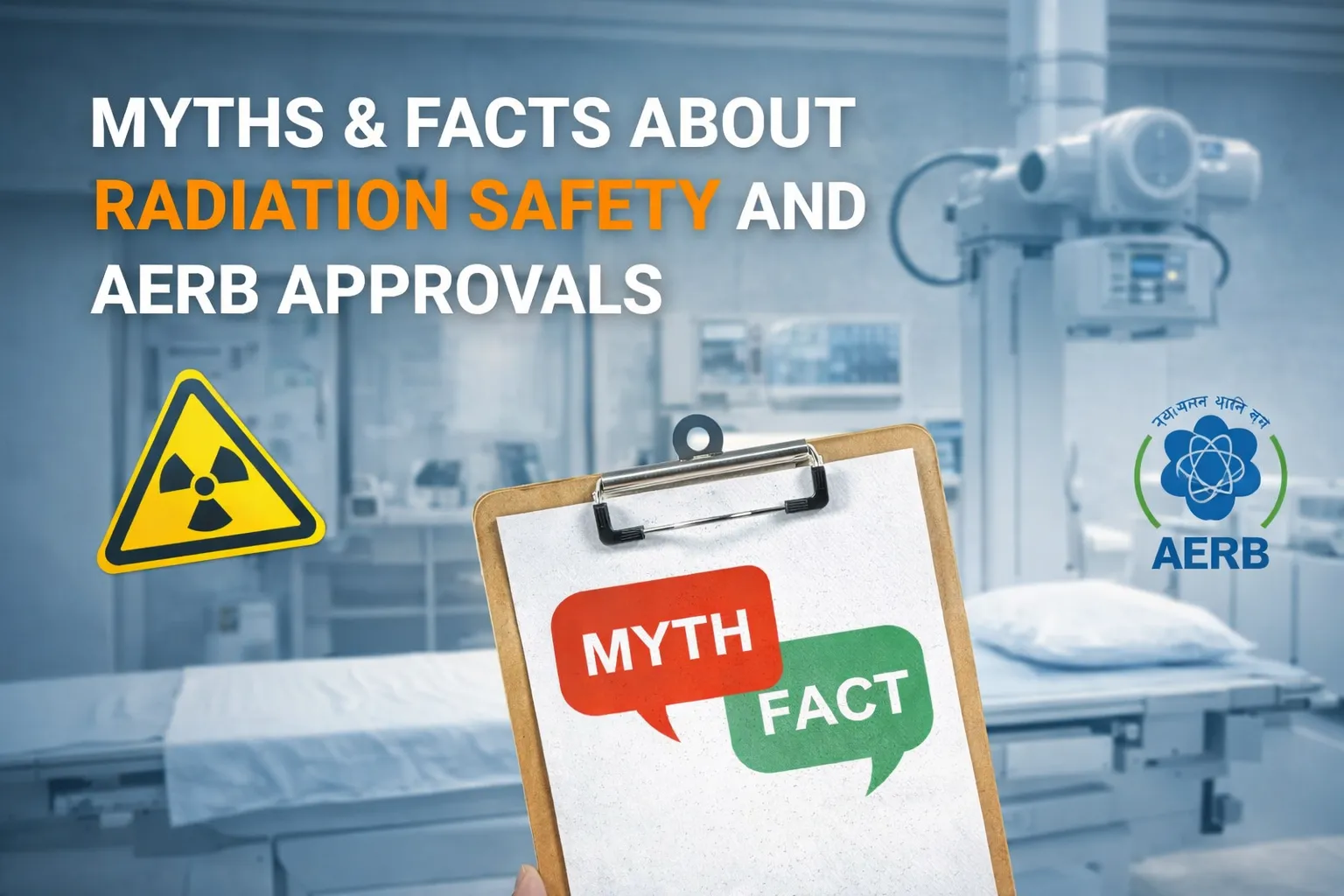
At Aarogyaa Bharat, we believe awareness is the first step
toward safe healthcare. This in-depth, SEO-optimized guide addresses the most
common myths and facts about radiation safety and AERB approvals, helping
hospitals, clinics, diagnostic centres, and patients make informed decisions.
Understanding Radiation in Medical Imaging
Radiation used in healthcare is controlled ionizing
radiation, designed to capture internal images of the body for diagnostic or
therapeutic purposes. The doses used in medical imaging are strictly regulated
and kept as low as reasonably achievable (ALARA principle).
It is important to understand that:
- Radiation
exists naturally in our environment (soil, air, food, and cosmic rays)
- Medical
radiation adds only a small, carefully controlled exposure
- Benefits
of accurate diagnosis far outweigh the minimal risks
What Is AERB and Why Is It Important?
The Atomic Energy Regulatory Board (AERB) is India’s
national authority responsible for regulating the use of ionizing radiation and
nuclear energy in healthcare and industry.
AERB’s role includes:
- Licensing
radiation-emitting medical equipment
- Approving
diagnostic and therapeutic radiology facilities
- Defining
radiation safety standards
- Ensuring
protection of patients, healthcare workers, and the public
- Monitoring
radiation exposure and compliance
Any healthcare facility using X-ray machines, CT scanners,
dental X-rays, C-arms, fluoroscopy units, or mammography systems must comply
with AERB regulations.
Why Radiation Safety Compliance Matters
Radiation safety is not optional it is a legal, ethical, and
medical necessity.
Failure to follow safety norms can result in:
- Overexposure
to patients and staff
- Long-term
health risks
- Legal
penalties and closure of facilities
- Loss
of credibility and patient trust
AERB compliance ensures:
- Safe
diagnostic practices
- Ethical
healthcare delivery
- Sustainable
hospital operations
- Protection
of future generations
Common Myths & Facts About Radiation Safety
Myth 1: All Radiation Is Extremely Dangerous
Fact:
Radiation used in medical imaging is low-dose, controlled, and medically
justified. A standard chest X-ray exposes a patient to radiation equivalent to
a few days of natural background exposure.
When equipment is AERB-approved and protocols are followed,
radiation risk is minimal and manageable.
Myth 2: One X-ray or CT scan Can Cause Cancer
Fact:
There is no evidence that a single diagnostic scan causes cancer. The risk from
occasional imaging is extremely low. Doctors recommend scans only when the clinical
benefit clearly outweighs the risk.
Repeated, unnecessary scans especially at unregulated
facilities are the real concern.
Myth 3: AERB Approval Is Just Paperwork
Fact:
AERB approval is a comprehensive safety framework, not a formality. It ensures:
- Proper
room shielding and layout
- Safe
equipment installation
- Radiation
leakage control
- Trained
and certified operators
- Regular
safety audits
Ignoring AERB norms can lead to unsafe exposure and serious
legal consequences.
Myth 4: Radiation Equipment Is Unsafe for Children
Fact:
Children are more sensitive to radiation, which is why special pediatric
protocols are followed. Modern AERB-compliant equipment uses adjusted, low-dose
settings specifically designed for children.
Radiation imaging in children is safe when medically
justified and properly controlled.
Myth 5: Old X-ray Machines Are Always Unsafe
Fact:
Age alone does not make equipment unsafe. Older machines can still be safe if
they are:
- Properly
maintained
- Regularly
calibrated
- AERB-approved
and inspected
However, poorly maintained or illegally installed machines
pose serious risks.
Myth 6: Lead Aprons and Shields Are Optional
Fact:
Protective devices such as lead aprons, thyroid shields, lead glass barriers,
and control booths are mandatory safety measures under AERB guidelines.
These shields significantly reduce unnecessary exposure to
patients and operators.
Myth 7: Radiation Affects Only the Patient
Fact:
Improper radiation use can affect:
- Radiology
technicians
- Doctors
and assistants
- Nearby
hospital staff
- General
public (through leakage)
That’s why AERB mandates room shielding, controlled access,
warning signage, and dosimetry badges.
Key Facts About Radiation Exposure
- Medical
radiation contributes only a small portion of total radiation exposure
- Natural
background radiation is unavoidable and constant
- AERB-approved
machines undergo rigorous safety testing
- Dosimetry
badges track staff exposure continuously
- Radiation
facilities are audited periodically
AERB Approval for New, Used & Refurbished Equipment
A common misconception is that only new machines require
approval.
Reality:
- New
equipment → Mandatory AERB approval
- Used
or refurbished equipment → Must be re-approved before use
- Relocated
machines → Fresh site approval required
AERB approval ensures that equipment, room design, and
operational practices meet safety standards, regardless of whether the device
is new or pre-owned.
How Aarogyaa Bharat Supports Radiation Safety
At Aarogyaaa Bharat, we actively promote safe, compliant,
and ethical medical equipment usage by:
- Encouraging
AERB-compliant equipment sourcing
- Educating
healthcare buyers on regulatory requirements
- Supporting
responsible refurbishment practices
- Promoting
awareness around radiation safety
We believe advanced healthcare technology must always be
paired with responsibility and compliance.
Frequently Asked Questions (FAQ)
Q1. Which medical equipment requires AERB approval?
X-ray machines, CT scanners, dental X-ray units, C-arms,
fluoroscopy systems, mammography units, and certain therapy devices require
AERB approval.
Q2. Is AERB approval required for refurbished or
second-hand equipment?
Yes. Used or refurbished radiation equipment must be re-certified
and approved by AERB before installation and use.
Q3. How often is radiation safety monitored?
Radiation safety is monitored continuously using dosimetry
badges, periodic inspections, and scheduled audits as per AERB norms.
Q4. Do patients remain radioactive after an X-ray or CT
scan?
No. Diagnostic imaging does not make patients radioactive.
Once the scan is complete, there is no residual radiation risk.
Q5. What are the penalties for operating without AERB
approval?
Penalties may include fines, seizure of equipment,
suspension of services, legal action, and closure of facilities.
Q6. How can patients ensure radiation safety?
Patients should:
- Choose
licensed diagnostic centers
- Avoid
unnecessary repeat scans
- Ask
about protective measures
- Trust
medically justified imaging
Conclusion
Radiation is a powerful medical tool not a danger when used
responsibly. The real risks come from misinformation, negligence, and
non-compliance, not from radiation itself.
Understanding the facts about radiation safety and AERB
approvals helps healthcare providers operate ethically and reassures patients
that diagnostic imaging is safe, regulated, and essential.
At Aarogyaa Bharat, we stand for informed healthcare,
regulatory compliance, and patient-first practices because safety is not an
option, it is a responsibility.
Knowledge dispels fear. Compliance ensures safety.
Responsible healthcare protects everyone.