What Is Obstructive Sleep Apnea (OSA)?
Obstructive sleep apnea (OSA) is a sleep-related breathing
disorder in which the muscles of the throat relax excessively during sleep.
This relaxation causes the airway to:
- Narrow
significantly
- Become
partially blocked
- Or
collapse completely
As airflow stops or reduces, oxygen levels drop. The brain
senses this and briefly wakes the person just enough to reopen the airway.
These awakenings are usually so short that the person does not remember them but
they prevent deep, restorative sleep.
Why Obstructive Sleep Apnea Is a Serious Health Condition
OSA is not just about snoring or poor sleep. When left
untreated, it can lead to serious long-term health problems, including:
- High
blood pressure
- Heart
disease and heart attack
- Stroke
- Type
2 diabetes
- Irregular
heart rhythms
- Daytime
accidents due to sleepiness
OSA affects both physical and mental health and should never
be ignored.
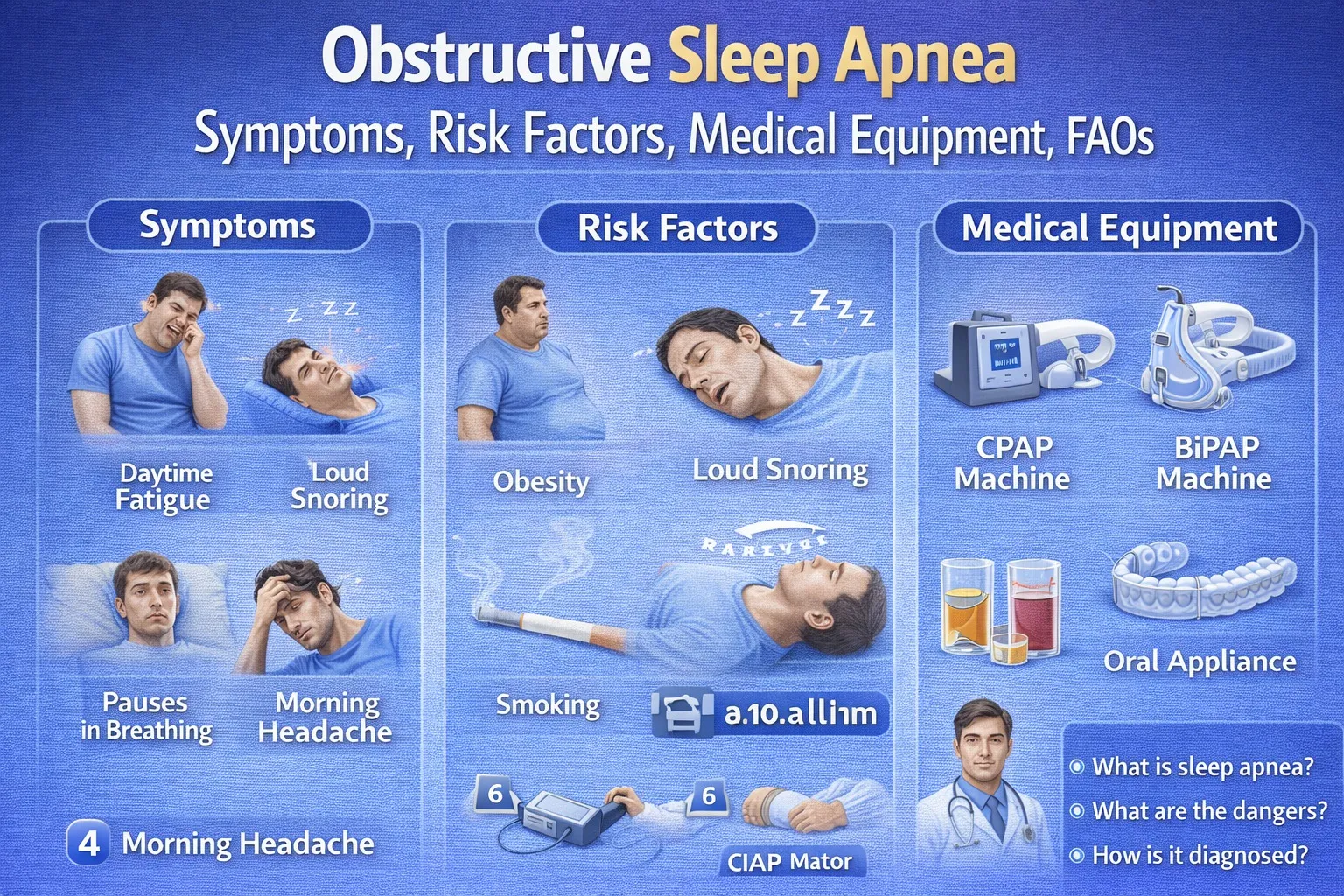
Common Symptoms of Obstructive Sleep Apnea
Symptoms of OSA can appear at night, during the day, or
both.
Night-Time Symptoms
- Loud,
chronic snoring
- Pauses
in breathing witnessed by a bed partner
- Choking,
gasping, or snorting sounds during sleep
- Restless
or fragmented sleep
- Frequent
awakenings
Day-Time Symptoms
- Excessive
daytime sleepiness
- Morning
headaches
- Difficulty
concentrating or memory problems
- Irritability
or mood changes
- Feeling
unrefreshed even after a full night’s sleep
Because symptoms develop gradually, many people live with
OSA for years without realizing it.
Risk Factors for Obstructive Sleep Apnea
Certain factors increase the likelihood of developing OSA.
1. Excess Body Weight
Extra fat around the neck and throat increases airway
narrowing during sleep.
2. Neck Circumference
A thicker neck can put pressure on the airway, especially
during sleep.
3. Male Gender
Men are more likely to develop OSA, though risk increases
for women after menopause.
4. Age
OSA becomes more common with increasing age due to reduced
muscle tone.
5. Family History
A genetic tendency toward airway structure or obesity can
increase risk.
6. Smoking and Alcohol Use
Smoking causes airway inflammation, while alcohol relaxes
throat muscles further.
7. Nasal Congestion
Chronic nasal blockage can worsen breathing during sleep.
8. Medical Conditions
Conditions such as:
- High
blood pressure
- Diabetes
- Hypothyroidism
- Polycystic
ovary syndrome (PCOS)
are often associated with OSA.
How Obstructive Sleep Apnea Is Diagnosed
OSA is usually diagnosed through a sleep study, also known
as polysomnography.
Sleep Study (Polysomnography) Measures
- Breathing
patterns
- Oxygen
levels
- Heart
rate
- Brain
activity
- Body
movements
Based on the number of apnea and hypopnea events per hour,
OSA is classified as:
- Mild
- Moderate
- Severe
Accurate diagnosis is essential for effective treatment.
Medical Equipment Used in Obstructive Sleep Apnea
Medical equipment plays a central role in managing and
treating OSA.
1. CPAP (Continuous Positive Airway Pressure) Machine
The CPAP machine is the gold standard treatment for
obstructive sleep apnea.
How It Works
- Delivers
a steady stream of air
- Keeps
the airway open during sleep
Benefits
- Reduces
apnea episodes
- Improves
oxygen levels
- Restores
normal sleep patterns
CPAP therapy significantly lowers the risk of heart and
metabolic complications.
2. BiPAP (Bilevel Positive Airway Pressure) Machine
BiPAP machines provide two different pressure levels one for
inhalation and one for exhalation.
Who Needs It
- Patients
who cannot tolerate CPAP
- People
with severe OSA or additional lung conditions
3. APAP (Auto-Adjusting Positive Airway Pressure) Machine
APAP machines automatically adjust air pressure based on
breathing needs throughout the night.
Advantages
- Personalized
pressure delivery
- Improved
comfort
4. CPAP Masks and Interfaces
Masks are a crucial part of PAP therapy.
Common Types
- Nasal
masks
- Full-face
masks
- Nasal
pillows
Proper mask fit improves comfort, compliance, and treatment
success.
5. Oral Appliances (Mouth Guards)
For mild to moderate OSA, specially designed oral appliances
may be used.
How They Help
- Reposition
the jaw and tongue
- Prevent
airway collapse
6. Oxygen Therapy (Selected Cases)
In some patients, oxygen may be used alongside PAP therapy
under medical supervision.
Lifestyle Measures That Support OSA Treatment
Medical equipment works best when combined with healthy
habits:
- Weight
loss
- Sleeping
on the side instead of the back
- Avoiding
alcohol before bedtime
- Quitting
smoking
- Maintaining
regular sleep schedules
Living with Obstructive Sleep Apnea
With proper treatment, people with OSA often experience:
- Better
sleep quality
- Improved
daytime alertness
- Lower
blood pressure
- Reduced
risk of heart disease
- Better
mood and productivity
Consistency with treatment is key to long-term success.
Conclusion
Obstructive sleep apnea is a common but serious sleep
disorder that affects breathing, oxygen levels, and overall health. Recognizing
the symptoms, understanding the risk factors, and using the right medical
equipment can dramatically improve sleep quality and long-term well-being.
Sleep should restore your body not strain it.
At Aarogyaa Bharat, we are committed to sharing clear,
reliable health information that empowers people to take control of their sleep
and their health.