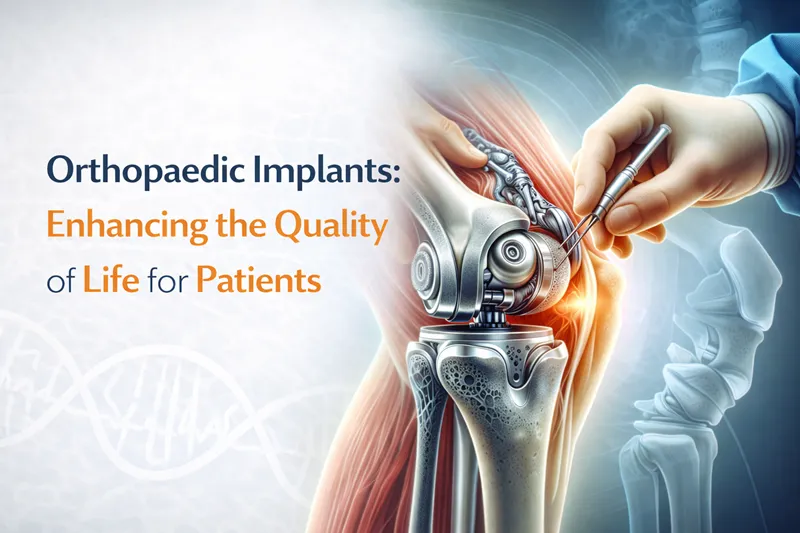
These medical devices are designed to replace, support, or stabilize damaged bones and joints, enabling patients to regain movement and return to daily activities that were once restricted by pain or disability. For millions of people worldwide, orthopaedic implants represent the difference between long-term dependence and renewed independence.
In clinical practice, orthopaedic implants are used to treat a wide spectrum of conditions, including fractures, arthritis, spinal disorders, joint degeneration, congenital abnormalities, and trauma-related injuries. As populations age and lifestyles become more active, the demand for orthopaedic procedures has increased steadily. Orthopaedic implants allow surgeons to correct internal structural problems while preserving alignment, strength, and long-term functional stability.
Advancements in medical science, materials engineering, and surgical techniques have made orthopaedic implants safer, more durable, and more compatible with the human body. Modern implants are designed not only to repair physical damage but also to improve overall patient well-being by enabling faster recovery, smoother movement, and reduced dependence on pain medication. Orthopaedic implants have therefore become a cornerstone of quality-of-life-focused healthcare.
Understanding Orthopaedic Implants in Modern Medicine
Orthopaedic implants are medical devices surgically placed inside the body to support, stabilize, or replace damaged bones, joints, or connective tissues. These implants are manufactured from biocompatible materials such as titanium alloys, stainless steel, ceramics, and advanced polymers that integrate safely with human tissue. Their primary objective is to restore anatomical structure and enable natural movement.
Orthopaedic implants are used in procedures ranging from simple fracture fixation to complex joint replacement surgeries. Plates, screws, rods, intramedullary nails, and joint prostheses are among the most commonly used implants. Each implant is carefully selected based on patient anatomy, bone quality, age, lifestyle, and severity of the condition, ensuring personalized and effective treatment.
Role of Orthopaedic Implants in Pain Relief and Mobility Restoration
Chronic pain and limited mobility are common consequences of orthopaedic conditions such as osteoarthritis, joint degeneration, spinal disorders, and traumatic injuries. Orthopaedic implants help relieve pain by stabilizing damaged structures and eliminating abnormal movement that causes discomfort and inflammation. Joint replacement implants, for example, remove worn-out joint surfaces and replace them with smooth, functional components.
By restoring structural integrity, orthopaedic implants enable patients to regain mobility and perform everyday activities with greater ease. Improved movement often leads to better cardiovascular health, enhanced mental well-being, and increased social participation. Pain relief combined with restored mobility is one of the most powerful benefits of orthopaedic implant surgery.
Types of Orthopaedic Implants Used in Healthcare
Orthopaedic implants encompass a broad range of products designed for different anatomical regions and clinical applications. Joint replacement implants such as hip, knee, shoulder, and elbow prostheses are widely used to treat advanced arthritis and joint damage. Trauma implants, including plates, screws, intramedullary nails, and external fixation devices, are essential for fracture management.
Spinal implants such as rods, pedicle screws, cages, and spacers are used to treat spinal instability, deformities, disc degeneration, and nerve compression. Specialized implants are also available for hand, wrist, foot, ankle, and paediatric orthopaedic procedures. This diversity ensures that orthopaedic implants can address complex and varied patient needs.
Orthopaedic Implants in Trauma and Emergency Care
In trauma and emergency care, orthopaedic implants play a critical role in stabilizing fractures and preventing further injury. Rapid fixation of broken bones using plates, screws, or rods helps restore alignment and promotes proper healing. Early stabilization reduces pain, improves blood circulation, and lowers the risk of infection and complications.
Trauma implants are designed to provide immediate structural support while allowing gradual bone healing. Their use enables faster mobilization and rehabilitation, which is essential for preventing long-term disability. In emergency medicine, orthopaedic implants often form the foundation of life-restoring treatment.
Supporting Long-Term Recovery and Rehabilitation
Orthopaedic implants are not limited to surgical correction but are essential in supporting long-term recovery and rehabilitation. Stable implants allow patients to begin physiotherapy earlier, which helps restore muscle strength, joint flexibility, and coordination. Early mobilization is crucial in preventing stiffness, muscle wasting, and secondary complications.
Rehabilitation following orthopaedic implant surgery focuses on helping patients adapt to restored structures and regain confidence in movement. With properly placed implants, patients can progress safely through recovery phases, ultimately achieving greater independence and long-term functional improvement.
Materials, Durability, and Biocompatibility
The success of orthopaedic implants depends heavily on material quality, durability, and biocompatibility. Modern implants are engineered to withstand repetitive mechanical stress while minimizing wear, corrosion, and fatigue. Biocompatible materials reduce the risk of immune reaction, inflammation, and implant rejection.
Advances in surface coatings and implant design have improved bone integration and long-term stability. These innovations reduce the need for revision surgeries and ensure reliable implant performance over many years. High-quality materials are therefore central to patient safety and long-term success.
Impact on Aging Population and Active Lifestyles
With increasing life expectancy, orthopaedic implants have become particularly important for the aging population. Conditions such as osteoarthritis, osteoporosis, and joint degeneration often limit mobility and independence in older adults. Orthopaedic implants allow elderly patients to remain active, reduce fall risk, and maintain dignity and quality of life.
Younger and middle-aged patients also benefit from orthopaedic implants following sports injuries, accidents, or occupational trauma. By restoring function and enabling early return to activity, implants support both physical health and economic productivity.
Quality Standards and Surgical Expertise
Successful orthopaedic implant outcomes depend on strict quality standards and skilled surgical expertise. Implants must comply with regulatory requirements and undergo rigorous testing for strength, durability, and biocompatibility. Equally important is the experience of orthopaedic surgeons who select and position implants accurately.
Post-surgical monitoring, follow-up care, and structured rehabilitation further influence long-term outcomes. When high-quality implants are combined with expert surgical care, patients experience faster recovery, fewer complications, and higher satisfaction.
Role of Aarogyaa Bharat in Orthopaedic Implants
Aarogyaa Bharat supports hospitals, orthopaedic surgeons, and healthcare institutions by enabling access to quality-assured orthopaedic implants sourced from verified manufacturers. The platform focuses on providing implants that meet clinical, material, and regulatory standards required for safe and effective orthopaedic care.
By simplifying procurement and offering transparent product options, Aarogyaa Bharat helps healthcare providers select orthopaedic implants aligned with patient needs and surgical requirements. This support strengthens orthopaedic care delivery and improves patient outcomes across trauma, joint replacement, and spinal procedures.
Future of Orthopaedic Implants and Patient Care
The future of orthopaedic implants is shaped by innovation in biomaterials, personalized implant design, and minimally invasive surgical techniques. Technologies such as 3D printing, patient-specific implants, smart sensors, and advanced imaging are improving precision and customization.
These advancements aim to improve implant fit, reduce recovery time, and extend implant lifespan. As orthopaedic care continues to evolve, implants will play an even greater role in restoring function, enhancing mobility, and improving quality of life for patients of all ages.
Conclusion
Orthopaedic implants enhance the quality of life for patients by restoring mobility, relieving pain, and enabling long-term functional independence. From trauma care to joint replacement and spinal surgery, these implants support safe, effective, and life-changing treatment. With ongoing innovation and reliable sourcing through platforms like Aarogyaa Bharat, orthopaedic implants will remain a vital pillar of modern healthcare focused on patient well-being and active living.