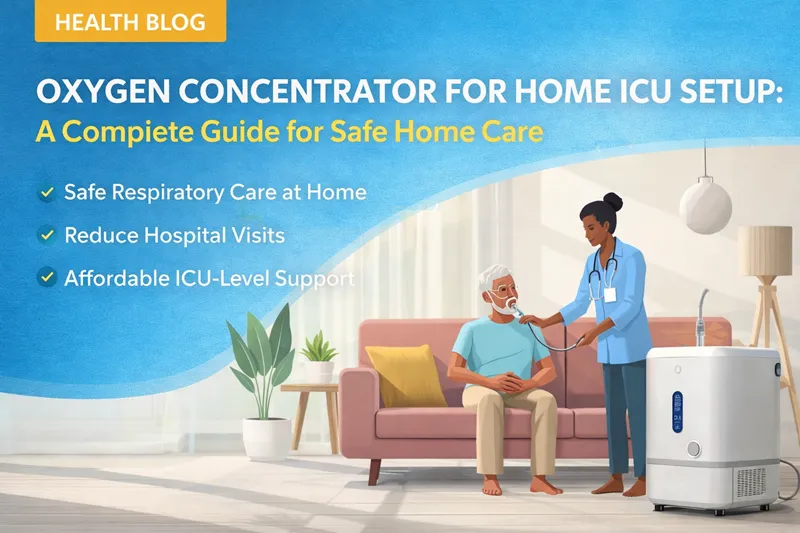
An oxygen concentrator for home ICU setup is not just a medical device; it is a lifeline that helps stabilize oxygen levels, prevent complications, and support recovery in a familiar and comfortable environment. With proper planning, the right equipment, and professional guidance, families can safely manage critical respiratory care at home without compromising medical standards.
This comprehensive guide explains everything you need to know about choosing the right oxygen concentrator, setting up a home ICU environment, ensuring patient safety, and maintaining uninterrupted oxygen therapy. Whether you are caring for a COVID recovery patient, an elderly parent, or someone with chronic lung disease, this guide will help you make informed decisions with confidence.
At Aarogyaa Bharat, we believe home healthcare should be safe, accessible, and medically reliable, which is why this guide focuses on real-world usability, clinical relevance, and long-term patient well-being rather than just product specifications.
What Is an Oxygen Concentrator and Why Is It Essential for Home ICU Care?
An oxygen concentrator is a medical-grade device that extracts oxygen from ambient air, filters out nitrogen and other gases, and delivers concentrated oxygen directly to a patient through a nasal cannula or oxygen mask. Unlike oxygen cylinders that store finite oxygen and require frequent refilling, concentrators provide a continuous and reliable oxygen supply as long as they are powered.
For home ICU setups, an oxygen concentrator plays a critical role in managing conditions such as pneumonia, COPD, asthma, COVID-19 recovery, heart failure, post-operative respiratory weakness, and neuromuscular disorders. It ensures stable oxygen saturation levels, reduces breathlessness, and supports vital organ function during recovery.
The greatest advantage of using an oxygen concentrator in a home ICU setup is its reliability. Since it does not depend on external refills, families can avoid the logistical stress and cost of cylinder replacement while maintaining uninterrupted oxygen therapy. This makes it especially valuable in emergencies, nighttime care, and long-term respiratory management.
Modern oxygen concentrators are designed to be compact, quiet, energy-efficient, and user-friendly, making them suitable for continuous home use. When integrated into a properly organized home ICU environment, they can significantly reduce hospitalization needs and improve patient comfort and quality of life.
For families caring for high-risk patients, an oxygen concentrator is not just optional equipment; it is a foundational medical device that ensures safety, stability, and peace of mind during home-based critical care.
Who Needs an Oxygen Concentrator in a Home ICU Setup?
An oxygen concentrator is essential for patients who experience chronic or acute oxygen deficiency due to respiratory or cardiac conditions. Elderly individuals with weakened lung capacity often require oxygen therapy to maintain healthy blood oxygen levels and prevent complications such as fatigue, confusion, and organ stress.
Patients recovering from severe COVID-19 infections frequently experience long-term lung damage, breathlessness, and reduced oxygen saturation levels, making home oxygen concentrators a crucial part of their rehabilitation process. Continuous oxygen support helps stabilize their condition and accelerates healing in a controlled home environment.
Individuals with chronic obstructive pulmonary disease (COPD), interstitial lung disease, pulmonary fibrosis, and asthma may require long-term oxygen therapy to manage symptoms and prevent respiratory failure. In such cases, an oxygen concentrator ensures consistent oxygen delivery without the need for repeated hospital visits.
Post-surgery patients, especially those who have undergone cardiac, thoracic, or neurological procedures, often require temporary oxygen support during recovery. A home ICU setup with an oxygen concentrator allows them to heal comfortably while maintaining safe oxygen levels under caregiver supervision.
Patients with neuromuscular disorders, spinal injuries, or advanced-stage cancer may also benefit from home oxygen therapy as part of palliative or supportive care, making the concentrator a vital component of compassionate home healthcare.
Types of Oxygen Concentrators for Home ICU Setup
Choosing the right type of oxygen concentrator depends on the patient’s medical condition, oxygen flow requirements, and long-term care needs. Understanding the different categories helps families select the most suitable model for their home ICU setup.
Stationary Oxygen Concentrators are the most commonly used models for home ICU care. They are designed for continuous operation and can deliver high oxygen flow rates ranging from 5 to 10 liters per minute (LPM). These concentrators are ideal for patients who require consistent oxygen support and spend most of their time in one room or bed.
Portable Oxygen Concentrators are lightweight and battery-operated devices designed for mobility. While they are convenient for travel and short-term outdoor use, most portable models offer lower flow rates and are not suitable as primary oxygen sources for ICU-level home care. They are best used as backup devices for patient mobility within the home.
Dual-Flow Oxygen Concentrators allow two patients to receive oxygen therapy simultaneously from a single machine. These are useful in rare cases where two family members require oxygen support, but they must be used under medical guidance to ensure proper oxygen distribution.
For a true home ICU setup, a high-capacity stationary oxygen concentrator with medical-grade filtration, alarm systems, and continuous operation capability is the safest and most reliable choice.
Key Features to Look for in an Oxygen Concentrator for Home ICU Setup
Selecting the right oxygen concentrator involves evaluating several technical and safety-related features that directly impact patient outcomes and long-term reliability.
Oxygen Purity Level is one of the most important specifications. A good concentrator should deliver oxygen with a purity level of at least 90 to 95 percent across all flow settings. This ensures that the patient receives medically effective oxygen therapy without dilution.
Flow Rate Capacity determines how much oxygen the machine can deliver per minute. Patients with mild respiratory issues may require 1 to 3 LPM, while critically ill patients may need 5 to 10 LPM. Choosing a concentrator with sufficient flow capacity ensures that it can meet changing medical needs.
Noise Level is an important comfort factor in home ICU environments. Low-noise concentrators allow patients to rest and sleep peacefully without constant mechanical disturbance. Quiet operation also reduces stress for caregivers during nighttime monitoring.
Power Efficiency and Backup Support are critical for uninterrupted care. Look for concentrators with low power consumption, voltage stabilizer compatibility, and external battery or inverter support to handle power outages safely.
Safety Alarms and Monitoring Systems add an extra layer of protection. High-quality concentrators include alarms for low oxygen purity, power failure, overheating, and system malfunction, ensuring immediate action in case of device failure.
Build Quality and Durability determine long-term performance. Medical-grade components, strong casing, and reliable internal filters ensure consistent oxygen delivery even during extended operation.
How to Set Up a Home ICU Environment with an Oxygen Concentrator
Creating a safe and functional home ICU environment requires careful planning and attention to medical guidelines. The goal is to replicate hospital-level care standards while maintaining the comfort of a home setting.
Choose a well-ventilated, dust-free room with adequate space around the oxygen concentrator to ensure proper airflow. Avoid placing the machine near curtains, walls, or heat sources that may obstruct ventilation or increase fire risk.
Install a stable power supply system, including a voltage stabilizer and inverter or UPS backup, to prevent interruptions during power cuts. Continuous oxygen therapy depends on reliable electricity, making power management a top priority.
Position the patient’s bed near the concentrator while maintaining enough distance to reduce noise exposure. Ensure that oxygen tubing is properly secured to prevent tripping hazards or accidental disconnection during movement.
Maintain strict hygiene standards by cleaning oxygen tubing, nasal cannulas, and humidifier bottles regularly. Proper sanitation prevents infections and ensures safe long-term use of the oxygen concentrator.
Integrate essential monitoring devices such as a pulse oximeter, blood pressure monitor, and thermometer into the home ICU setup. These tools help caregivers track vital signs and respond promptly to health changes.
Safety Tips for Using an Oxygen Concentrator at Home
Safety is paramount when operating an oxygen concentrator in a home environment. Oxygen supports combustion, making fire prevention and electrical safety essential considerations.
Never smoke or allow open flames near the oxygen concentrator. Keep the machine at least five feet away from stoves, candles, and heaters to minimize fire risk.
Use only medically approved accessories, including oxygen tubing, humidifier bottles, and nasal cannulas. Avoid low-quality or incompatible parts that may leak or malfunction.
Ensure that the concentrator’s air filters are cleaned or replaced regularly to maintain oxygen purity and prevent dust buildup that can damage internal components.
Train caregivers and family members on basic troubleshooting procedures, such as restarting the device, checking alarm indicators, and switching to backup oxygen sources if needed.
Always keep an emergency oxygen cylinder as a backup in case of prolonged power outages or concentrator failure, ensuring uninterrupted oxygen therapy during critical moments.
Maintenance and Long-Term Care of an Oxygen Concentrator
Proper maintenance ensures that the oxygen concentrator delivers consistent performance and remains safe for long-term use. Neglecting routine maintenance can compromise oxygen purity and increase the risk of device failure.
Clean external surfaces and air filters weekly to remove dust and debris. Internal filters should be replaced according to the manufacturer’s guidelines to maintain optimal airflow and oxygen quality.
Schedule periodic professional servicing to inspect internal components, calibrate oxygen purity levels, and test alarm systems. Regular servicing extends the lifespan of the concentrator and prevents sudden breakdowns.
Monitor oxygen output using an oxygen analyzer or professional calibration service to ensure that the machine consistently meets medical purity standards.
Keep detailed usage logs to track operating hours, maintenance schedules, and any performance issues. This documentation helps identify early signs of wear and ensures timely repairs.
Why Choose Aarogyaa Bharat for Home ICU Oxygen Solutions?
At Aarogyaa Bharat – Live Healthy, Live Better, we specialize in providing medically certified oxygen concentrators and complete home ICU solutions tailored to Indian home-care needs. Our products are carefully selected for reliability, safety, and long-term performance.
We offer a wide range of oxygen concentrators, including 5 LPM and 10 LPM models, designed for continuous operation and ICU-level care. Each device undergoes quality checks and includes warranty-backed protection for peace of mind.
Our expert healthcare support team assists families with product selection, installation guidance, safety training, and maintenance support. We ensure that every home ICU setup meets medical standards and patient comfort requirements.
With pan-India delivery, fast installation assistance, and responsive after-sales service, Aarogyaa Bharat makes critical home healthcare accessible and dependable for families across the country.
When you choose Aarogyaa Bharat, you are not just buying a machine; you are investing in a complete home-care ecosystem built around patient safety, clinical reliability, and compassionate support.
Conclusion
An oxygen concentrator is the cornerstone of any home ICU setup, providing continuous respiratory support for critically ill, elderly, and recovering patients. Choosing the right model, ensuring proper installation, and following strict safety guidelines can transform home-based care into a safe and effective alternative to hospitalization.
By investing in a high-quality oxygen concentrator and creating a well-organized home ICU environment, families can significantly improve patient comfort, reduce healthcare costs, and ensure timely medical intervention when needed.
At Aarogyaa Bharat, we are committed to empowering families with reliable medical equipment, expert guidance, and end-to-end home healthcare solutions that prioritize patient well-being and long-term safety.