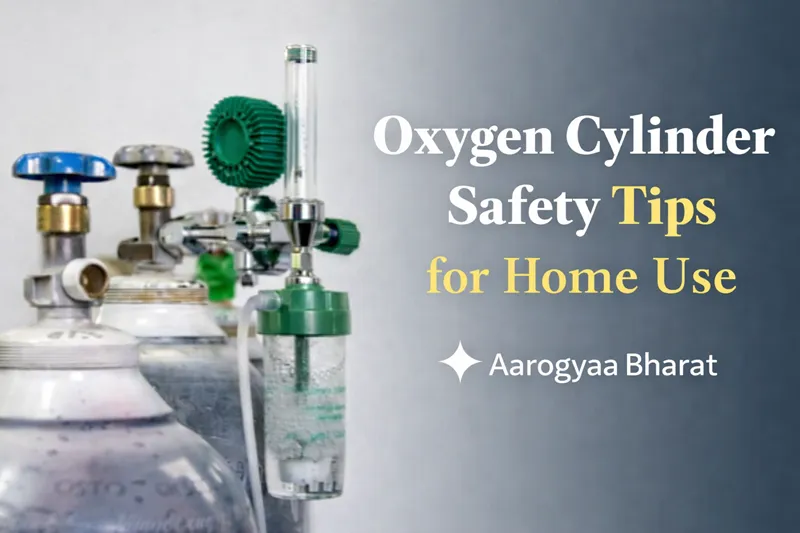
Oxygen itself is not flammable, but it significantly increases the speed and intensity of fire when exposed to sparks or open flames, which makes careless handling extremely dangerous. Combined with the fact that oxygen cylinders are heavy, pressurized metal tanks, even a small mistake such as improper placement, loose regulators, or poor ventilation can lead to serious accidents, injuries, or fire hazards. Unfortunately, most home oxygen incidents happen not because of defective equipment, but because of simple safety oversights.
At Aarogyaa Bharat, we regularly guide families who are new to home oxygen therapy and feel anxious about whether they are using their oxygen cylinders safely. This detailed guide is designed to give you complete clarity on oxygen cylinder safety at home, including proper storage, fire prevention, daily handling tips, leak detection methods, and emergency preparedness. Whether you are a patient, family member, or home-care nurse, these safety practices can help protect lives, property, and peace of mind.
Understanding the Basic Risks of Oxygen Cylinders
Oxygen cylinders store medical-grade oxygen at very high pressure, allowing a large volume of gas to fit inside a compact metal tank. If the valve or regulator becomes damaged, oxygen can escape rapidly and create a powerful jet of gas that may turn the cylinder into a dangerous projectile. Sudden decompression can also cause frost injuries or breathing difficulties for people nearby, making regulator safety a critical concern.
Another major risk is oxygen enrichment of the surrounding air. When oxygen leaks into a room, it raises oxygen concentration levels, causing materials such as bedding, curtains, clothing, furniture, and hair to burn much faster if exposed to a flame or spark. This means even everyday activities like lighting a candle, cooking nearby, or using faulty electrical appliances become extremely hazardous.
There is also a physical injury risk involved. Oxygen cylinders are heavy and awkward to move, especially for elderly caregivers. If a cylinder tips over or falls onto someone’s foot or leg, it can cause fractures, bruises, or long-term mobility problems. Improper storage can also block walkways and emergency exits, creating additional dangers inside the home.
Understanding these risks is not meant to scare families, but to empower them. With proper awareness, correct placement, and simple daily precautions, oxygen cylinders can be used safely and confidently for long-term home care.
Choose the Right Location for Oxygen Cylinder Placement
The placement of an oxygen cylinder inside the home plays a massive role in overall safety. Cylinders should always be kept in a well-ventilated area where fresh air can circulate freely. This helps prevent oxygen buildup in case of minor leaks and reduces the risk of fire hazards. Avoid placing cylinders in closed spaces such as bathrooms, storage rooms, or small closets where ventilation is poor.
Always keep oxygen cylinders away from heat sources such as gas stoves, heaters, ovens, fireplaces, and direct sunlight. High temperatures can increase internal pressure inside the cylinder and weaken valve seals, making leaks more likely. Ideally, cylinders should be positioned at least 6–10 feet away from open flames, cooking areas, and heating devices.
Cylinders should always be stored upright and secured properly to prevent tipping. Using a cylinder stand, wall chain, or stabilizing holder ensures the cylinder stays firmly in place even if it is accidentally bumped. Never lay a full cylinder flat on the floor because it increases the risk of rolling, valve damage, and sudden leaks.
At Aarogyaa Bharat, we recommend placing oxygen cylinders near the patient’s bed or seating area while maintaining enough distance to avoid accidental knocks from wheelchairs, walkers, or furniture. A clear, stable, and accessible location improves both safety and convenience for daily use.
Handle the Regulator and Valve with Extreme Care
The regulator is the most critical component of an oxygen cylinder system because it controls the flow of oxygen from the tank to the patient. Always make sure the regulator is fitted correctly and tightened securely before opening the cylinder valve. A loose regulator can cause dangerous oxygen leaks and unstable flow rates, which can put the patient at medical risk.
When opening the cylinder valve, do it slowly and gently. Never force the valve open or closed, and never use oil, grease, or lubricants on the regulator or valve threads. Oxygen reacts violently with oils and greases, which can cause fires or explosions. If the valve feels stuck, contact your oxygen supplier instead of trying to fix it yourself.
Check the regulator gauge daily to monitor oxygen pressure levels and avoid unexpected oxygen shortages. If you hear hissing sounds, notice unusual vibrations, or observe pressure dropping faster than normal, stop using the cylinder immediately and contact your supplier. These signs often indicate leaks or regulator malfunctions.
At Aarogyaa Bharat, we advise caregivers to inspect the regulator every day for cracks, loose fittings, or signs of wear. A damaged regulator should never be used, even if it appears to function temporarily, because it can fail suddenly without warning.
Fire Safety Rules Every Home Must Follow
Fire safety is the most critical aspect of oxygen cylinder use at home. Oxygen does not burn, but it dramatically increases the intensity of any fire. This means strict no-smoking rules must be enforced in any room where oxygen is in use. Even a small spark from a lighter or matchstick can cause a serious fire in an oxygen-rich environment.
All flammable materials should be kept far away from oxygen cylinders and tubing. This includes aerosol sprays, perfumes, alcohol-based sanitizers, cooking oils, petroleum jelly, candles, and cleaning chemicals. Patients receiving oxygen therapy should avoid using oil-based skin creams or hair products, as these can become fire accelerants.
Electrical safety is equally important. Make sure electrical appliances near the cylinder are in good condition and free from loose wiring. Avoid overloading power sockets and never place extension cords under rugs or furniture where they can overheat. Faulty electrical equipment is one of the most common causes of home fires near oxygen equipment.
At Aarogyaa Bharat, we strongly recommend placing visible “No Smoking – Oxygen in Use” signs in the patient’s room to remind family members and visitors about fire risks and safety rules.
Transport and Move Oxygen Cylinders Safely
Moving oxygen cylinders requires careful handling to prevent accidents. Always use a proper cylinder trolley or wheeled stand for large cylinders instead of dragging or rolling them across the floor. Dragging can damage the valve and weaken the metal structure over time, increasing the risk of leaks.
When lifting a smaller cylinder, hold it firmly in an upright position and avoid bumping it against walls, door frames, or furniture. Never lift a cylinder by the regulator or valve, as this can loosen the connection and cause leaks. Always lift using both hands from the main body of the cylinder.
During transportation in a vehicle, cylinders should be placed upright and secured using straps or brackets to prevent rolling during sudden braking. Never leave oxygen cylinders inside a closed car under direct sunlight because heat can increase internal pressure and cause valve failures.
At Aarogyaa Bharat, all oxygen cylinders are delivered with optional trolleys and safety guidance to make home transportation easier and safer for caregivers.
Daily Maintenance and Leak Detection
Daily inspection is one of the simplest ways to prevent oxygen cylinder accidents. Check the cylinder body for dents, rust, or signs of damage, and make sure the valve and regulator connections are tight and clean. Wipe the exterior of the cylinder with a dry or slightly damp cloth, but never use chemical cleaners near the valve area.
To detect leaks, apply a mild soap-water solution around the regulator and valve connection. If bubbles form, it indicates a gas leak. In such cases, close the valve immediately, move the cylinder to a well-ventilated area, and contact your oxygen supplier. Never ignore a leak, even if it seems minor.
Always track refill schedules and pressure levels to avoid sudden oxygen shortages. Running out of oxygen unexpectedly can cause panic and serious medical emergencies, especially for patients who depend on continuous therapy.
At Aarogyaa Bharat, we recommend maintaining a simple oxygen usage log to record daily consumption, refill dates, and any technical issues for better safety management.
Oxygen Cylinder Safety Checklist Table
Here is a quick-reference safety table for patients and caregivers:
| Safety Area | What to Do | What to Avoid |
|---|---|---|
| Placement | Store upright in a ventilated room | Do not place in bathrooms or closets |
| Fire Safety | Keep 6–10 feet away from flames and heat | No smoking, candles, or gas stoves nearby |
| Regulator Handling | Tighten securely, open valve slowly | Never use oil or grease on valves |
| Electrical Safety | Use well-maintained appliances | Avoid faulty wiring or overloaded sockets |
| Leak Detection | Use soap-water test weekly | Never ignore hissing sounds |
| Transportation | Use cylinder trolley or straps in vehicles | Do not drag or roll cylinders |
| Maintenance | Clean exterior regularly | Avoid chemical cleaners near valves |
| Backup Plan | Keep spare cylinder ready | Never rely on a single oxygen source |
Keep a Backup Oxygen Plan Ready
Unexpected events such as delivery delays, power outages, or regulator failures can happen at any time. That is why having a backup oxygen plan is essential for home oxygen therapy safety. If you use a primary oxygen cylinder, always keep a second backup cylinder ready in case the main one runs out unexpectedly.
For patients using oxygen concentrators, a small oxygen cylinder should always be available as a backup during power cuts or machine malfunctions. This hybrid approach provides maximum safety and uninterrupted oxygen therapy.
Make sure all family members and caregivers know how to switch between oxygen sources quickly in emergencies. Practicing this process once or twice helps prevent panic during real-life oxygen shortages.
At Aarogyaa Bharat, we help families design customized oxygen therapy setups that include backup cylinders, regulators, and accessories for complete peace of mind.
Conclusion: Safe Oxygen Use Means Peace of Mind
Oxygen cylinders save lives and dramatically improve the quality of life for patients with breathing difficulties, but they must be handled with awareness and respect. From proper placement and careful regulator handling to fire prevention and daily maintenance, every safety step plays a vital role in protecting patients and families.
By following these oxygen cylinder safety tips for home use, caregivers can reduce risks, prevent accidents, and create a secure environment for their loved ones. Safety is not about fear—it is about confidence, preparation, and smart daily habits.
At Aarogyaa Bharat, we are committed to providing not just high-quality oxygen cylinders and home healthcare equipment, but also complete guidance for safe and effective usage. Whether you need oxygen cylinder rentals, concentrators, accessories, or expert advice, our team is always here to support your respiratory health journey.