What Defines a Plastic Commode Chair
Plastic commode chairs are typically manufactured using
high-density molded plastic or reinforced polymer materials. Some models
combine plastic seats with lightweight metal supports, but the primary
structure remains plastic. These chairs are designed to be lightweight, easy to
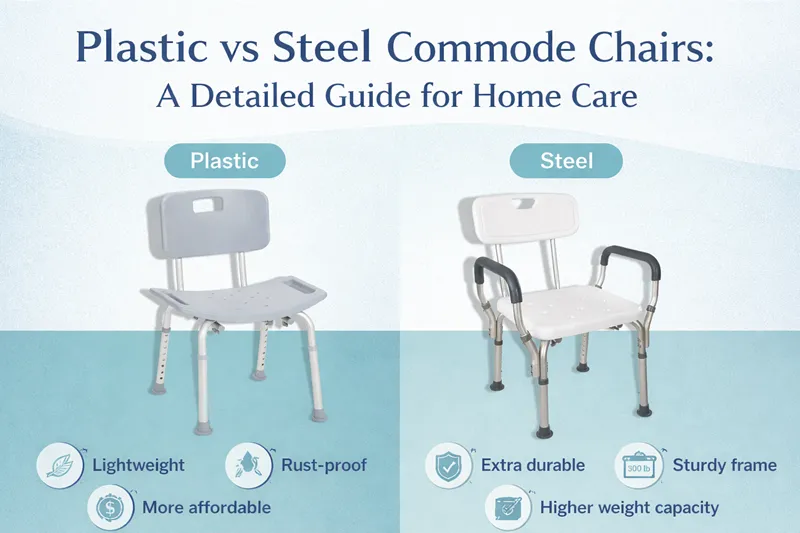
move, corrosion-resistant, and simple to clean. Because plastic does not rust,
these chairs are commonly used in humid environments or temporary care setups.
Plastic commode chairs are often preferred for short-term
needs, rental usage, or situations where portability and ease of handling are
priorities.
What Defines a Steel Commode Chair
Steel commode chairs are built with metal frames made from
mild steel or stainless steel. These frames are usually powder-coated or
chrome-finished to protect against corrosion. Steel commode chairs are heavier,
sturdier, and designed to handle higher stress during sitting and standing.
They are commonly used in hospitals, long-term home care, rehabilitation
settings, and for users who require maximum stability. Steel commode chairs are
considered a long-term investment due to their strength and durability.
Structural Strength and Load-Bearing Capability
Structural strength is where the biggest difference appears.
Plastic commode chairs rely on molded joints and plastic supports. While
high-quality plastic models can support average users safely, plastic naturally
flexes under load. Over time, repeated weight transfer especially during
standing can weaken joints, cause micro-cracks, or reduce stability.
Steel commode chairs provide rigid structural support. The
metal frame does not flex under load, which creates a firm, confidence-building
seating experience. This rigidity is crucial for elderly users who rely heavily
on armrests and for patients who struggle during sit-to-stand movements. Steel
frames are far less likely to deform, even with years of daily use.
Stability and User Confidence During Toileting
Stability plays a major role in user confidence. Plastic
commode chairs, being lighter, may feel less grounded to some users, especially
those with balance issues or fear of falling. Even minor movement or flex can
increase anxiety during use. Steel commode chairs feel solid and planted on the
floor. The added weight reduces unintended movement, which reassures users
during sitting and standing. This psychological comfort is extremely important
for elderly individuals, stroke patients, and post-surgery users who already
feel physically vulnerable.
Comfort and Sitting Experience
Plastic commode chairs often feel smoother and warmer to the
touch. Many users find plastic seats comfortable, especially in colder weather.
Plastic chairs are also easier to mold into ergonomic shapes, which can improve
initial comfort.
Steel commode chairs usually use plastic or padded seats
mounted on steel frames, combining comfort with strength. The real comfort
advantage of steel chairs comes from better posture support, correct seat
height, and strong armrests rather than seat material alone. Over long
durations, steel chairs often feel more comfortable because they maintain
correct alignment without sagging.
Hygiene, Moisture Resistance, and Cleaning
Hygiene is a critical factor in toileting equipment. Plastic
commode chairs are non-porous, water-resistant, and easy to wash. They do not
rust and tolerate frequent cleaning with disinfectants. This makes plastic
chairs suitable for humid bathrooms and frequent washing routines. Steel
commode chairs require slightly more care. Powder-coated or stainless-steel
models resist rust well, but scratches or damaged coating can eventually allow
corrosion if neglected. That said, medical-grade steel commode chairs are
designed for hygienic environments and, with basic care, remain safe and clean
for many years.
Durability and Long-Term Performance
Plastic commode chairs are best suited for short-term or
occasional use. Over extended periods, plastic can weaken, discolour, or crack especially
under higher weight loads or rough usage. Steel commode chairs excel in
long-term performance. They are designed to withstand daily use for years
without loss of strength. For chronic conditions, elderly care, or permanent
mobility limitations, steel commode chairs provide long-lasting reliability and
better return on investment.
Portability and Ease of Movement
Plastic commode chairs are lightweight and easy to carry,
reposition, or store. This is useful in small homes, temporary setups, or
situations where the chair needs to be moved frequently. Steel commode chairs
are heavier, which makes them harder to lift but improves stability. Many steel
commode chairs come with wheels and brakes, combining mobility with strength.
For dependent patients, wheeled steel commode chairs reduce caregiver lifting
and improve safety.
Maintenance and Repair Considerations
Plastic commode chairs require minimal maintenance. They do
not rust and only need routine cleaning. However, once plastic cracks or loses
structural integrity, repair is usually not possible the chair must be
replaced. Steel commode chairs require occasional inspection for rust, loose
bolts, or damaged coating. With basic maintenance, they remain functional for a
very long time. Steel frames can often be repaired or reinforced if needed,
adding to their long-term value.
Cost Analysis and Long-Term Value
Plastic commode chairs are more affordable upfront, making
them attractive for short-term use, rentals, or budget-conscious buyers.
However, frequent replacement can increase long-term cost. Steel commode chairs
cost more initially but offer superior durability, safety, and longevity. For
long-term care, the higher upfront investment often results in lower overall
cost due to reduced replacement and improved safety.
Expanded Comparison Table: Plastic vs Steel Commode
Chairs
|
Aspect |
Plastic
Commode Chair |
Steel
Commode Chair |
|
Weight
capacity |
Low to medium |
Medium to
very high |
|
Structural
rigidity |
Moderate |
Excellent |
|
Stability |
Moderate |
Very high |
|
User
confidence |
Medium |
High |
|
Comfort over
time |
Medium |
High |
|
Hygiene |
Excellent |
Good with
care |
|
Rust
resistance |
Excellent |
Coated /
stainless |
|
Maintenance |
Very low |
Low to
moderate |
|
Portability |
Very easy |
Moderate |
|
Lifespan |
Short to
medium |
Long |
|
Cost |
Lower |
Higher |
|
Best suited
for |
Temporary use |
Long-term
care |
Best Choice for Elderly Care
For elderly users with mild mobility issues and average body
weight, plastic commode chairs may suffice for short-term needs. However, for
seniors with joint pain, fear of falling, balance issues, or long-term care
requirements, steel commode chairs provide far better safety and confidence. In
most long-term elderly care scenarios, steel is the recommended choice.
Best Choice for Post-Surgery Recovery
After minor surgeries with short recovery periods, plastic
commode chairs can be a practical solution. For orthopaedic, spinal, or
abdominal surgeries that restrict movement and require weeks or months of
support, steel commode chairs offer better stability and protection throughout
recovery.
Best Choice for Bedridden and Bariatric Users
Plastic commode chairs are generally not recommended for
bedridden or bariatric users due to limited strength and stability. Steel
commode chairs, especially reinforced or bariatric models, are specifically
designed for these use cases and significantly reduce risk.
Common Mistakes Families Make
Many families choose plastic chairs purely based on price without considering user weight or duration of use. Others avoid steel chairs due to fear of rust, ignoring modern coatings and medical-grade designs. The biggest mistake is underestimating future needs choosing a chair that works today but fails as the condition progresses.
Conclusion
The choice between plastic and steel commode chairs should be guided by safety, user weight, mobility level, and expected duration of use not just price. Plastic commode chairs offer affordability, portability, and ease of cleaning, making them suitable for temporary or light use. Steel commode chairs deliver superior strength, stability, durability, and confidence, making them the preferred solution for elderly care, heavy users, bedridden patients, and long-term home healthcare. Making the right choice today ensures dignity, safety, and peace of mind every day.