A pulse oximeter is a small, non-invasive device that
measures blood oxygen saturation (SpO₂) and pulse rate within seconds. What was
once limited to hospitals and ICUs is now widely available for home use,
allowing families to track oxygen levels, detect early warning signs, and
prevent medical emergencies. The COVID-19 pandemic further highlighted the
importance of daily oxygen monitoring, as thousands of patients suffered silent
hypoxia without realizing their oxygen levels were dangerously low.
At Aarogyaa Bharat, we have seen firsthand how a simple
pulse oximeter has saved lives by alerting families to declining oxygen levels
before a crisis occurred. From elderly individuals with weak lungs to athletes
optimizing performance, from asthma patients monitoring flare-ups to post-COVID
survivors tracking lung recovery, pulse oximeters have become an essential part
of everyday wellness routines.
This comprehensive guide explains everything you need to
know about using a pulse oximeter for daily health monitoring. It covers how
pulse oximeters work, who should use them, why daily monitoring matters, how to
interpret readings, medical benefits, safety guidelines, buying tips, common
errors, and how to build a reliable long-term health tracking routine at home.
What Is a Pulse Oximeter and How It Works
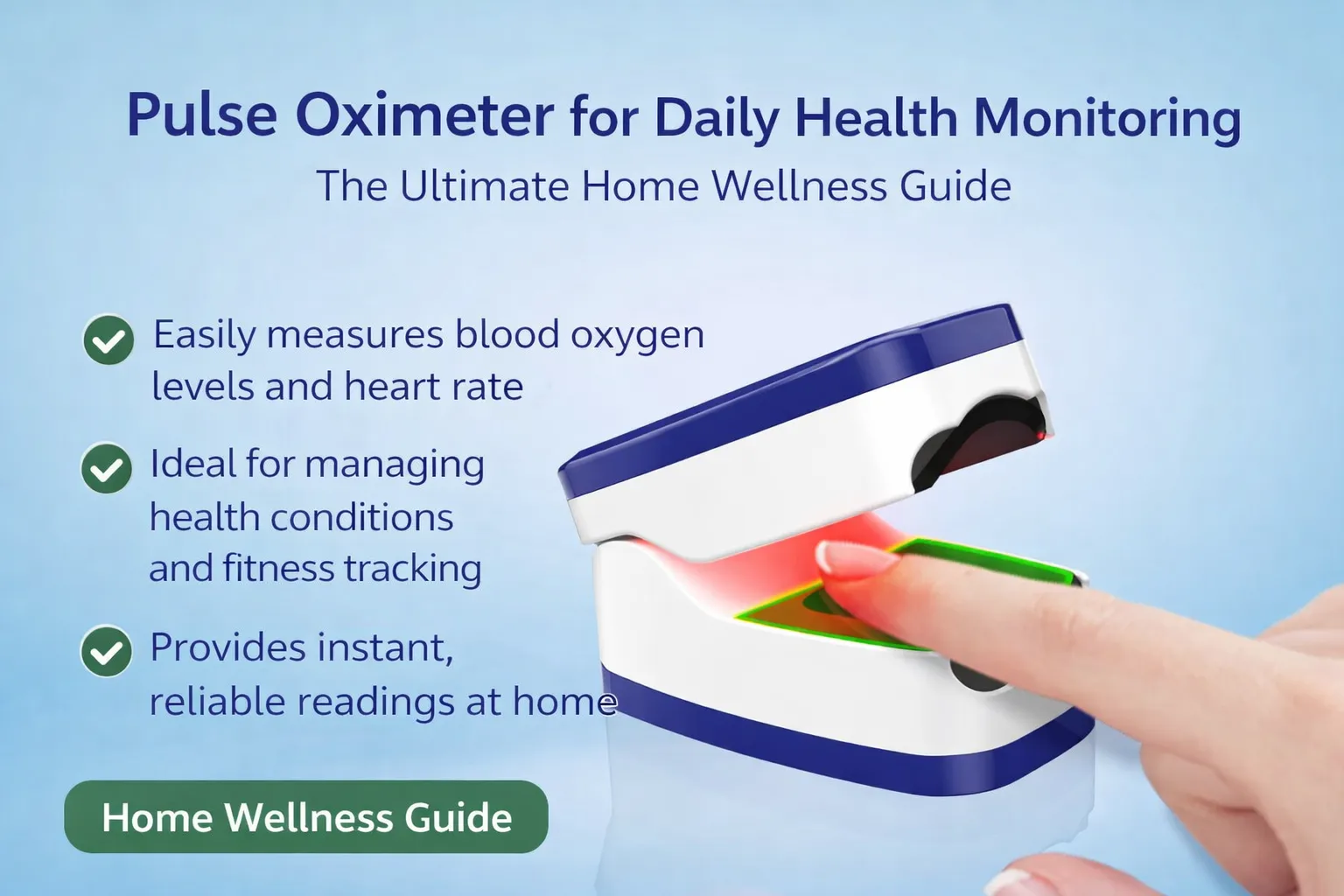
A pulse oximeter is a small electronic medical device that
clips onto a fingertip and measures two vital health parameters: blood oxygen
saturation (SpO₂) and pulse rate. SpO₂ represents the percentage of hemoglobin
in the blood that is carrying oxygen, while pulse rate reflects the number of
heart beats per minute. These two readings together provide critical insights
into how well the lungs and heart are working.
The device works using a technology called
photoplethysmography. It emits two wavelengths of light red and infrared through
the fingertip. Oxygenated and deoxygenated hemoglobin absorb light differently,
and the pulse oximeter calculates oxygen saturation by analyzing how much light
is absorbed at each wavelength. The device also detects tiny changes in blood
volume caused by heartbeats, allowing it to calculate pulse rate.
Modern pulse oximeters are highly advanced, offering digital
displays, waveform graphs, motion resistance, low-perfusion detection, and
smartphone connectivity. Some models also store historical data, allowing users
to track oxygen trends over days, weeks, or months.
Because pulse oximeters are non-invasive, painless, and easy
to use, they are ideal for daily monitoring across all age groups. They provide
hospital-grade insights in a pocket-sized device that anyone can operate at
home.
Why Daily Oxygen Monitoring Matters More Than You Think
Most people assume that oxygen levels only matter during
severe illness or hospitalization. In reality, blood oxygen levels fluctuate
throughout the day and can decline silently due to factors such as respiratory
infections, air pollution, high altitude, sleep apnea, heart disease, anemia,
and post-viral lung damage.
One of the most dangerous conditions associated with low
oxygen levels is silent hypoxia, where oxygen saturation drops without obvious
symptoms like breathlessness. Patients may feel only mild fatigue or dizziness
while their oxygen levels fall into dangerously low ranges, increasing the risk
of organ damage, heart failure, and sudden collapse.
Daily oxygen monitoring helps detect these hidden drops
early, allowing timely medical intervention before a full-blown emergency
occurs. This is especially critical for elderly individuals, asthma patients,
COPD patients, post-COVID survivors, and people with heart disease.
Regular monitoring also provides peace of mind. Instead of
guessing whether symptoms like fatigue, headache, or breathlessness are
serious, families can check actual oxygen levels within seconds and take
informed action.
Who Should Use a Pulse Oximeter Daily
Daily pulse oximeter use is not limited to critically ill
patients. In fact, a wide range of individuals benefit from routine oxygen
monitoring as part of preventive healthcare.
Elderly individuals are one of the highest-risk groups for
silent hypoxia. Age-related lung decline, heart disease, and reduced immune
function make seniors particularly vulnerable to oxygen fluctuations that may
go unnoticed.
Patients with asthma, COPD, and chronic lung diseases
require daily monitoring to detect flare-ups early. A gradual decline in SpO₂
often precedes wheezing, chest tightness, and respiratory distress, making
early intervention possible.
Post-COVID patients frequently experience long-term lung
damage, reduced oxygen diffusion capacity, and unpredictable oxygen drops.
Daily monitoring helps track lung recovery and detect complications such as
fibrosis or reinfection.
Heart disease patients benefit from pulse oximeter
monitoring because low oxygen levels place extra strain on the heart,
increasing the risk of arrhythmias and heart failure exacerbations.
Athletes and fitness enthusiasts use pulse oximeters to
optimize performance, monitor recovery, and assess high-altitude training
adaptation.
People with sleep apnea often experience night time oxygen
drops that go unnoticed. Morning SpO₂ monitoring helps identify nocturnal
hypoxia patterns.
Understanding Normal and Abnormal Oxygen Levels
Interpreting pulse oximeter readings correctly is critical
for effective daily monitoring. While exact values vary slightly between
individuals, the following general ranges apply:
- 95%-100%:
Normal oxygen saturation
- 90%-94%:
Mild hypoxemia (monitor closely)
- 85%-89%:
Moderate hypoxemia (medical evaluation needed)
- Below
85%: Severe hypoxemia (emergency situation)
Most healthy individuals maintain SpO₂ levels above 95% at
rest. However, some chronic lung disease patients may have lower baseline
levels that are considered normal for their condition. In such cases, doctors
establish individualized target ranges.
Pulse rate readings also provide important insights. A
normal resting pulse rate for adult’s ranges from 60 to 100 beats per minute.
Persistent tachycardia (high pulse rate) or bradycardia (low pulse rate)
combined with low oxygen levels may indicate serious medical issues.
Tracking daily trends is more important than focusing on a
single reading. A gradual decline over several days is often more concerning
than a temporary drop caused by cold fingers or motion.
What a Daily Pulse Oximeter Monitoring Improves Health
Outcomes
One of the biggest benefits of daily oxygen monitoring is
early detection. Subtle declines in SpO₂ often occur days before visible
symptoms appear. By identifying these trends early, patients can seek medical
advice, adjust medications, or increase rest and hydration to prevent
deterioration.
Daily monitoring also improves treatment compliance.
Patients using oxygen therapy, inhalers, or nebulizers can objectively measure
whether their treatment is working. Seeing oxygen levels improve reinforces
adherence to prescribed therapy.
Another major advantage is emergency prevention. Families
equipped with a pulse oximeter can recognize dangerous drops in oxygen levels
and seek immediate medical help, potentially saving lives during asthma
attacks, pneumonia progression, or cardiac events.
Pulse oximeters also support mental well-being. Knowing that
oxygen levels are stable reduces anxiety and panic, especially for post-COVID
survivors and chronic respiratory patients.
Using a Pulse Oximeter Correctly for Accurate Readings
Proper usage is essential for reliable daily monitoring.
Always measure oxygen levels while seated comfortably and at rest. Avoid taking
readings immediately after physical activity, as exertion temporarily alters
oxygen saturation.
Ensure the finger is warm, clean, and free of nail polish or
artificial nails. Cold fingers and nail cosmetics can interfere with light
absorption, causing inaccurate readings.
Place the oximeter snugly on the fingertip and keep the hand
still during measurement. Motion can distort the signal and produce erratic
results.
Wait at least 10-15 seconds for the reading to stabilize
before recording the value. Many devices display fluctuating numbers initially
before settling on a final reading.
For consistent tracking, measure oxygen levels at the same
times each day, such as morning, afternoon, and before bed.
Common Errors and How to Avoid Them
One of the most common errors is taking readings with cold
hands, which reduces blood flow to the fingers and leads to falsely low oxygen
levels. Warming the hands before measurement improves accuracy.
Movement during measurement is another major cause of
inaccurate readings. Always keep the hand still and avoid talking or coughing
while measuring.
Using a damaged or low-battery device can also distort
readings. Regularly check battery levels and replace the device if display
issues occur.
Comparing readings across different devices may show slight
variations due to calibration differences. Always use the same pulse oximeter
for consistent long-term tracking.
Pulse Oximeter vs Hospital Monitoring Devices
While hospital-grade monitors offer advanced features such
as continuous monitoring and alarm systems, modern home pulse oximeters provide
remarkably accurate readings for daily use.
For most home users, a high-quality finger pulse oximeter
offers more than enough accuracy and convenience. Hospital monitors are
primarily needed for critically ill patients requiring continuous surveillance.
At Aarogyaa Bharat, we recommend certified medical-grade
pulse oximeters that meet international accuracy standards for reliable home
monitoring.
Key Features to Look for in a Pulse Oximeter
When choosing a pulse oximeter for daily monitoring,
accuracy certification should be your top priority. Look for devices that meet
FDA, CE, or ISO standards.
Display clarity matters for elderly users. Choose models
with bright OLED screens and large numeric displays for easy reading.
Motion resistance and low-perfusion detection improve
accuracy in patients with weak circulation or tremors.
Data storage and smartphone connectivity are useful for
tracking long-term trends and sharing reports with doctors.
Battery life and durability are also important for long-term
daily use.
Safety Guidelines for Daily Pulse Oximeter Use
Never rely solely on pulse oximeter readings to make medical
decisions. Always consult a doctor if abnormal readings persist.
Do not ignore symptoms such as breathlessness, chest pain,
or confusion even if oxygen levels appear normal.
Store the device in a clean, dry place away from dust and
moisture.
Clean the sensor regularly using a soft cloth and alcohol
wipes to maintain hygiene and accuracy.
Quick Decision Guide Table
|
Scenario |
Daily
Monitoring Helpful? |
Reason |
|
Elderly
individuals |
Yes |
Silent
hypoxia risk |
|
Asthma &
COPD patients |
Yes |
Early
flare-up detection |
|
Post-COVID
recovery |
Yes |
Lung healing
tracking |
|
Heart disease |
Yes |
Cardiac
strain monitoring |
|
Athletes |
Yes |
Performance
optimization |
|
Healthy
adults |
Optional |
Preventive
wellness |
Conclusion
A pulse oximeter is no longer just a hospital tool it is a
life-saving wellness device for daily home health monitoring. From detecting
silent hypoxia and preventing respiratory emergencies to tracking recovery and
improving treatment compliance, daily oxygen monitoring empowers families to
take control of their health like never before.
For elderly individuals, chronic respiratory patients,
post-COVID survivors, and anyone living in high-pollution or high-risk
environments, a pulse oximeter offers an affordable, simple, and incredibly
powerful way to protect long-term health.
At Aarogyaa Bharat, we provide certified, high-accuracy
pulse oximeters designed for reliable daily monitoring and long-term
durability. Our mission is to help families breathe easier, live healthier, and
stay safer through smart home healthcare solutions.