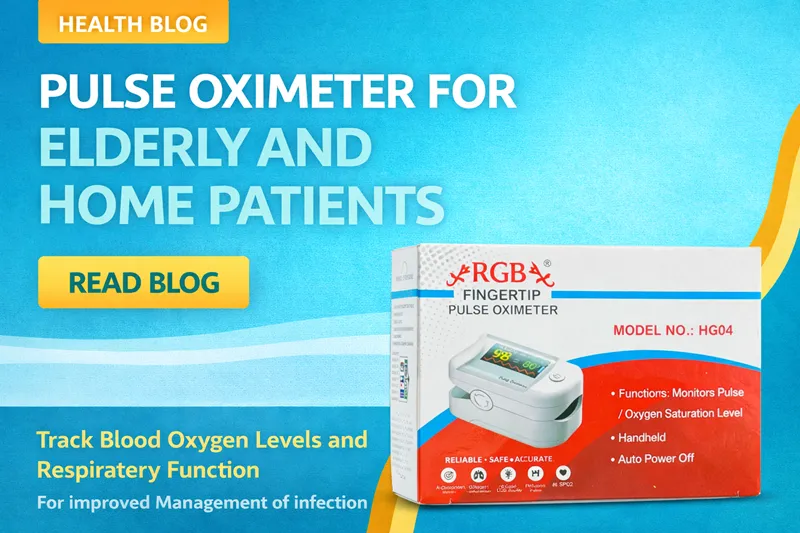
A Complete Home-Care Guide to Safe Oxygen Monitoring for
Seniors, Bedridden Patients, and Chronic Illness Care
A pulse oximeter is a small, non-invasive device that
measures blood oxygen saturation (SpO₂) and pulse rate within seconds. It
empowers families to detect falling oxygen levels early, track disease
progression, assess recovery, and decide when urgent medical help is needed.
While pulse oximeters gained mass popularity during the COVID-19 pandemic,
their relevance today goes far beyond COVID. They are now essential tools for
elderly individuals, bedridden patients, heart patients, asthma and COPD sufferers,
post-surgery recovery patients, cancer patients, dialysis patients, and anyone
undergoing long-term respiratory or cardiac therapy.
Many caregivers still underestimate the importance of
routine oxygen monitoring for elderly and home patients. Subtle drops in oxygen
levels often go unnoticed until symptoms become severe. Conditions such as
silent hypoxia, heart failure, pneumonia, COPD flare-ups, pulmonary fibrosis,
post-surgical complications, and fluid overload can worsen rapidly if not
detected early. A pulse oximeter offers an affordable, easy-to-use, and
reliable solution for early warning and long-term monitoring.
At Aarogyaa Bharat - Live Healthy, Live Better, we regularly
guide families across India in selecting reliable pulse oximeters and using
them correctly for elderly care, chronic disease management, and long-term home
recovery. In this extremely detailed guide, you will learn what a pulse
oximeter is, why it is critical for elderly and home patients, how it works,
what SpO₂ numbers mean for seniors, how to use it safely at home, who needs it
the most, how to choose the right model, common mistakes to avoid, and when to
seek urgent medical care.
Why Pulse Oximeters Are Essential for Elderly and Home
Patients
Elderly individuals are naturally more vulnerable to
respiratory and cardiovascular problems due to age-related decline in lung
capacity, reduced immunity, stiffening of chest muscles, and the presence of
multiple chronic illnesses. Even minor infections, dehydration, seasonal flu,
or physical stress can cause dangerous drops in oxygen levels in seniors. These
changes may not always cause obvious breathlessness, making early detection
difficult without monitoring tools.
Home patients recovering from surgery, illness, or long-term
medical conditions often experience fluctuating oxygen levels that may not
cause noticeable symptoms. In many cases, oxygen levels can drop silently
without noticeable breathlessness a condition known as silent hypoxia.
This is especially dangerous for elderly patients who may not communicate
symptoms clearly or may mistake breathlessness for normal aging.
Pulse oximeters provide continuous insight into a patient’s
oxygen status, allowing caregivers to detect early warning signs and take
timely action. Regular monitoring helps prevent medical emergencies, reduces
hospital readmissions, improves medication effectiveness, and enhances overall
quality of life for elderly and home patients.
What Is a Pulse Oximeter and How Does It Work?
A pulse oximeter is a small, non-invasive medical device
that measures two vital parameters: oxygen saturation (SpO₂) and pulse rate
(heart rate). It is typically clipped onto a fingertip, toe, or earlobe and
provides instant digital readings without needles or blood samples.
Pulse oximeters work using a technology called
photoplethysmography. The device emits two wavelengths of light red and
infrared through the fingertip. These light beams pass through the blood and
are absorbed differently by oxygenated and deoxygenated hemoglobin.
Oxygenated hemoglobin absorbs more infrared light, while
deoxygenated hemoglobin absorbs more red light. By analyzing how much light is
absorbed at each wavelength, the device calculates the ratio of oxygenated to
total hemoglobin and estimates the SpO₂ level.
Pulse rate is measured by detecting small changes in blood
volume that occur with each heartbeat. These changes are converted into beats
per minute (BPM) and displayed on the screen.
Why Oxygen Monitoring Is So Important for Seniors
As people age, their lungs gradually lose elasticity, chest
wall movement becomes restricted, and respiratory muscles weaken. These natural
changes reduce oxygen exchange efficiency and increase the risk of hypoxemia
(low blood oxygen levels).
Elderly individuals are also more likely to suffer from
chronic conditions such as asthma, COPD, heart failure, diabetes, kidney
disease, and anemia all of which can affect oxygen delivery to vital organs.
Even mild respiratory infections or seasonal flu can trigger dangerous oxygen
drops in seniors.
Routine SpO₂ monitoring helps caregivers identify subtle
changes early and adjust treatment plans before complications arise. It also
supports safer long-term care and reduces the risk of sudden medical
emergencies.
Who Should Use a Pulse Oximeter at Home?
Pulse oximeters are highly recommended for:
- Elderly
individuals above 60 years
- Bedridden
or immobile patients
- Post-surgery
recovery patients
- Heart
disease patients
- Asthma
patients
- COPD
patients
- Pneumonia
patients
- Post-COVID
recovery patients
- Cancer
patients undergoing chemotherapy
- Dialysis
patients
- Obese
individuals
- Smokers
- Individuals
living in high-pollution areas
For these high-risk groups, daily SpO₂ monitoring can detect
early deterioration and prevent life-threatening complications.
Normal and Dangerous Oxygen Levels for Elderly Patients
Understanding SpO₂ numbers is critical for safe home
monitoring.
|
SpO₂ Level |
Meaning |
Action
Required |
|
95% - 100% |
Normal |
Continue
monitoring |
|
92% - 94% |
Mildly low |
Monitor
closely, consult doctor |
|
88% - 91% |
Moderately
low |
Seek medical
advice urgently |
|
Below 88% |
Dangerously
low |
Medical
emergency |
For elderly individuals, slight reductions in SpO₂ may occur
due to age-related lung changes. However, persistent readings below 92% should
always be evaluated by a doctor.
How to Use a Pulse Oximeter Safely at Home
Using a pulse oximeter correctly significantly improves
accuracy and reliability. Sit calmly and rest for at least five minutes before
measurement. Avoid checking oxygen levels immediately after physical activity,
smoking, or climbing stairs.
Make sure the patient’s hands are warm and relaxed. Cold
fingers reduce blood flow and lead to inaccurate readings. Remove nail polish,
artificial nails, or henna from the finger used for measurement.
Place the pulse oximeter on a clean fingertip and keep the
hand still at heart level. Avoid talking or moving during measurement.
Wait for the reading to stabilize for at least 10-15 seconds
before recording it. Take two or three readings and average them for better
accuracy.
Use the same finger consistently for daily monitoring to
track trends more reliably.
Role of Pulse Oximeters in Chronic Disease Management
Pulse oximeters play a crucial role in managing chronic
respiratory and cardiovascular diseases.
Asthma patients use pulse oximeters to assess the severity
of attacks and determine whether emergency treatment is needed. Persistent
drops in SpO₂ below 92% during an asthma flare indicate poor oxygenation and
require urgent medical attention.
COPD patients often have lower baseline oxygen levels,
typically ranging between 90% and 92% under medical supervision. Pulse
oximeters help detect exacerbations early and guide oxygen therapy adjustments.
Heart failure patients benefit from SpO₂ monitoring to
detect fluid build up in the lungs and worsening heart function. Sudden drops in
oxygen levels often signal deterioration.
Pneumonia patients use pulse oximeters to track disease
progression and treatment effectiveness. A falling oxygen level often indicates
worsening lung infection and the need for hospitalization.
Pulse Oximeter vs Hospital Monitoring: What’s the
Difference?
|
Feature |
Pulse
Oximeter |
Hospital
Monitoring |
|
Invasiveness |
Non-invasive |
Invasive (ABG
tests) |
|
Accuracy |
High for
trends |
Very high
(gold standard) |
|
Speed |
Instant |
Lab
processing |
|
Cost |
Low |
High |
|
Best Use |
Home
monitoring |
Critical care |
Pulse oximeters are ideal for continuous home monitoring,
while hospital-grade tests are used for precise diagnostic confirmation.
Common Mistakes Caregivers Make While Monitoring Oxygen
Levels
Many caregivers panic over minor fluctuations or take
readings immediately after physical activity, leading to inaccurate results.
Relying on a single low reading without rechecking can cause
unnecessary anxiety. Always take multiple readings and look for consistent
patterns.
Using cheap, unbranded pulse oximeters with poor sensors
results in unreliable data.
Ignoring symptoms and relying only on SpO₂ values is also
dangerous. Always consider the patient’s overall condition.
How to Choose the Best Pulse Oximeter for Elderly and
Home Patients
Choosing a reliable pulse oximeter is essential for
trustworthy readings. Always look for medical certification, clear display
quality, and positive customer feedback. Avoid extremely cheap unbranded
devices, as they often show inconsistent readings.
Mid-range and premium models with OLED displays,
plethysmograph waveform, and perfusion index (PI) indicators provide better
reliability for daily home monitoring.
Rechargeable models offer long-term convenience and cost
savings. Always buy from a trusted seller like Aarogyaa Bharat to ensure
genuine products, warranty coverage, and after-sales support.
When Should You Seek Medical Help?
- SpO₂
consistently below 94%
- Sudden
drop of more than 3% from baseline
- Severe
breathlessness
- Chest
pain
- Bluish
lips or fingertips
- Confusion
or fainting
Never delay medical care based solely on pulse oximeter
readings.
Conclusion
Pulse oximeters are essential safety devices for elderly and home patients.
They provide early warning signs, support long-term recovery, and empower
families to take control of respiratory and cardiovascular health.
At Aarogyaa Bharat - Live Healthy, Live Better, we believe
that every high-risk household should own a reliable pulse oximeter as part of
a complete home-care setup.