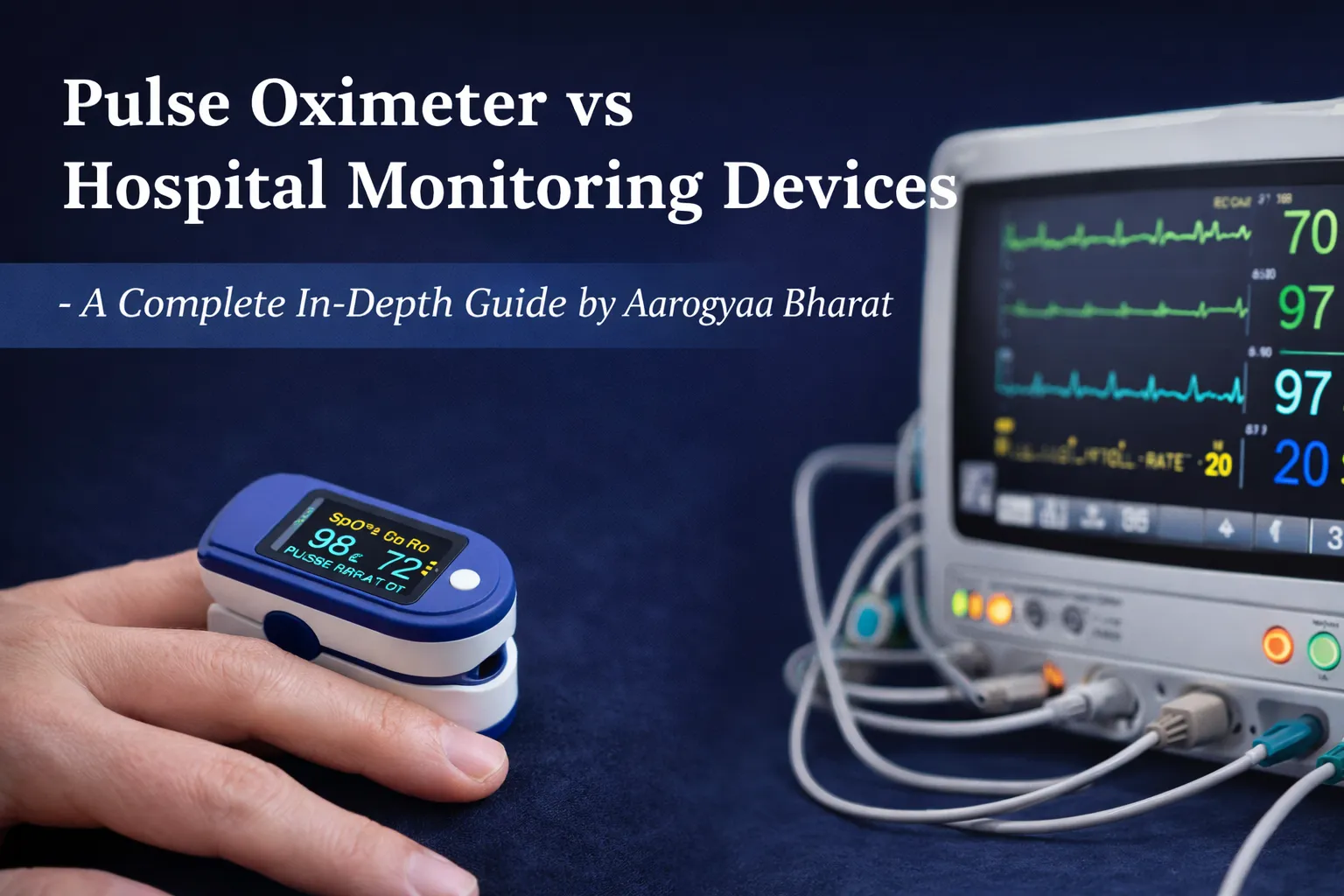
At the same time, hospitals use highly sophisticated
multi-parameter monitoring devices that track a wide range of vital signs in
real time. These hospital monitoring systems are designed to provide
continuous, high-accuracy data to medical professionals, enabling rapid
decision-making in critical situations. They can measure not only oxygen
saturation but also heart rate, blood pressure, respiratory rate, ECG,
temperature, and in some cases even advanced hemodynamic parameters.
Many families and caregivers often wonder whether a simple
pulse oximeter is enough for home monitoring or if hospital-grade monitoring
devices are necessary. This confusion becomes even more important when caring
for elderly patients, post-surgical patients, respiratory illness cases, or
individuals with chronic heart and lung diseases. Choosing the wrong device can
lead to missed warning signs, unnecessary anxiety, or delayed medical
intervention.
At Aarogyaa Bharat, we regularly guide families, caregivers,
and home ICU setups on selecting the right monitoring devices based on patient
condition and care goals. This comprehensive guide compares pulse oximeters and
hospital monitoring devices in detail, explaining how they work, what they
measure, when each is appropriate, their limitations, safety considerations,
and how to build an effective home monitoring strategy.
What Is a Pulse Oximeter and How It Works
A pulse oximeter is a small, non-invasive medical device
designed to measure two key health parameters: blood oxygen saturation (SpO₂)
and pulse rate. It typically clips onto a finger, toe, or earlobe and uses
light-based technology to estimate how much oxygen is being carried by
hemoglobin in the blood. The device emits red and infrared light through the
skin and measures how much light is absorbed by oxygenated and deoxygenated
blood.
Pulse oximeters are widely used because they are simple,
affordable, portable, and easy to operate without medical training. Within
seconds of attaching the device, users can see their oxygen saturation
percentage and heart rate displayed on a digital screen. This instant feedback
makes pulse oximeters particularly useful for home monitoring, emergency first
aid, fitness tracking, and high-altitude travel.
In home healthcare, pulse oximeters are most commonly used
by patients with asthma, COPD, pneumonia, post-COVID recovery, heart
conditions, sleep apnea, and elderly individuals with breathing difficulties.
They allow families to track oxygen levels and detect early signs of hypoxia
before symptoms become severe.
However, while pulse oximeters are extremely valuable for
basic monitoring, they provide only a limited snapshot of a patient’s health.
They do not measure other vital parameters such as blood pressure, respiratory
rate, ECG, or body temperature, which can be crucial in diagnosing and managing
complex medical conditions.
What Are Hospital Monitoring Devices and How They Work
Hospital monitoring devices, also known as multi-parameter
patient monitors, are advanced medical systems used in hospitals, ICUs,
emergency rooms, and operation theatres. These devices are designed to
continuously track multiple vital signs simultaneously and display them in real
time on a central monitor. Unlike pulse oximeters, which provide intermittent
readings, hospital monitors offer continuous, high-resolution data streams.
A typical hospital monitoring device can measure oxygen
saturation (SpO₂), heart rate, ECG (electrocardiogram), non-invasive blood
pressure (NIBP), respiratory rate, body temperature, and sometimes invasive
parameters such as arterial pressure and central venous pressure. These systems
use a combination of sensors, electrodes, cuffs, and probes attached to
different parts of the patient’s body.
Hospital monitors are integrated with alarm systems that
alert medical staff when any vital parameter crosses a predefined safe
threshold. This feature is critical in intensive care settings, where immediate
intervention may be required to prevent life-threatening complications. Many
modern hospital monitors are also connected to central nursing stations and
electronic medical record systems, enabling seamless data sharing and
documentation.
Because of their complexity, hospital monitoring devices
require professional setup, regular calibration, and trained medical personnel
for interpretation. While they provide unmatched accuracy and depth of
information, they are significantly more expensive, less portable, and less
practical for everyday home use unless a full home ICU setup is required.
Key Differences Between Pulse Oximeters and Hospital
Monitoring Devices
The most obvious difference between a pulse oximeter and a
hospital monitoring device lies in the number of parameters they measure. A
pulse oximeter focuses primarily on oxygen saturation and pulse rate, making it
a specialized tool for respiratory monitoring. In contrast, hospital monitors
provide a holistic view of a patient’s physiological status by tracking
multiple vital signs simultaneously.
Another major difference is the monitoring mode. Pulse
oximeters are typically used for spot checks, meaning users take readings
periodically throughout the day. Hospital monitoring devices, on the other
hand, are designed for continuous monitoring, providing real-time data 24/7.
This continuous stream is essential for critically ill patients who require
constant supervision.
Accuracy and reliability also vary significantly. While
modern pulse oximeters are quite accurate for general use, their readings can
be affected by factors such as poor circulation, cold fingers, nail polish,
skin pigmentation, and patient movement. Hospital monitors use more advanced
sensors and algorithms, offering higher accuracy and reliability even in
challenging clinical conditions.
Portability and ease of use further distinguish the two.
Pulse oximeters are lightweight, battery-powered, and easy to carry anywhere.
Hospital monitors are bulky, power-dependent, and require professional
installation. This makes pulse oximeters ideal for home use, while hospital
monitors are better suited for medical facilities or full-scale home ICU
setups.
Comparison Table: Pulse Oximeter vs Hospital Monitoring
Devices
|
Feature |
Pulse
Oximeter |
Hospital
Monitoring Devices |
|
Parameters
Measured |
SpO₂, Pulse
Rate |
SpO₂, ECG,
BP, HR, RR, Temp, More |
|
Monitoring
Mode |
Spot Checks |
Continuous
Real-Time Monitoring |
|
Accuracy
Level |
Moderate to
High |
Very High |
|
Portability |
Very High |
Low |
|
Ease of Use |
Very Easy |
Requires
Training |
|
Cost |
Low |
Very High |
|
Alarm System |
Basic or None |
Advanced
Multi-Alarm System |
|
Data Storage |
Limited |
Extensive |
|
Suitable for
Home Use |
Yes |
Only for Home
ICU |
|
Maintenance
Requirements |
Minimal |
High |
When a Pulse Oximeter Is Enough
A pulse oximeter is usually sufficient for individuals who
need basic respiratory monitoring at home. This includes patients with mild to
moderate asthma, stable COPD, post-COVID recovery, seasonal respiratory
infections, and elderly individuals who experience occasional breathlessness.
In such cases, spot-check monitoring allows families to track oxygen trends and
seek medical help if levels fall below safe thresholds.
Pulse oximeters are also extremely useful for fitness
enthusiasts, high-altitude travellers, and individuals with sleep apnea who
want to monitor their oxygen levels during physical activity or sleep. Their
simplicity and portability make them a convenient everyday health tool.
For post-surgical patients recovering at home, a pulse
oximeter provides reassurance by helping caregivers ensure that oxygen
saturation remains within a healthy range. This is particularly important after
procedures involving anaesthesia, chest surgery, or respiratory complications.
However, while pulse oximeters are valuable for early
detection and basic monitoring, they should not be used as the sole diagnostic
tool in serious medical conditions. If symptoms persist or worsen despite
normal SpO₂ readings, professional medical evaluation is essential.
When Hospital Monitoring Devices Are Necessary
Hospital monitoring devices are essential for patients who
require continuous, multi-parameter monitoring due to critical or unstable
health conditions. This includes ICU patients, individuals on ventilators,
post-operative patients in critical recovery phases, severe COPD or heart
failure patients, and those with life-threatening infections or trauma.
In home healthcare, hospital-grade monitors are used
primarily in home ICU setups. These are typically arranged for patients who are
discharged early from hospitals but still require close supervision. Such
setups often include ventilators, infusion pumps, oxygen concentrators, and
trained nursing staff.
Hospital monitors are also necessary for patients with
complex cardiac conditions that require continuous ECG monitoring. In such
cases, a pulse oximeter alone would be insufficient, as it cannot detect
arrhythmias, ischemic events, or sudden cardiac instability.
While hospital monitoring devices provide unmatched safety
and data depth, they are expensive, require professional oversight, and are not
practical for routine home monitoring unless medically justified.
Accuracy and Limitations of Pulse Oximeters
Pulse oximeters are highly effective tools, but they do have
limitations that users must understand. One of the most common issues is
inaccurate readings due to cold fingers, poor blood circulation, or patient
movement. Nail polish, artificial nails, and dark skin pigmentation can also
interfere with light absorption, leading to incorrect SpO₂ values.
Pulse oximeters may also show falsely normal readings in
cases of carbon monoxide poisoning or severe anemia, as they cannot
differentiate between different types of hemoglobin. This makes them unreliable
for certain medical emergencies.
Another limitation is the lack of trend analysis and alarms
in basic models. While some advanced pulse oximeters offer Bluetooth
connectivity and data storage, most low-cost devices provide only momentary
readings without long-term tracking.
Despite these limitations, pulse oximeters remain highly
valuable when used correctly and interpreted in combination with clinical
symptoms.
Building a Smart Home Monitoring Setup
For most families, a balanced home monitoring setup includes
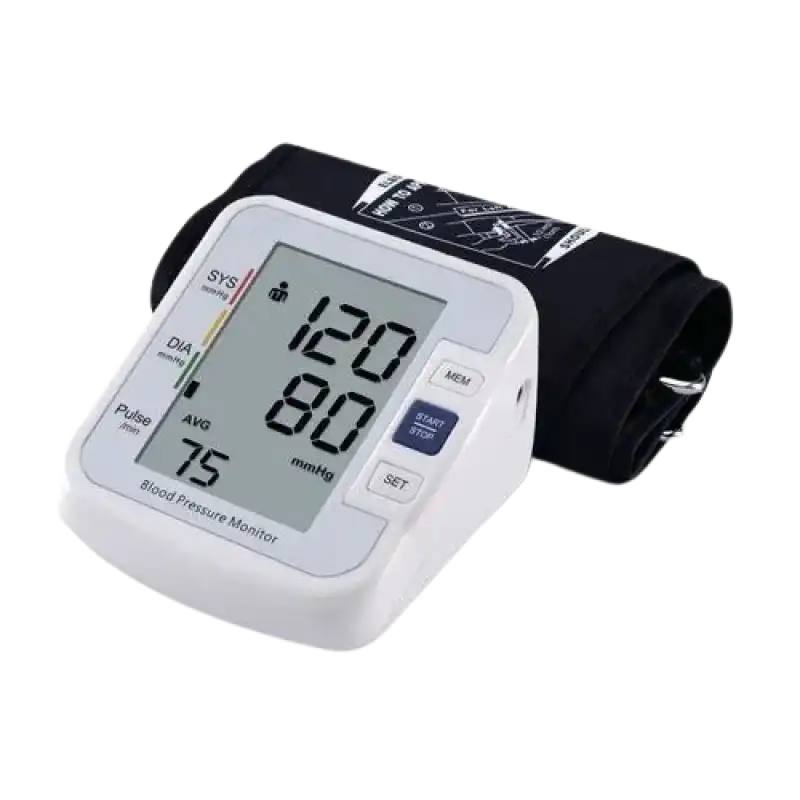
a pulse oximeter along with other basic devices such as a digital thermometer,
blood pressure monitor, and glucometer. This combination provides a
comprehensive overview of key health parameters without the complexity of
hospital-grade equipment.
For patients with moderate to severe conditions, adding a
portable ECG monitor or respiratory rate monitor may further enhance home care
capabilities. These devices bridge the gap between basic and advanced
monitoring.
In high-risk cases, families may opt for a temporary home
ICU setup that includes hospital-grade monitoring devices under medical
supervision. This approach ensures maximum safety while allowing patients to
recover in a familiar environment.
At Aarogyaa Bharat, we help families design customized home
monitoring setups based on patient condition, budget, and care goals.
Conclusion
Both pulse oximeters and hospital monitoring devices play
vital roles in modern healthcare, but they serve very different purposes. A
pulse oximeter is an affordable, portable, and easy-to-use device ideal for
basic home monitoring and early detection of respiratory issues. In contrast,
hospital monitoring devices provide comprehensive, continuous, and
high-accuracy data necessary for critical care and complex medical management.
Choosing the right device depends entirely on the patient’s
condition, risk level, and care environment. For most families, a pulse
oximeter is sufficient for daily monitoring and peace of mind. For critically
ill patients, hospital-grade monitors are essential for safety and survival.
At Aarogyaa Bharat, we offer a wide range of pulse
oximeters, hospital monitoring devices, and home ICU solutions tailored to
diverse healthcare needs. Our expert team provides guidance on device
selection, setup, and long-term usage to ensure safe and effective patient care
at home.
If you are unsure whether a pulse oximeter or a hospital
monitoring device is right for your situation, Aarogyaa Bharat is always here
to help you make an informed and confident decision.